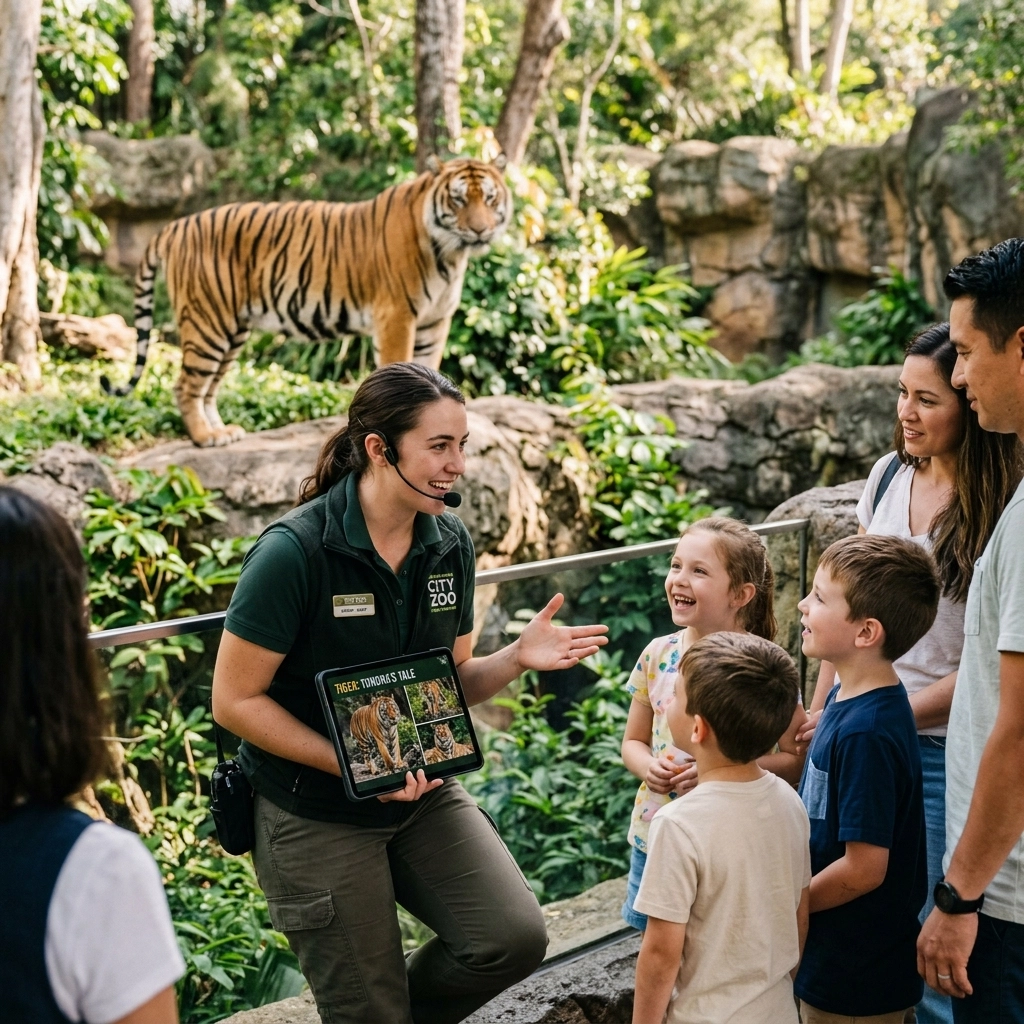
Species Spotlights 101: A Beginner’s Guide to Mastering Wildlife Storytelling for Zoos
Zoos are more than collections of animals. They are hubs for conservation. They are centers for education. To reach people, you need more than a cage and a sign. You need a story.
A species spotlight is your best tool. It is a focused narrative about one animal. It bridges the gap between a visitor and a creature they might never see in the wild.
This guide is for those starting out. Simple. Direct. Effective.
Why Spotlight?
People care about what they know.
Most visitors see an animal for 30 seconds. They read a name. They move on.
A spotlight stops them. It gives the animal a context.
The goals are clear:
- Build an emotional connection.
- Highlight conservation needs.
- Increase visitor engagement.
- Support Zoo Imagery’s mission of visual storytelling.

The Choice: Selecting Your Species
Do not always pick the lion. Do not always pick the elephant.
The "charismatic megafauna" already have fans.
Look for the "forgotten" species:
- The small reptiles.
- The nocturnal mammals.
- The insects that keep ecosystems running.
- The birds with unique songs.
When you spotlight a lesser-known species, you provide new value. You show the breadth of biodiversity.
Pillar 1: The No-Fluff Facts
Research is the foundation.
Avoid the obvious. Everyone knows tigers have stripes. Tell them why the stripes matter in the tall grass.
Key data points to include:
- Scientific Name: Keep it as a footnote, but keep it accurate.
- Habitat: Where do they actually live? Be specific. "The rainforest" is too broad. "The canopy of the Amazon basin" is better.
- Diet: What do they eat in the wild versus the zoo?
- Unique Adaptation: One physical or behavioral trait that sets them apart.

Pillar 2: High-Quality Imagery
A spotlight fails without a visual.
The image is the hook. It should be crisp. It should show the animal's eyes or a unique texture.
At Zoo Imagery, we provide stock photography specifically for this. Professional shots. High resolution. These images are curated to tell a story, not just show a specimen.
Visual tips:
- Action shots: The animal moving, eating, or playing.
- Close-ups: Focus on scales, fur, or feathers.
- Context: Show the animal in a natural-looking environment.
Pillar 3: The Conservation Reality
Every spotlight must have a purpose.
The purpose is survival.
State the status: Vulnerable. Endangered. Critically Endangered.
State the threat: Habitat loss. Poaching. Climate change.
Keep it simple:
- Population: 2,500 left in the wild.
- Threat: Deforestation for palm oil.
- Action: Choose sustainable products.
Avoid doomsday language. Focus on what can be done. Direct the reader to help.
The Narrative Arc: How to Write It
Keep your sentences short.
Use active verbs.
Talk to the reader.
A sample structure for a spotlight post:
- The Hook: A surprising fact or a beautiful image.
- The Introduction: Meet the [Species Name].
- The Details: What makes them special?
- The Struggle: Why are they in trouble?
- The Solution: What is the zoo doing? What can the reader do?

Case Study: The Red Panda
The Hook: It isn’t a panda. It isn't a raccoon.
The Detail: Red pandas have a "false thumb." It is an extension of the wrist bone. It helps them climb bamboo.
The Struggle: Their forest homes are shrinking. Less than 10,000 remain.
The Solution: Support the Red Panda Network.
Case Study: The Axolotl
The Hook: The Peter Pan of the water.
The Detail: They never outgrow their larval stage. They can regenerate entire limbs and even parts of their heart.
The Struggle: Native only to Lake Xochimilco in Mexico. Water pollution is killing them.
The Solution: Promote clean water initiatives.
Milestone: Zoo Imagery’s Commitment
Zoo Imagery is hitting a milestone.
Our library now contains over 10,000 unique species assets.
We provide these to zoos and conservation groups worldwide.
This month, we are focusing on ESG-aligned campaigns. We help organizations prove their impact through visual data and storytelling.
Our goal is simple: Help people see the wild so they will save the wild.
Platform Strategy: Where to Post
Don't just put it on a blog.
- Instagram: Focus on the image. One fact in the caption.
- LinkedIn: Focus on the "Presented by" aspect. Mention corporate sponsorship or conservation partnerships.
- On-Site: Use QR codes on enclosure signs. Link them to the full species spotlight.

Tips for Beginners
- Be Consistent: Post one spotlight a week.
- Be Honest: If a species is struggling, say so. Don't sugarcoat the science.
- Ask Questions: Engage your audience. "Did you know turtles can breathe through their butts?" (They can. It's called cloacal respiration).
- Use Experts: Interview a zookeeper. They have the best stories. They know the animals' personalities.
Measuring Success
How do you know if your storytelling works?
Look at the numbers.
- Engagement: Comments and shares.
- Traffic: How many people visited the spotlight page?
- Donations: Did the spotlight lead to an uptick in your "Adopt an Animal" program?
Data doesn't lie. If a certain species gets a lot of attention, do a "Part 2" or a video follow-up.
Mastering the Craft
Wildlife storytelling is a skill. It takes time.
Start with the species you love. The passion will show in the writing.
Use the resources available to you.
Zoo Imagery is here to help. Our stock library is built for this. We provide the visuals so you can provide the voice.

Conclusion
The world needs more storytellers.
It needs people who can take a complex biological fact and make it mean something to a five-year-old or a CEO.
Species spotlights are the first step.
Start small. Focus on one animal. Use a great image. Tell the truth.
Stay connected with us.
Learn more about how we support wildlife media.
Visit zooimagery.com.
Follow our updates and milestones on LinkedIn.
Keep telling stories. The animals are counting on it.


