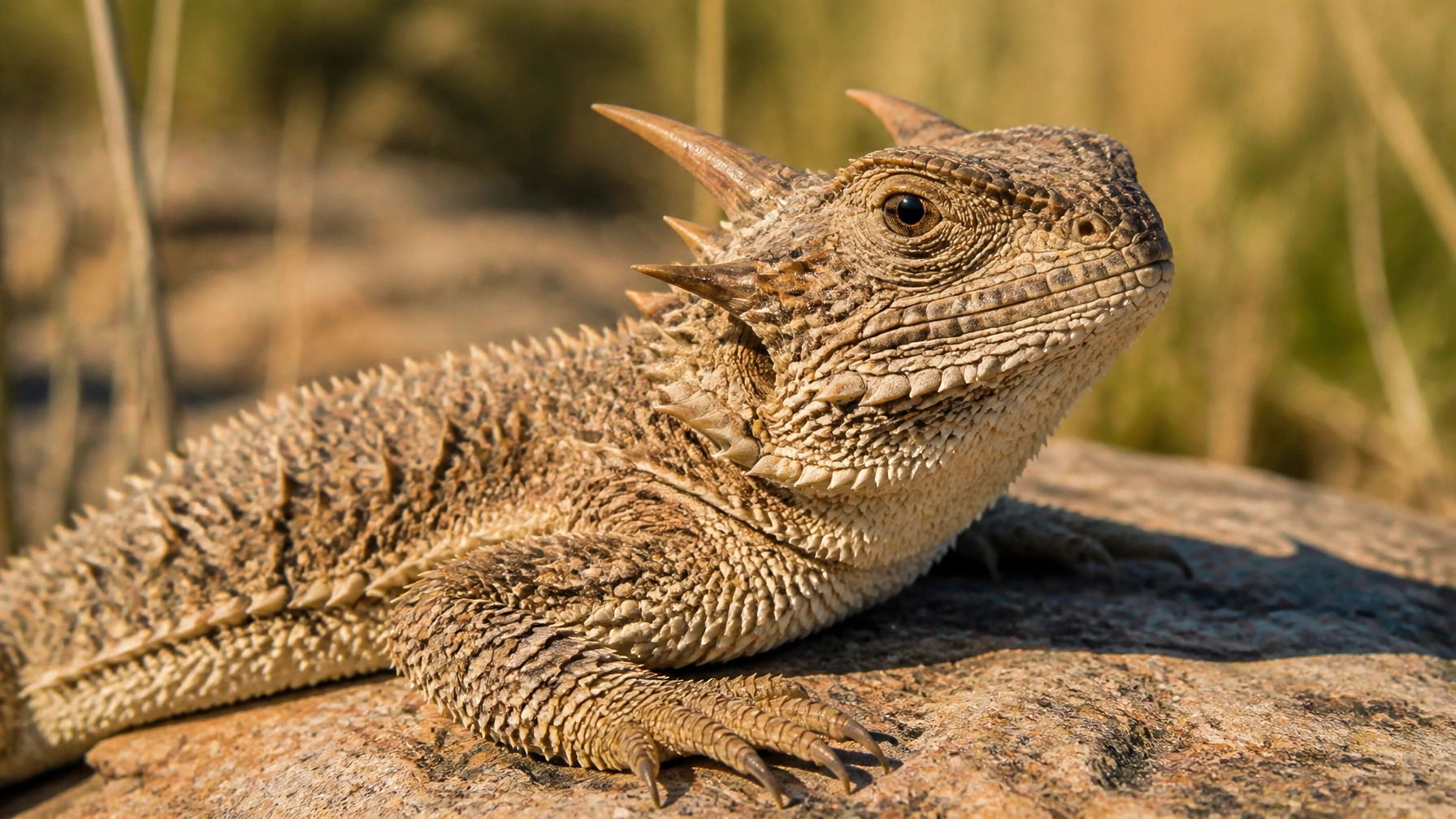
Texas Horned Lizard Secrets Revealed: The Truth About Wild Rebirth at San Antonio Zoo
The Return of a Legend
The Texas Horned Lizard.
Iconic. Flat-bodied. Spiny.
Locally known as the "Horny Toad."
Actually a lizard.
Specifically, Phrynosoma cornutum.
Once widespread across Texas.
Now nearly gone from the eastern third of the state.
Listed as threatened in 1977.
Illegal to catch. Illegal to keep. Illegal to sell.
The San Antonio Zoo stepped in.
The goal: self-sustaining wild populations.
The location: The Center for Conservation and Research (CCR).
The method: Reintroduction.
The Lizard Lab Operations
Inside a 450-square-foot warehouse bay.
Heavily insulated. Controlled environment.
Timed UV lights. Precision basking spots.
This is the "Lizard Lab."

Lab Data:
- Purpose: Captive breeding.
- Capacity: Hundreds of hatchlings per season.
- Care: Tailored husbandry for the southern genetic cluster.
- Genetics: Every pairing logged. Parentage confirmed via DNA.
- Diet: Specialized. Dependent on harvester ants.
Success looks like this:
71 lizards hatched in one collaborative effort.
Released into the wild each fall.
Targeting 250 acres of high-quality habitat.
Breaking News: The Wild Rebirth
The milestone happened in Blanco County.
A private ranch. Native plants.
A test case for survival.
Monitoring teams found a lizard.
Its belly spot pattern: unique.
Not in the zoo's database.
Not a released individual.
The conclusion: Wild-born.
The offspring of zoo-bred parents.
The first documented proof of a self-sustaining cycle.
True wild rebirth.

Why Belly Spots Matter:
- Every released lizard is photographed.
- Belly patterns are like fingerprints.
- Black spot alignment is unique to the individual.
- New patterns = Wild reproduction.
The Science of Survival
Monitoring is difficult.
The lizards are masters of camouflage.
They blend with dirt. They blend with rock.
They bury themselves in loose sand.
The solution: Four legs. Two wet noses.
The Horned Lizard Detection Canine Network.
Partnered with Chiron K9.

Canine Detection Facts:
- Training: Scent-based.
- Targets: Live lizards, scat, eggs, shed skin.
- Efficiency: Faster than human eyes.
- Result: Accurate post-release tracking.
Survival depends on more than just the lizard.
It depends on the landscape.
Healthy harvester ant populations are mandatory.
Pesticide-free zones are required.
Native grasses must replace invasive species.
Restoration Constants
Habitat selection is rigorous.
Remote ranking. Boots-on-the-ground surveys.
Loose sand or loamy soils.
Arid to semi-arid environments.
Sparse vegetation for basking.
Key Threats Addressed:
- Red imported fire ants.
- Habitat fragmentation.
- Invasive exotic grasses.
- Pesticide runoff.
- Urban encroachment.

Conservation Storytelling
This project is a model for Texas.
Recognized as a Texan by Nature Conservation Wrangler.
It is a long-term commitment.
2017 to present.
Ongoing.
Zoo Imagery supports these stories.
Visual documentation of conservation milestones.
High-resolution imagery for ESG-aligned campaigns.
Saving time. Saving money. Saving species.
The objective is clear.
Not a return to urban yards.
But stable, zoo-born pockets of life.
Integrating with remaining wild populations.
Returning the legend to the landscape.
Support the Mission:
- Reduce pesticide use.
- Protect native harvester ants.
- Plant native Texas vegetation.
- Follow the San Antonio Zoo Conservation efforts.
Direct messaging. Confident results.
Wild rebirth is no longer a goal.
It is a reality.
Explore stunning animal photography for your next project.
Help us tell the story of conservation.


