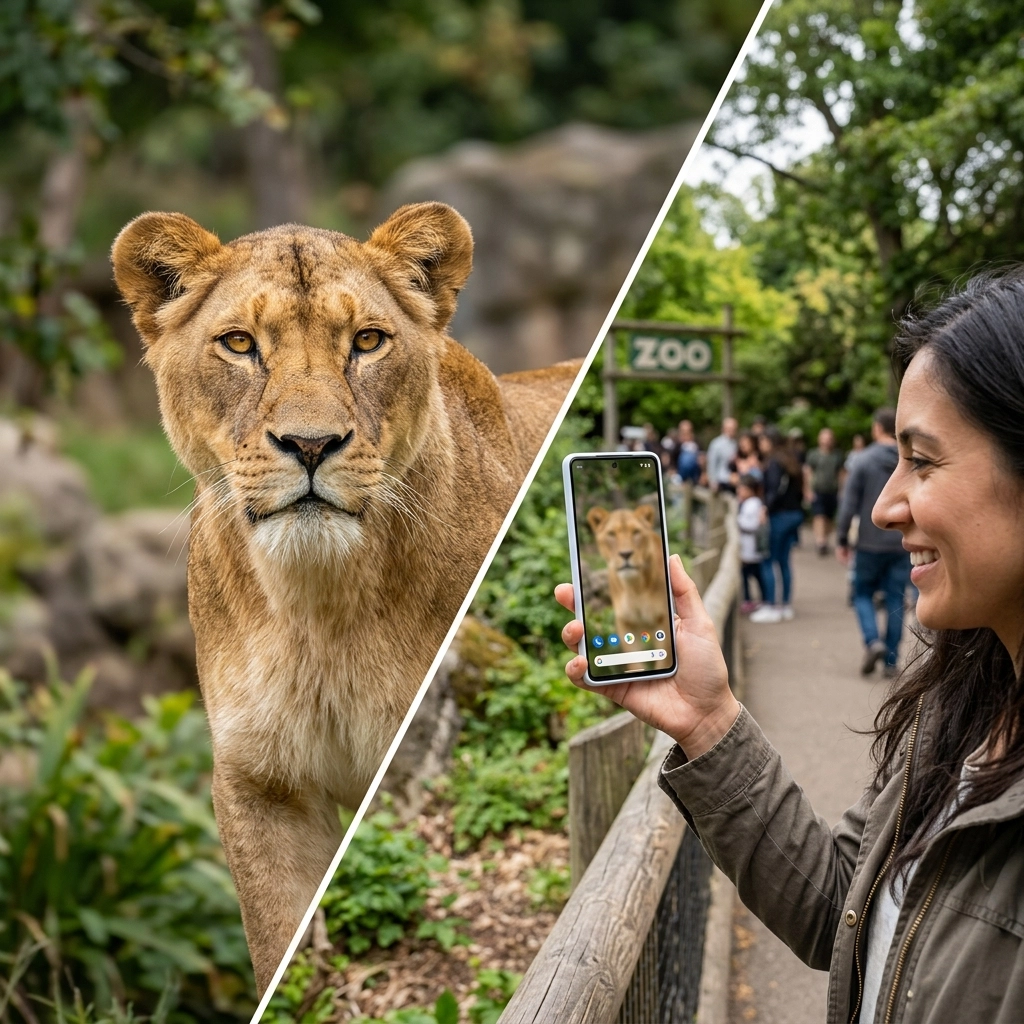
Professional Wildlife Stock Photos Vs. Smartphone Snaps: Which Is Better For Your Zoo Marketing?
Visuals drive zoo attendance. A potential visitor sees a photo on their phone. They decide to visit or scroll past. The debate in marketing departments usually lands on two options: quick smartphone snaps or professional stock photography.
Both have a place. Knowing when to use which is the strategy.
The Case for the Smartphone
Smartphones are always present. They capture the immediate.
Speed and Timeliness
A new calf is born. A red panda is doing something funny. You need that online in minutes. Smartphones excel here.
- Instant capture.
- Instant upload.
- High engagement for "right now" content.
Authenticity
Audiences appreciate the raw look. It feels like a peer took the photo.
- Low barrier to entry.
- Minimal production cost.
- Humanizes the zoo staff.
The Limitation
Distance. Wildlife is rarely close. Digital zoom destroys image quality. Pixels break. The subject becomes a blur. Low light: especially in nocturnal houses or deep aquariums: is a smartphone's enemy.

The Case for Professional Stock Photos
Professional wildlife photography isn't just about a better camera. It is about the moment. It is about the glass.
Superior Detail
A professional lens captures what the human eye misses.
- Individual whiskers.
- Texture of scales.
- Clarity in the eyes.
This level of detail creates an emotional connection. It demands attention on a billboard or a website header.
Consistency
Marketing requires a brand voice. Visuals are part of that voice.
- Uniform color grading.
- Consistent lighting.
- Professional composition.
Professional assets from Zoo Imagery provide a polished look that smartphone photos cannot sustain across a multi-channel campaign.
Versatility
Large format printing requires high resolution. A smartphone photo will look grainy on a bus wrap or a large poster. Professional stock photos are high-bitrate and high-resolution. They scale without loss.
The Strategy: Finding the Balance
Don't choose one. Use both.
The Marketing Funnel Approach
- Awareness (High Quality): Use professional stock photography for ads, website landing pages, and brochures. First impressions must be sharp.
- Engagement (Smartphone): Use phone clips and photos for Instagram Stories, TikTok, and quick Twitter updates. Keep it "behind the scenes."
- Education (High Quality): When teaching about a species, clarity matters. Use professional shots for signage and species spotlights.

"Presented By" Animal Pages
Zoos are moving toward digital sponsorship models. This is where quality becomes a legal and brand requirement.
If a local corporation sponsors the Lion enclosure, they want their logo next to a king, not a blurry yellow cat.
- Corporate partners expect high production value.
- "Presented by" pages on your website function as a digital storefront.
- High-resolution images reflect the value of the sponsorship.
At Zoo Imagery, we specialize in providing the assets needed for these pages. Clear, stunning, and professional.
Sponsored Species Spotlights
Species spotlights are a staple of zoo marketing. They highlight conservation efforts and unique biology.
Why Quality Matters for Conservation
Conservation is a serious topic. It requires a serious visual.
- Impact: A high-definition shot of an endangered species creates urgency.
- Trust: Professional imagery signals a professional organization.
- Storytelling: Good photography tells the story of the animal's life without words.
When a donor sees a Sponsored Species Spotlight, they are looking for a reason to contribute. A professional photo from zooimagery.com provides that reason.

Technical Comparisons
Let's look at the numbers and facts.
Focal Length
Smartphones use wide-angle lenses. To get a close-up, you have to be physically close or use digital zoom.
Professional wildlife photographers use 400mm to 800mm lenses.
- They stay back.
- The animal remains calm.
- The background blurs beautifully (bokeh), making the animal "pop."
Sensor Size
Light is everything.
- Smartphones: Tiny sensors. They struggle in shadows. Noise (grain) appears quickly.
- Professional Cameras: Large sensors. They capture a massive dynamic range. You see detail in the darkest fur and the brightest snow.
Post-Processing
Stock photos are color-corrected. They are cleaned of distractions. A smartphone "filter" is a blunt tool. Professional editing is a scalpel.
Brand Image and ESG
Environmental, Social, and Governance (ESG) criteria are becoming vital for corporate partnerships.
Zoos are the bridge between the public and conservation.
- Your visuals are your report card.
- High-quality imagery aligns with high-quality care.
- It shows respect for the subject matter.
Using professional stock photography for your ESG-aligned campaigns ensures the message isn't lost in a poor-quality image.

Practical Implementation for Zoo Teams
How do you transition to a hybrid model?
- Audit your website: Look at your main animal pages. If the images are small or blurry, replace them with professional stock.
- Equip your keepers: Give keepers basic training on smartphone photography for social media.
- Build a library: Use Zoo Imagery to build a base of "Hero" images for every major species in your care.
- Consistency is key: Use the same professional shot of your "star" animals across all permanent physical signage.
The Cost of "Free" Photos
Many zoos rely on visitor-submitted photos or staff snaps because they are free.
But there is a hidden cost:
- Brand dilution: Inconsistent quality makes the zoo look disorganized.
- Missed sponsorships: High-tier donors want to see their names associated with excellence.
- Lower conversion: People don't click on blurry ads.
Investing in a professional stock library is an investment in your zoo's future revenue.

Summary
The smartphone is a tool for the moment. Professional stock photography is a tool for the brand.
For your "Presented by" animal pages and sponsored species spotlights, there is no substitute for professional quality. It provides the clarity, emotion, and scale that marketing demands in 2026.
Keep the smartphone for the daily fun. Use Zoo Imagery for the mission.
Ready to elevate your zoo’s visual brand?
Visit zooimagery.com to browse our library of professional wildlife photography.
Connect with us on LinkedIn for more insights on zoo marketing and digital media strategy.
Zoo Imagery
Simple. Professional. Effective.
About Us | How it Works | Contact


