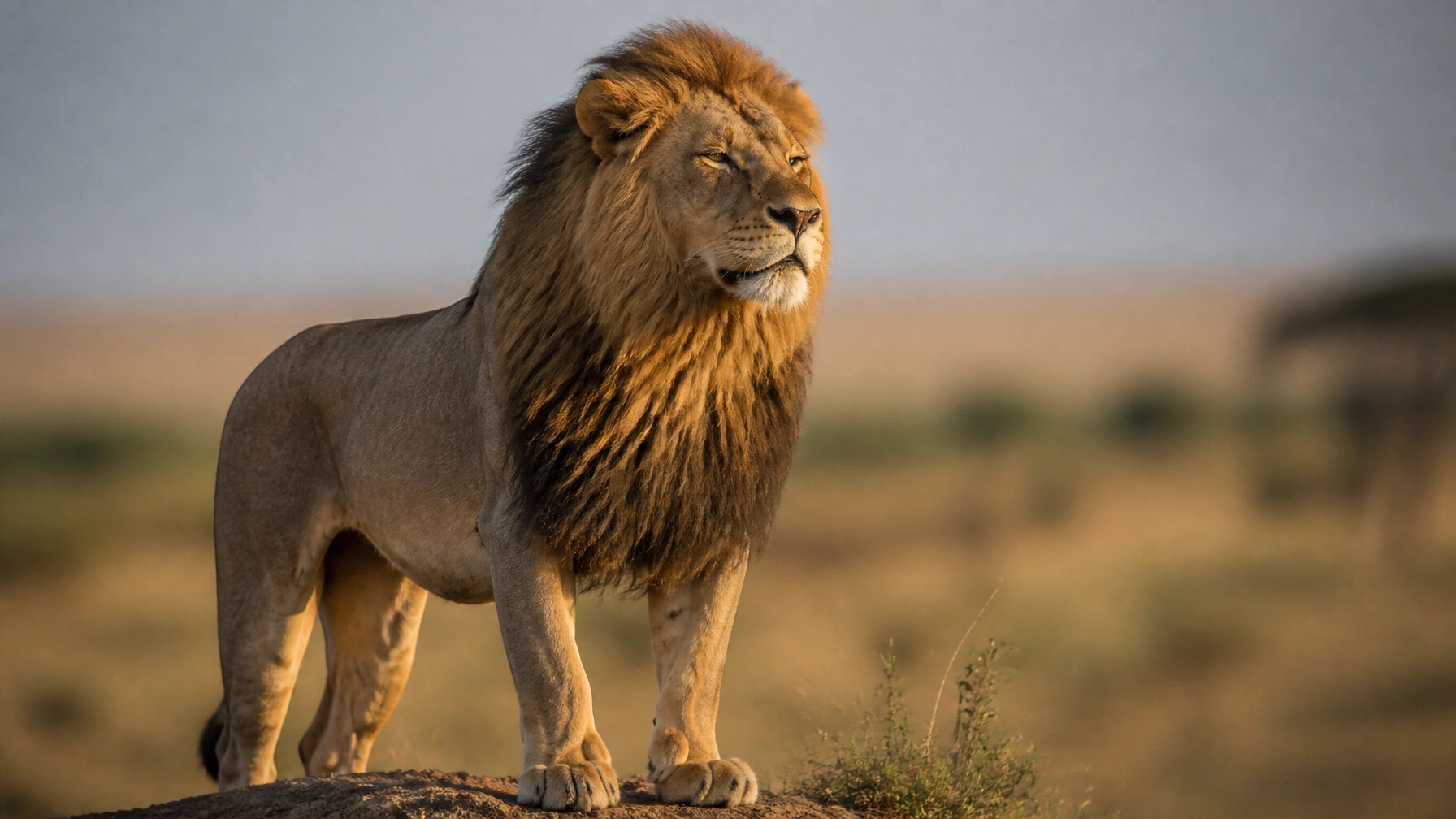
10 Reasons Your Lion Stock Photo Isn’t Driving Donations (And How to Fix It)
Stock photos of lions are everywhere.
Every conservation website. Every "save the big cats" flyer.
Most of them fail.
They look good. They are high-resolution. They are majestic.
But they don't move the needle.
If your donation button is gathering dust, your imagery might be the problem.
Here are 10 reasons why your lion photos aren't working: and the simple ways to fix them.
1. The "Perfect" Problem
Generic stock photos often show a lion in peak physical condition.
A perfect mane. No scars. Standing in a pristine sunset.
The issue:
Donors give to solve problems.
A perfect lion looks like it doesn't need help.
The fix:
Use authentic, documentary-style photography.
Show the reality of life in the wild.
Scars tell a story of survival.
Dust shows the environment.
Authenticity builds trust.
2. Lack of Eye Contact
Eyes are the window to empathy.
Many stock photos show a lion looking away, sleeping, or roaring at a distant rival.
The issue:
Without a gaze, there is no connection.
The viewer feels like an outsider watching a nature documentary, not a participant in a mission.
The fix:
Select "Species Spotlight" imagery where the animal makes direct contact with the lens.
It creates a "me and you" moment.
It turns a generic animal into an individual.
3. Missing Context
A lion in a void is just a lion.
A lion in a landscape is a conservation story.
The issue:
If the background is blurred into a green mush, the donor doesn't see the habitat.
They don't see the drought, the encroaching fences, or the shrinking territory.
The fix:
Use wider shots.
Show the lion within its ecosystem.
At Zoo Imagery, we focus on categories that include both tight portraits and wide landscape formats.
Show what is at stake.

4. No Visible Human Element
Conservation is a human effort.
If the photos only show animals, the donor forgets the work involved.
The issue:
Donors aren't just "buying" a lion.
They are funding rangers, scientists, and local communities.
The fix:
Pair your lion imagery with "Intervention" photos.
Show the tracking collars.
Show the ranger vehicles in the distance.
Show the human hands doing the work.
It makes the "ask" tangible.
5. Visual Fatigue
People have seen the "roaring male lion" a thousand times.
The issue:
The brain filters out common patterns.
If your image looks like every other NGO’s image, it is invisible.
The fix:
Choose rare moments.
A lioness caring for a cub.
A young male in a goofy mid-blink.
A pride resting in the rain.
Unexpected visuals stop the scroll.
6. The "Captive" Look
Donors are savvy.
They can often tell when an image was taken in a small enclosure vs. a wild reserve.
The issue:
If the photo feels "staged" or too clean, it loses its edge.
If the grass looks like a mowed lawn, the conservation message is diluted.
The fix:
Look for "Presented by" animal pages that feature specific, real-world locations.
Use imagery from professional stock libraries that verify the source of their photos.
7. No Story of Coexistence
Modern conservation is about people and wildlife living together.
The issue:
Traditional stock photography often depicts the wild as a place without humans.
This is a myth.
The fix:
Feature images that hint at the surrounding world.
Show the predator-proof bomas (enclosures).
Show the cattle that need protection from the lions.
This highlights the conflict that needs your donor’s solution.

8. Failure to Use User-Generated Content (UGC)
Sometimes professional photography feels too distant.
The issue:
It can feel like a corporate advertisement.
The fix:
Leverage tools like the ZooMedia app.
Allow your guests and visitors to share their own photos.
UGC feels real. It feels peer-to-peer.
A photo taken by a visitor on their phone can often drive more engagement than a $5,000 studio shot.
It shows a community of people who care.
9. Static Composition
A lion just sitting there is fine.
A lion on the move is better.
The issue:
Static images feel like the story has already ended.
Active images feel like the story is unfolding.
The fix:
Choose photos with "implied motion."
Walking. Scanning the horizon. Interaction between pride members.
Action implies a future.
Donors fund the future.
10. The Disconnect Between Image and Mission
If you are asking for money for a specific reserve in Namibia, but your photo shows a lion from a different subspecies or a different climate, the trust is broken.
The issue:
Inaccuracy kills credibility.
The fix:
Use sponsored species spotlights.
Ensure the image matches the specific geography of your campaign.
If you are talking about African lions, don't use a photo of an Asiatic lion (and vice-versa).
How to Fix Your Strategy Today
Changing your imagery doesn't have to be expensive.
It just has to be intentional.
- Audit your current photos.
Do they show a problem, or just a pretty animal? - Mix your media.
Combine high-end stock with UGC from the ZooMedia app. - Focus on individuals.
Give the lion in the photo a name and a story in your copy. - Use specific categories.
Don't just search for "lion." Search for "lion in savanna" or "lion with ranger."

Simple Solutions for Complex Missions
At Zoo Imagery, we provide the visuals that tell these stories.
We help you save time.
We help you save money.
Most importantly, we help you save species.
Our library is built for conservation marketing.
We understand the difference between a pretty picture and a powerful one.
Summary Checklist
- Authenticity over perfection.
- Eyes on the donor.
- Environment over void.
- Humans in the loop.
- Rare over cliché.

Don’t let your message get lost in a sea of generic imagery.
Make them look.
Make them feel.
Make them act.
Ready to upgrade your visual storytelling?
Explore our Stock Library
Connect with us on LinkedIn


