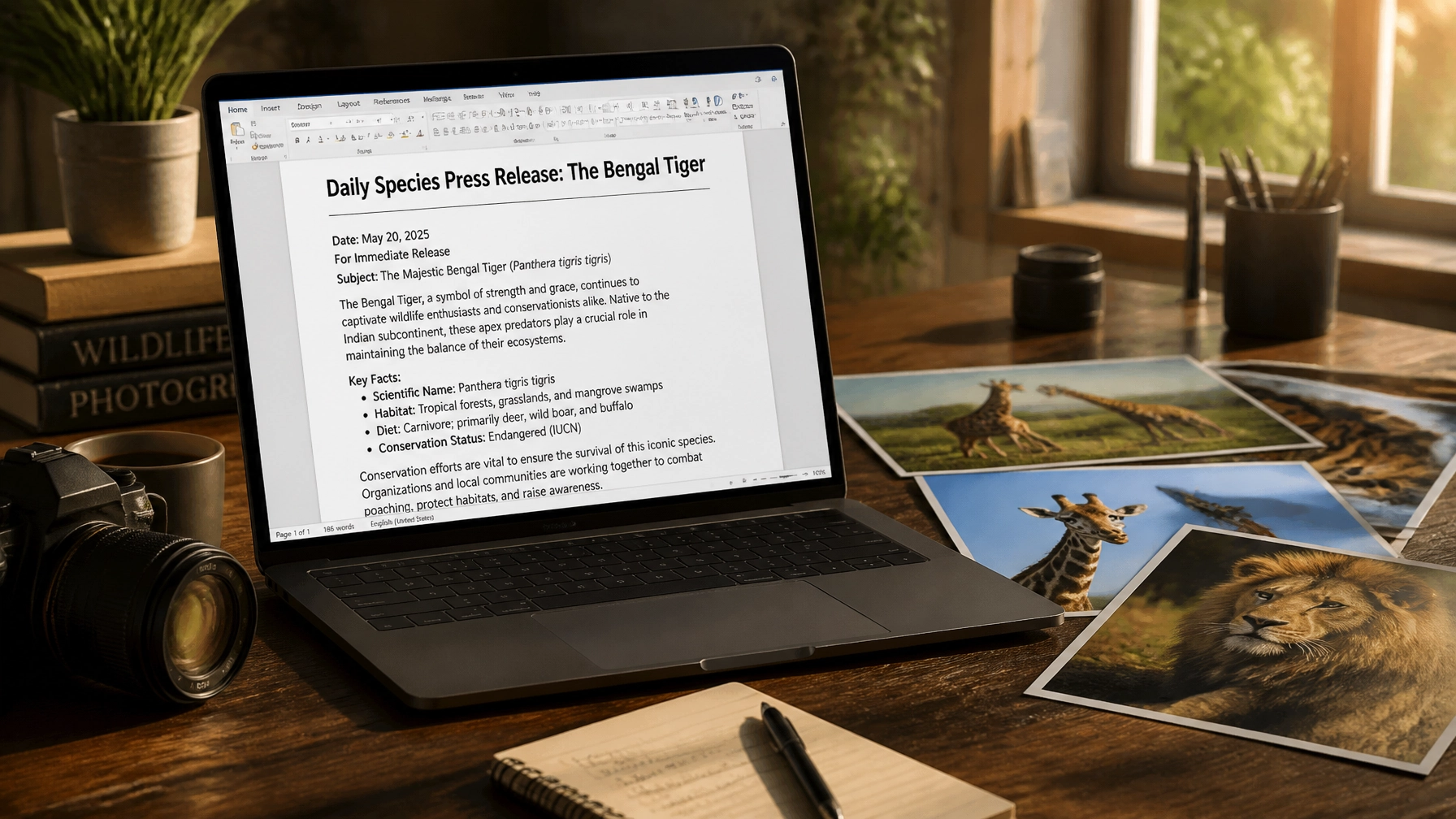
Wildlife Storytelling 101: A Beginner’s Guide to Mastering Daily Species Press Releases
Daily communication builds momentum. For zoos, aquariums, and conservation groups, a consistent voice is the bridge between the public and the wild. This guide simplifies the process of creating impactful daily species press releases.
The Purpose of Daily Updates
Information moves fast. To stay relevant, your message must be frequent and clear. Daily releases are not about major news every day. They are about constant visibility.
- Awareness. Keep your species in the public eye.
- Education. Share small, digestible facts daily.
- Connection. Build a relationship between the audience and individual animals.
- SEO. Fresh content drives traffic to your listing categories.
1. The Direct Structure
A daily release should be functional. Strip away the fluff. Follow this utilitarian format for every post.
Headline
Keep it news-like. State the species and the core action.
- Example: "New Data Shows Migratory Success for Arctic Birds."
The Lede
2–3 sentences max. Answer who, what, where, and why now. Use plain language.
Core Facts
Use bullet points for readability.
- Species status (Endangered, Vulnerable, Stable).
- Current location or habitat focus.
- One specific behavioral observation.
The Quote
A single sentence from a keeper or biologist. It should add human perspective, not just more data.
Call to Action
One specific instruction. "Learn more," "See the gallery," or "Support conservation."
2. Visual Storytelling
Images carry the weight of the story. A press release without a high-quality visual is a missed opportunity. At Zoo Imagery, we prioritize clarity and vibrancy.

Selecting the Right Image
- Clarity. The subject must be unmistakable.
- Emotion. Use "micro-expressions" in animals. A gaze, a stride, or a maternal moment.
- Technical Quality. High resolution only. No grainy shots.
- Format. Provide both landscape and portrait options for media outlets.
For specific species spotlights, use our dedicated categories:
3. The Conservation Angle
Conservation storytelling is about balance. Present the challenge. Offer the solution. Stay realistic.

Character, Conflict, Solution
Treat each species release like a micro-narrative.
- Character. Introduce the species. Give them a name if appropriate.
- Conflict. State the pressure they face (e.g., habitat loss in the African savanna).
- Solution. What is being done right now? Focus on tangible actions.
Avoid hyperbole. State benefits simply.
- Instead of: "We are heroically saving the planet."
- Use: "This project restored 50 acres of wetlands last month."
4. Efficiency and Consistency
Writing daily is a challenge. Systems prevent burnout.
Use a Content Bank
Create a spreadsheet of your primary species. Include:
- Common and scientific names.
- 3–5 "evergreen" facts.
- Historical milestones for your organization.
- Pre-approved quotes that can be lightly edited.
The Editorial Calendar
Plan themes to reduce daily decision-making.
- Monday: Mammals.
- Tuesday: Aquatic Life.
- Wednesday: Conservation Milestones.
- Thursday: Bird Species.
- Friday: User-Generated Highlights.
5. Leveraging User-Generated Content
Engagement isn't one-way. Your visitors are your best photographers.

The ZooMedia app allows guests to share their experiences in real-time. This creates a stream of authentic imagery you can feature in your daily releases.
Benefits of User-Generated Content (UGC)
- Authenticity. Real moments from real people.
- Reach. Guests share to their own networks, expanding your footprint.
- Data. Track ROI and engagement through the app interface.
- Variety. Different perspectives on the same species (e.g., Giraffes).
6. Collaborative Media Strategy
Your team is your greatest asset. Marketing professionals and animal care staff must align.

Streamlining the Workflow
- Centralize Assets. Use a shared library for all high-res photography.
- Brief Sessions. Short, weekly meetings to identify "stories of the week."
- Open Feedback. Allow keepers to correct technical details in the drafts quickly.
- Professional Baseline. Maintain a consistent tone across all departments.
Summary Checklist for Daily Releases
- Headline is specific and news-oriented.
- Lede covers who, what, where, and why.
- Facts are presented in a simple list.
- High-resolution image is attached or linked.
- Quote adds a human element.
- Clear CTA is included.
Mastering the daily species release is about discipline, not just creativity. Keep it simple. Keep it honest. Keep it visual.
For high-quality imagery to support your daily storytelling, browse our animal categories or connect with us on LinkedIn.
Explore more at zooimagery.com.


