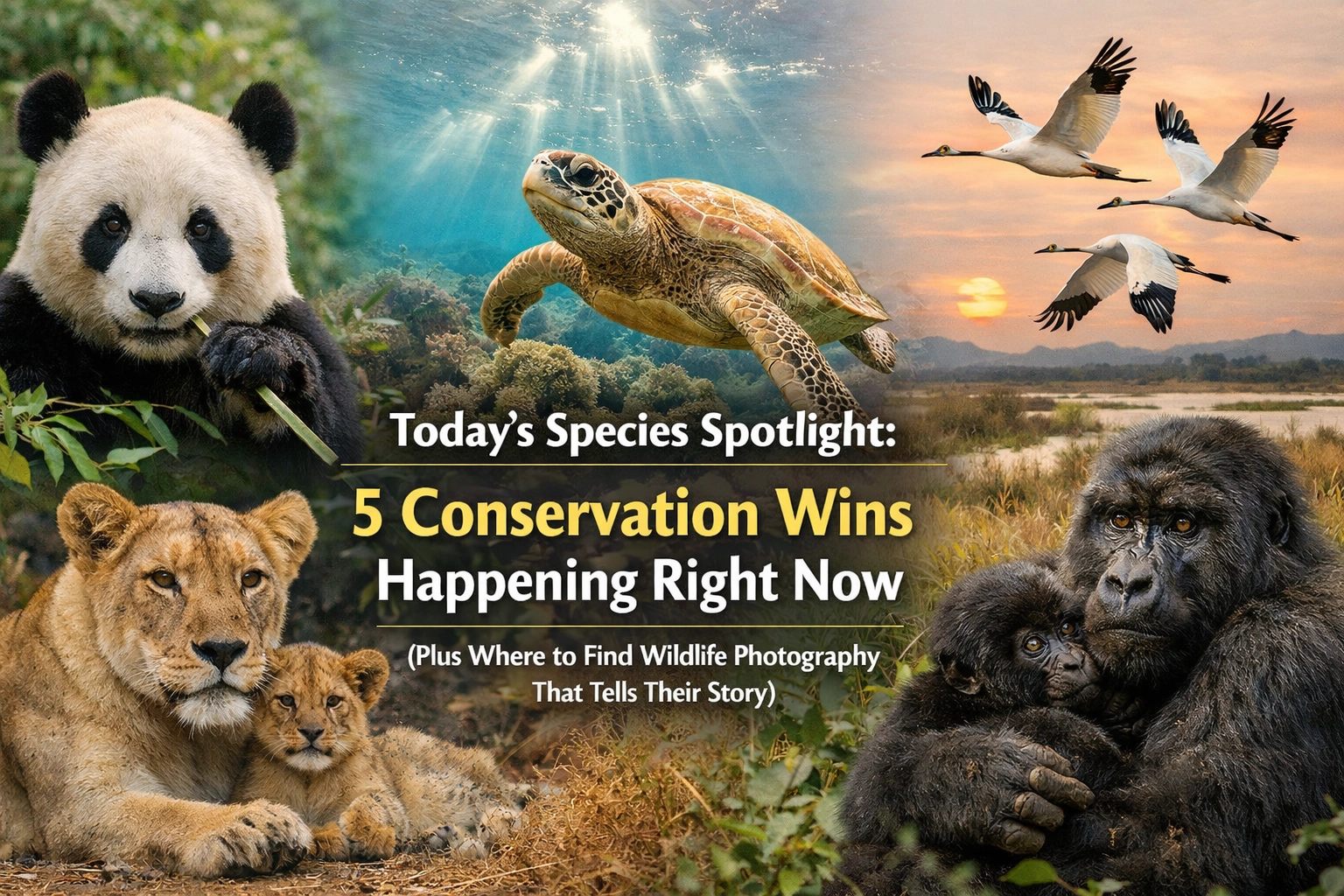
Today's Species Spotlight: 5 Conservation Wins Happening Right Now (Plus Where to Find Wildlife Photography That Tells Their Story)
Good news doesn't always make headlines. But conservation wins are happening right now: across continents, ecosystems, and species.
These aren't just feel-good stories. They're measurable successes backed by data, community action, and decades of dedicated work. And they deserve to be seen, shared, and celebrated.
Here's what's working in wildlife conservation today.
1. Big Cats Are Reshaping South Africa's Karoo
Lions and cheetahs are back in the Samara Karoo Reserve. The results? An entire ecosystem finding its balance again.
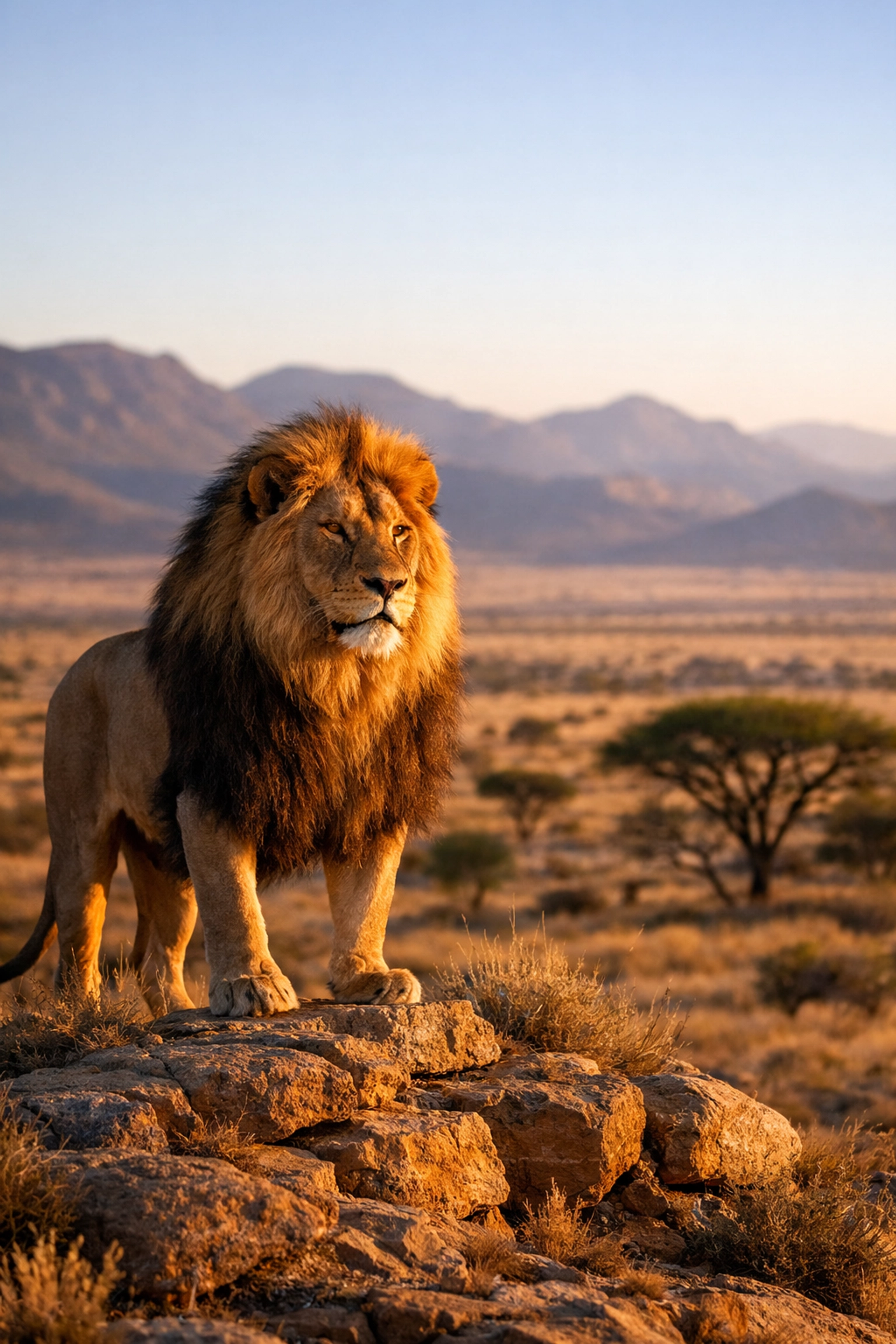
Wildebeest populations increased. Jackals shifted from hunting springbok lambs to their natural scavenging role. Springbok numbers bounced back as a result.
This is what apex predators do. They don't just exist at the top of the food chain: they stabilize it. Every level benefits when the natural order returns.
The lesson here is simple: restore the keystone species, and the rest follows.
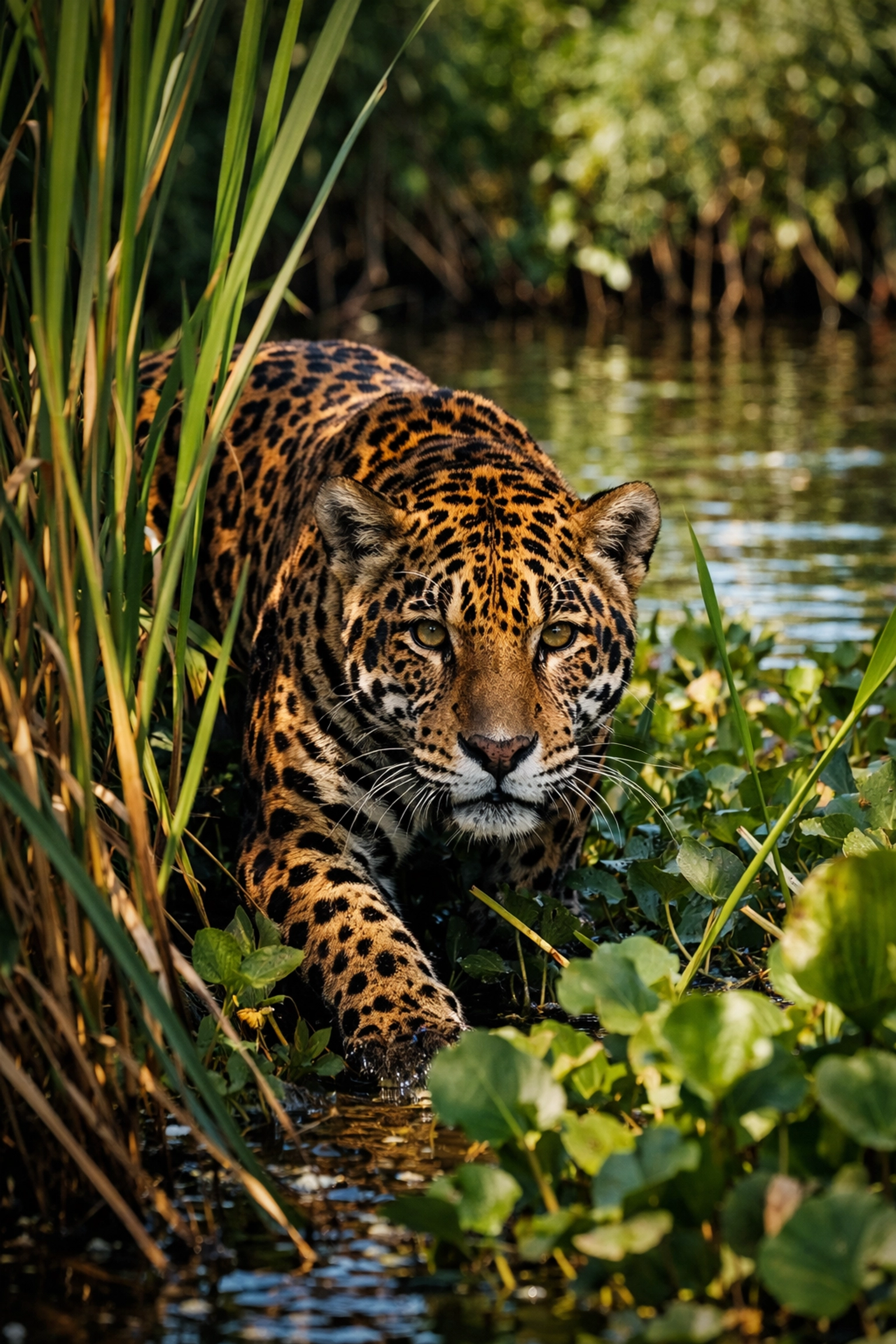
2. Jaguars Return to Argentina's Wetlands
The Iberá Wetlands were missing their top predator for decades. Now, jaguars are back.
They're controlling herbivore populations. Balancing predator dynamics. Creating new tourism opportunities that support local communities.
Argentina's wetlands have become one of the country's top wildlife-watching destinations. Conservation work doesn't just help animals: it builds economies, protects landscapes, and gives people a reason to invest in nature's future.
Jaguars didn't just return. They brought opportunity with them.
3. Scotland Rewrites Its Ecological Story
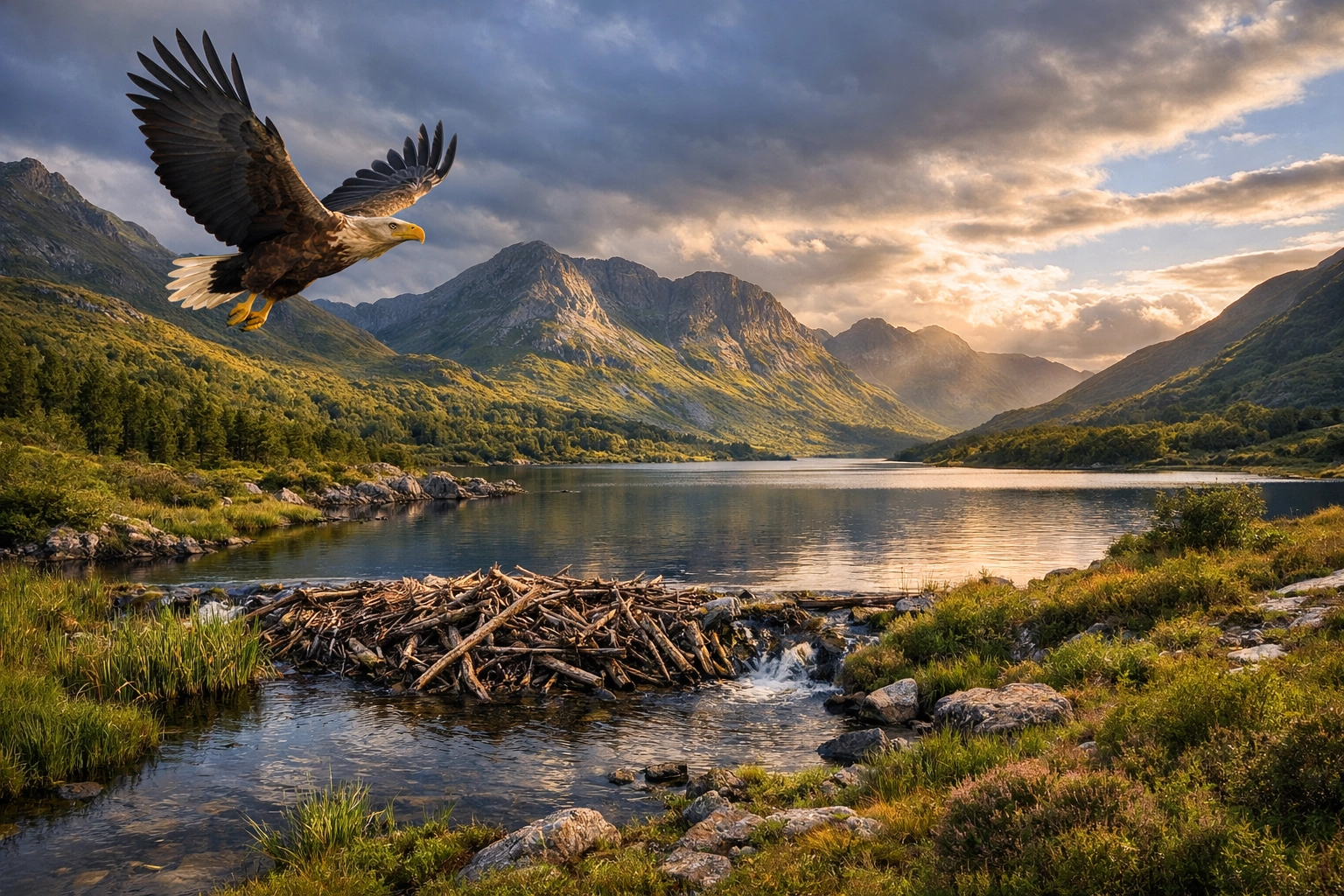
White-tailed eagles from Norway now patrol Scottish skies. Beavers engineer waterways again.
These reintroductions aren't symbolic. Eagles cycle nutrients between marine and terrestrial ecosystems. They limit prey populations and keep balance. Beavers reshape entire landscapes through dam construction, creating habitat for dozens of other species.
Scotland is proving that rewilding works: even in densely populated regions with centuries of human development.
The ecosystem remembers. Give it the tools, and it rebuilds itself.
4. Kenya Goes All-In on Wildlife Protection
The Sheldrick Wildlife Trust hit major milestones in 2025:
- Over 675 veterinary treatments on 1,460+ animals
- More than 7,000 foot patrols by Anti-Poaching Teams
- Black rhino populations climbing toward the 2,000-animal goal by 2037
Kenya is now halfway to that rhino target. Numbers like these don't happen by accident. They're the result of coordinated effort, consistent funding, and community buy-in.
The scale matters. This isn't a small pilot program: it's a national commitment.
5. Zimbabwe Moves 2,500 Animals to Beat Drought
Project Rewild Zambezi is relocating wildlife on an unprecedented scale. Over 101 elephants and 184 impala have already completed a 1,000km journey to areas with better water access and climate resilience.
This is one of southern Africa's most extensive live animal capture operations. It's also a glimpse into the future of conservation: adapting to climate realities while protecting vulnerable populations.
Moving 2,500 animals isn't easy. But neither is watching them die from drought.
Why Visual Storytelling Matters
These wins deserve documentation. Not just in scientific journals: in images that communicate urgency, progress, and hope.
Wildlife photography does more than capture moments. It builds empathy. It makes distant ecosystems feel personal. It turns data into something people care about.
Conservation storytelling needs visuals that match the scale of the work. Images that show apex predators in their restored habitats. Rewilded landscapes teeming with life. Teams on the ground doing the hard work.
This is where platforms like Zoo Imagery come in.
Finding Photography That Tells the Whole Story
Not all wildlife photography serves conservation. Stock libraries are often filled with staged shots, captive animals, or generic imagery that doesn't reflect real ecosystems or conservation challenges.
Zoo Imagery focuses on authentic wildlife content: images that support education, conservation messaging, and ESG-aligned campaigns. The kind of visuals that match the seriousness of the work happening in places like Samara Karoo, Iberá Wetlands, and Kenya's reserves.
Organizations need photography that reflects reality. Marketing teams need imagery that aligns with their conservation commitments. Storytellers need visuals that don't compromise the message.
Quality matters. Context matters. Authenticity matters.
What Comes Next
These five wins are just a snapshot. Conservation work is happening in every corner of the planet: sometimes quietly, always persistently.
The question isn't whether good things are happening. They are. The question is whether those stories get told in a way that inspires action, funding, and continued commitment.
Photography plays a role in that. So does accessible storytelling. So does celebrating progress without losing sight of how much work remains.
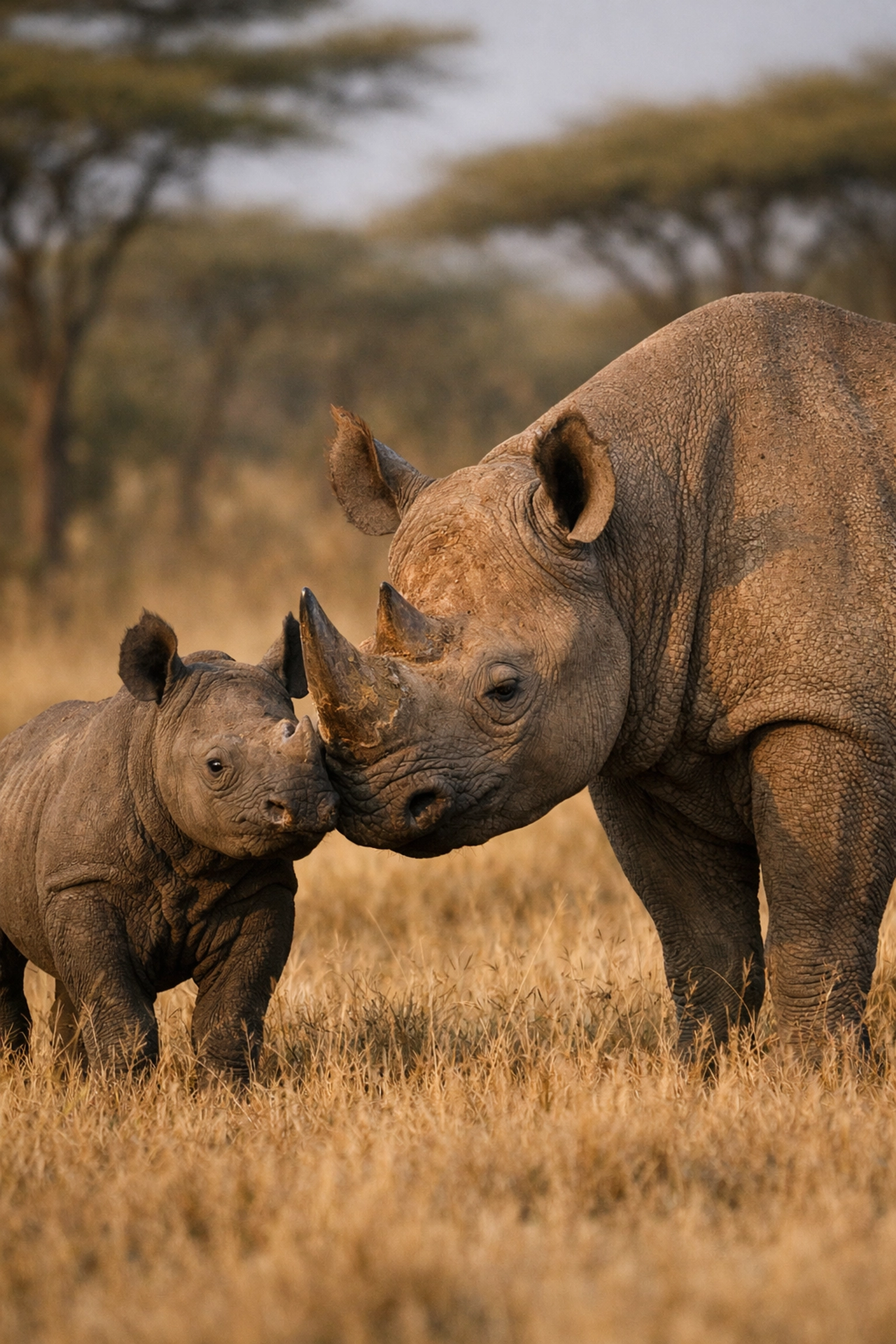
Every species spotlight is a reminder: nature can recover when given the chance. Ecosystems remember their balance. Communities benefit when wildlife thrives.
The wins are real. The work continues.
Looking for wildlife photography that supports your conservation storytelling? Explore authentic, impactful imagery at zooimagery.com or connect with us on LinkedIn to see how visual content can amplify your mission.


