The Ultimate Guide to Ethical Wildlife Stock Photos: Everything You Need to Succeed
Ethics in wildlife photography are no longer optional.
In 2026, audiences demand authenticity. They spot forced behavior. They ignore over-processed pixels. For marketers, creative professionals, and zoo directors, selecting the right image is a statement of values.
High-quality animal imagery should do more than fill a space. It should tell a story of respect.
The Foundation: Welfare First
Animal welfare is the primary metric.
An image is unethical if the subject was stressed, coerced, or endangered to capture it.
What to avoid
- Forced interaction: Animals being held, ridden, or dressed in clothes.
- Visible distress: Flattened ears, bared teeth, or frantic movement caused by proximity.
- Unnatural behavior: Large cats performing "tricks" or primates in domestic settings.
- Baiting: Predators fixated on human-placed food sources.
What to prioritize
- Natural postures: Calm, resting, or active behaviors typical of the species.
- Respectful distance: Shots that show the animal in its environment without signs of alarm.
- Authentic habitat: No trampled vegetation or rearranged landscapes for a "cleaner" view.
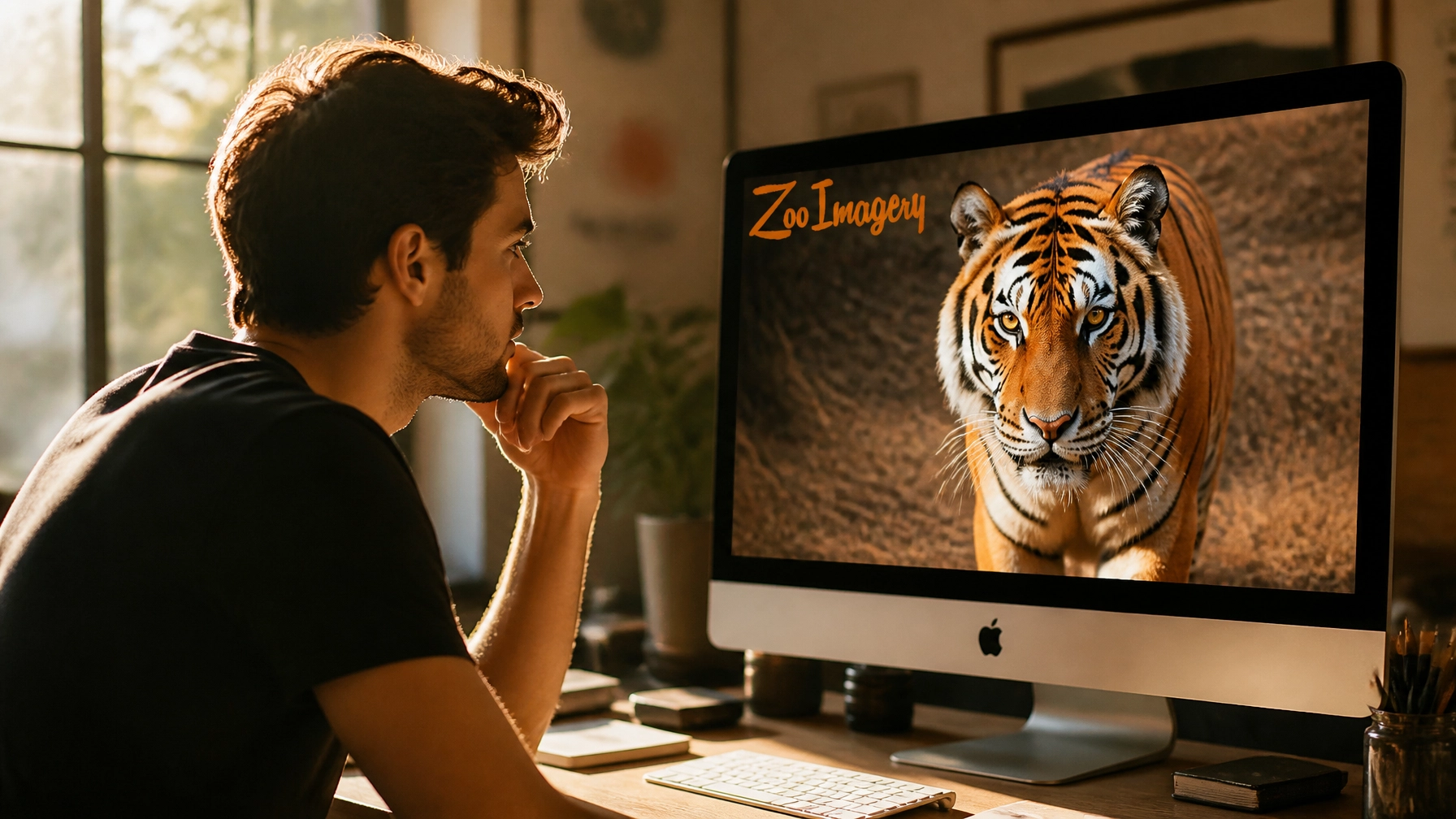
Zoo Imagery specializes in high-resolution, documentary-style photography. We prioritize clarity and natural lighting. We ensure the animals’ well-being is reflected in every frame.

Truth in Context: Captive vs. Wild
Transparency builds trust.
Marketing for zoos and aquariums requires a clear distinction between wild counterparts and resident animals.
Captivity Disclosure
Ethical guidelines require stating when an animal is in a controlled environment.
- Wild imagery: Use these for global conservation stories. Link to species facts.
- Captive imagery: Use these for facility-specific news. Showcase welfare and care.
Never imply a wild-roaming animal is at your facility. Never suggest a captive animal is in the wild.
Our library offers diverse categories to help you stay accurate:
Marketing Insights: The Authenticity Shift
The "perfect" stock photo is dying.
Audiences in 2026 prefer the "documentary" look. They want to see the enrichment devices. They want to see the real textures of the habitat.
The ROI of Realism
- Higher engagement: Authentic photos feel relatable.
- Credibility: Transparent imagery supports conservation claims.
- Emotional connection: A raw moment beats a staged one every time.

Leveraging User-Generated Content
Static stock is only half the battle.
Zoos now use the ZooMedia.us app to bridge the gap. Guests take photos. Guests share them. The app manages the flow.
The benefits:
- Real-time visitor engagement.
- High-volume content creation.
- Measurable ROI on guest experiences.
When your visitors become your photographers, your brand becomes a community.

Technical Standards for 2026
Quality matters as much as ethics.
Low-resolution or grainy images suggest a lack of professionalism. In the era of high-density displays, every pixel counts.
Key Technical Specs
- High Resolution: Sharp textures in fur, feathers, and scales.
- Natural Lighting: "Golden Hour" or soft morning light. Avoid flat office lighting.
- Depth of Field: Shallow focus to draw the eye to the subject’s expression.
- Minimal Processing: Avoid heavy filters. Stay true to nature’s palette.

The Selection Checklist
Before you license, ask these seven questions:
- Is the animal calm? Look for relaxed eyes and ears.
- Is the habitat intact? No signs of human interference in the background.
- Is the source credible? Ensure images come from accredited or ethical sources.
- Is it a realistic depiction? Avoid improbable poses or "too perfect" composites.
- Does it model good behavior? Avoid images showing people breaking zoo safety rules.
- Is it technically superior? Crisp, clear, and high-vibrancy.
- Does it align with your message? Choose imagery that supports a conservation story.
Conservation Storytelling
Stock photography isn't just a placeholder. It’s an opportunity to educate.
Use your visual assets to explain:
- Veterinary Care: Show the work behind the scenes.
- Environmental Enrichment: Highlight how animals stay active.
- Species Recovery: Connect your residents to their wild cousins.
By choosing ethical photos, you align your marketing with the core mission of modern wildlife institutions: protection and education.
Succeed with Zoo Imagery
Quality animal photography saves time. It saves money. It protects your reputation.
We provide stunning, diverse categories of animal imagery. From birds and fish to pandas and hyenas, our library is built for creative professionals who care about the details.
Make your next campaign count. Use imagery that inspires.
Browse our collection today: zooimagery.com
Follow us for more insights: Zoo Imagery on LinkedIn


