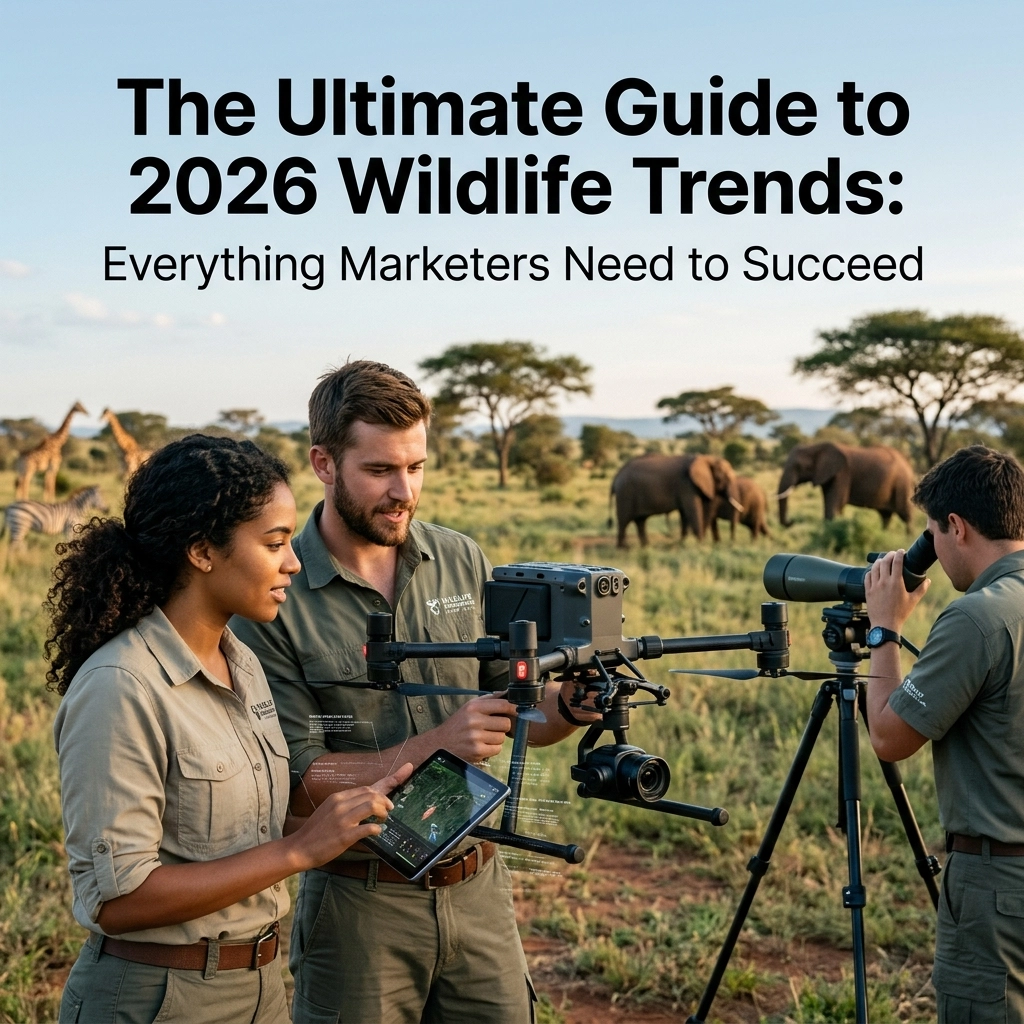
The Ultimate Guide to 2026 Wildlife Trends: Everything Marketers Need to Succeed
Market Snapshot: May 2026
Wildlife tourism is no longer a niche. It is a $211.5 billion industry.
By the end of this year, the market will grow toward $220 billion. The trajectory points to $380 billion by 2033. For marketers at zoos, aquariums, and digital media agencies, the opportunity is massive. But the rules have changed.
Consumers in 2026 do not want "eco-friendly" labels. They want proof of survival.
1. The 2026 Audience Profile
Who is spending?
Forty-five percent of the market share belongs to the 20-40 age bracket. These are Millennials and Gen Z professionals. They are often digital nomads. They have flexible itineraries. They value:
- Immersion. They want to be close, not behind glass.
- Social Proof. Experience sharing is their primary currency.
- Transparency. They check the math on conservation claims.
- Expertise. They pay for naturalists, not tour guides.

2. Channel Strategy: Authenticity Over Ads
Traditional retail marketing is failing. Magazines and trade shows are legacy media. In 2026, discovery happens through:
YouTube and Long-form Storytelling
Creators are the new travel agents. They produce "Day in the Life" content at jungle resorts. They review camera gear in the field. Brands that partner with these creators see higher trust scores than those using traditional commercials.
Instagram and Aesthetic Value
Visuals drive discovery. A single high-quality image of a rare species can stimulate a local economy. Photography-focused tours are a major revenue driver for 2026.
Community Platforms
Consumers trust peers. Online forums and gear review sites are where booking decisions are made. If your zoo or aquarium isn't mentioned in these communities, you don't exist to this demographic.
3. Real Conservation: Beyond the Buzzwords
The term "ESG" has been stripped of its utility. In 2026, marketers must focus on direct action. Stop using buzzwords. Use results.
What works now:
- Habitat Restoration. Show the acres bought. Show the fences built.
- Anti-Poaching. Highlight the rangers. Share the technology used for tracking.
- Community-Led Models. Show how tourism funds local schools and medical clinics.
- Species Survival. Track the individual animal. Move from "Saving the Species" to "Saving this Rhino."
At Zoo Imagery, we focus on these narratives. We provide the visual assets that show the work, not just the "vibe."
4. Tech in the Wild
Marketing in 2026 requires a tech-forward approach. Innovation is the differentiator.
- AI and Drones. Used for animal tracking and population counts. Marketers should use this footage to provide "behind-the-scenes" value.
- Mobile Tracking. Apps that show real-time wildlife movements (where ethical) keep visitors engaged.
- Virtual Pre-briefings. High-end tours now start with a VR or AR briefing before the visitor even leaves home.
- Digital Nomad Visas. Countries like Costa Rica and Kenya are attracting long-term visitors. These travelers aren't looking for a weekend trip. They want a month of "work-from-the-wild."

5. Marketing Insights for Zoos & Aquariums
Zoos and aquariums are the front lines of wildlife education. To succeed in 2026, move away from generic "visit us" campaigns.
The "Presented By" Model
Create sponsored species spotlights. Instead of a general donation, allow corporate partners to sponsor a specific animal’s care. Create a dedicated page for that animal.
- Live feeds.
- Monthly health updates.
- Conservation milestones.
Sponsored Animal Pages
Digital media assets are the backbone of these pages. High-resolution, professional stock photography allows for a premium feel without the cost of a full-time production crew.
Ethical Encounters
Marketers must address the "Sustainability Paradox." How do you grow visitor numbers without degrading the environment?
- Visitor Caps. Use "exclusive" and "limited entry" as a marketing hook.
- Impact Fees. Clearly state how much of the ticket price goes directly to field work.
- Education First. Every interaction must have a learning outcome.
6. Regional Growth Centers
Where is the investment going?
- Africa (Kenya/Tanzania). Focus on anti-poaching and massive protected area expansion.
- Asia (India). Community-led trekking and tiger conservation.
- Latin America (Costa Rica). The gold standard for integrated eco-lodges.
- USA (Yellowstone/National Parks). High demand for expert-led, small-group expeditions.

7. The Competitive Advantage Checklist
To outperform in 2026, your marketing team needs:
- Authentic Digital Communities. Not just followers. People who talk to each other.
- Expert Credentials. Feature your naturalists and biologists as the faces of the brand.
- Transparency. Open the books on conservation impact.
- Flexibility. Offer modular itineraries and easy booking tools.
- Visual Assets. Use high-quality imagery to tell the story of the animals you protect.
Why Zoo Imagery Matters
We understand the shift. We are not just a stock library. We provide the digital media that fuels 2026 wildlife campaigns. Simple. Direct. Effective.
Our library helps you:
- Build trust through authentic visuals.
- Support ESG-aligned campaigns with hard evidence.
- Tell the story of conservation without the fluff.

The Bottom Line
Marketing wildlife in 2026 is about truth.
The audience is smarter. The tech is better. The stakes for the animals are higher. Move away from traditional advertising. Build a community around real results.
If you need the visuals to make it happen, we are here.
Next Steps:
- Explore our About Us page to learn how we work.
- Read more insights on our Blog.
- Connect with us on LinkedIn.
Action-Focused Marketing.
Visible Conservation.
Zoo Imagery.
Note: For more information on our privacy standards, visit our Privacy Policy.


