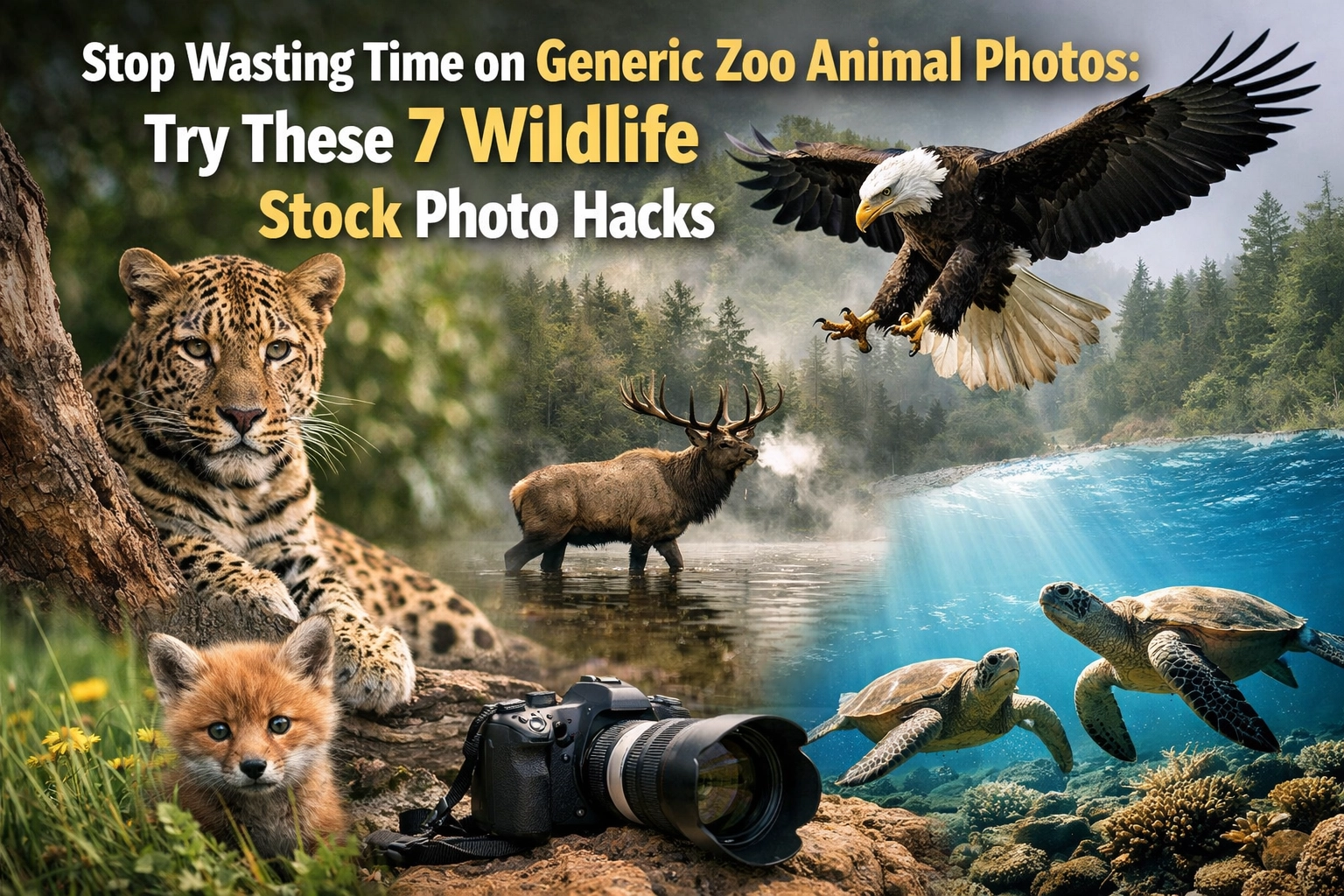
Stop Wasting Time on Generic Zoo Animal Photos: Try These 7 Wildlife Stock Photo Hacks
Generic zoo shots all look the same. Animals behind glass. Wide shots. Flat lighting. Nothing special.
Your audience scrolls past them.
Here's how to capture wildlife photography that actually stands out: without expensive gear or exotic locations.
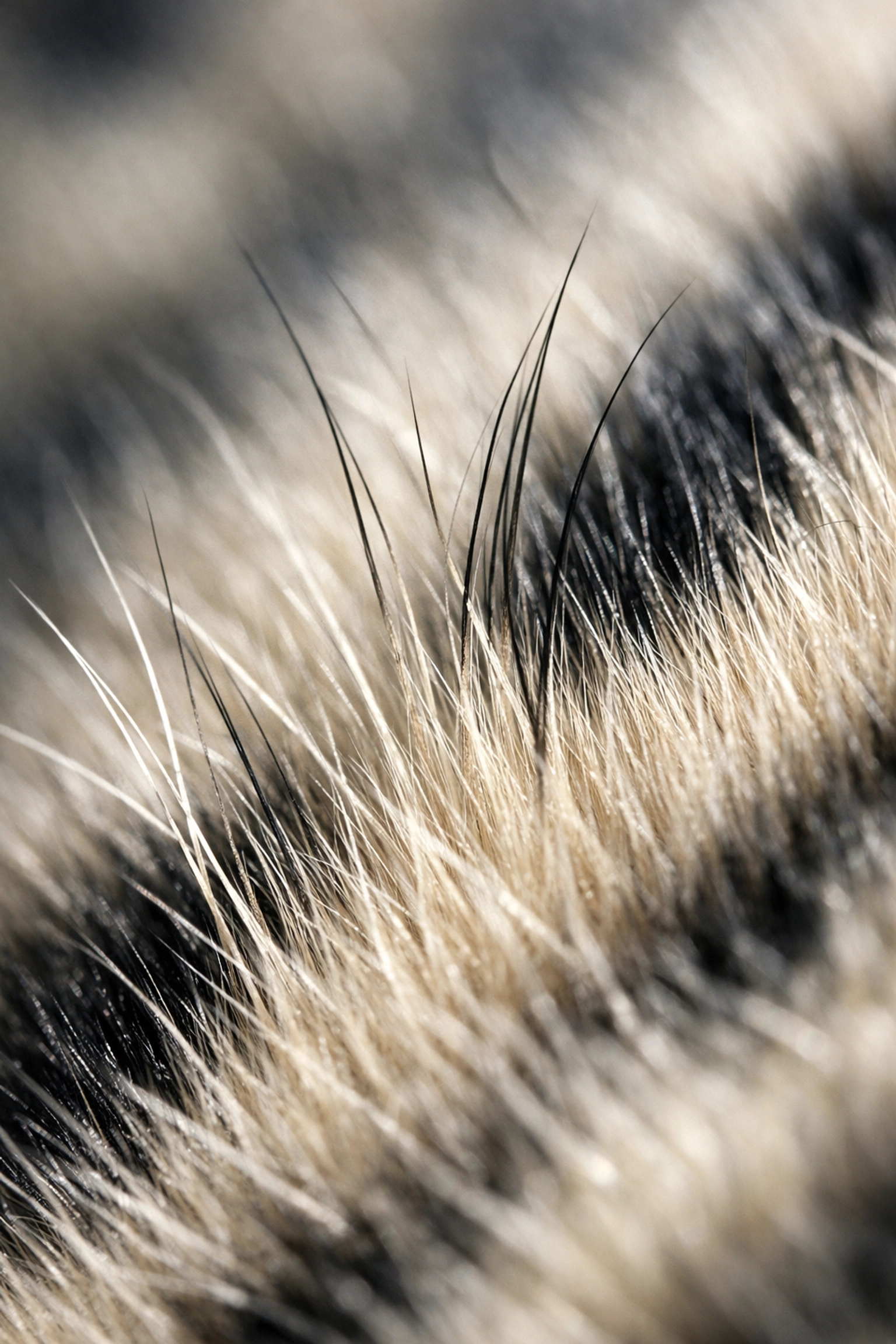
1. Zoom In on Texture and Details
Stop trying to fit the whole animal in frame.
Get close. Really close.
Focus on:
- Fur patterns
- Feather details
- Scales and skin texture
- Eye reflections
- Horn or claw structure
These intimate details reveal what viewers never notice in person. A polar bear's individual guard hairs. The iridescent shimmer in a peacock feather. Reptile scales catching light.
Detail shots work perfectly for social media, headers, and design projects. They're unique. They're engaging.
2. Change Your Perspective
Eye-level changes everything.
Most zoo visitors shoot from standing height, looking down. Every photo looks the same because everyone shoots from the same angle.
Try this instead:
- Crouch to match the animal's eye level for intimacy
- Shoot from above to highlight body patterns
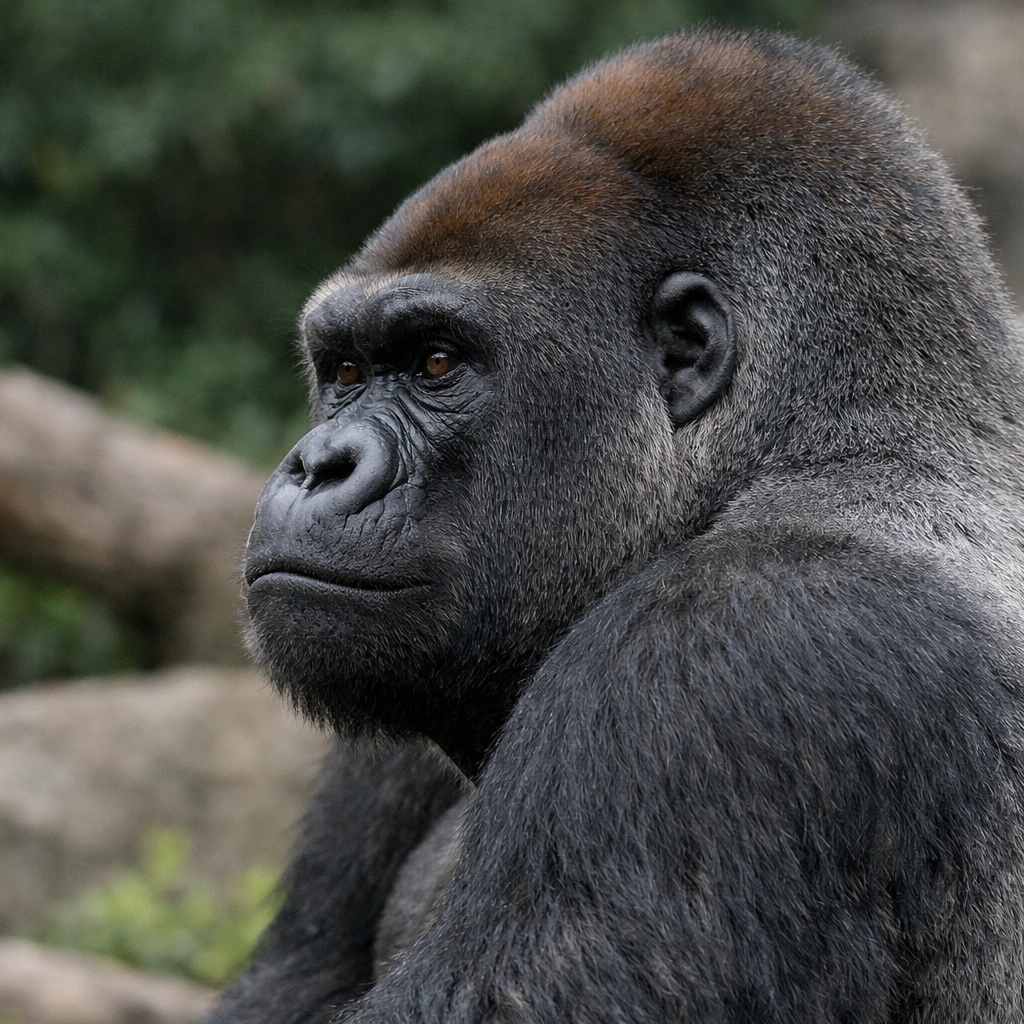
- Capture over-the-shoulder angles that draw viewers into the scene
An eye-level shot of a lion creates connection. Looking down at a giraffe's spots creates abstract beauty. Over-the-shoulder on a gorilla makes viewers feel like they're there.
Different angles = different stories.
3. Master the Silhouette
Backlighting creates drama without fancy equipment.
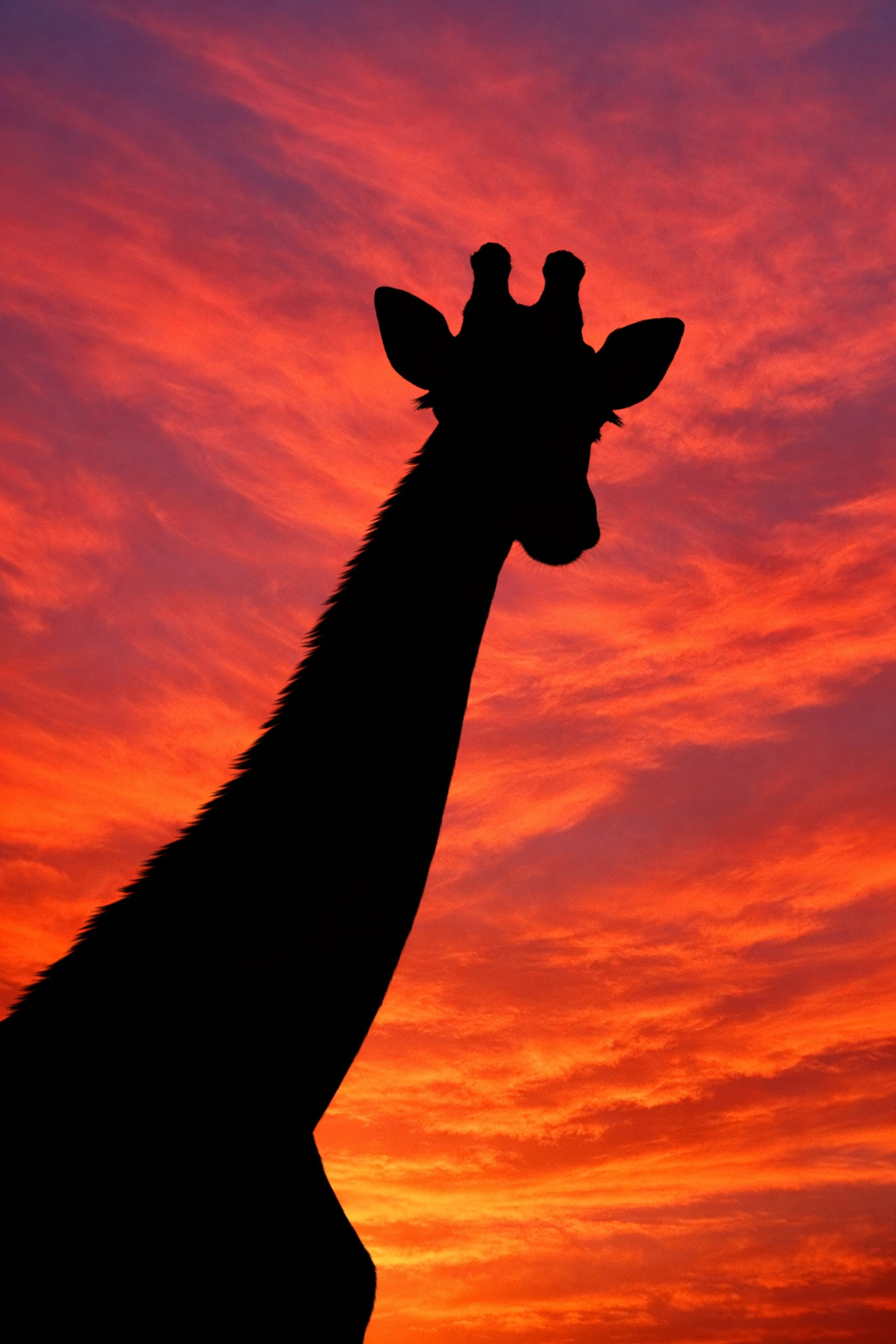
Position animals against bright backgrounds: sky, water, setting sun. Expose for the background. Let the subject go dark.
This works especially well for:
- Birds in flight
- Animals with distinctive shapes
- Golden hour and sunrise moments
- Subjects against open enclosures
Silhouettes demand sharp focus. But they eliminate distracting backgrounds and create striking, graphic images that grab attention.
No complicated lighting setup required.
4. Anticipate the Action
Generic shots are static. Animals just standing there.
Study behavior instead.
Watch for:
- Feeding times and routines
- Play and social interaction
- Grooming patterns
- Hunting or stalking postures (in big cats)
- Bathing and preening (in birds)
Set up before the action happens. Pre-focus. Wait.
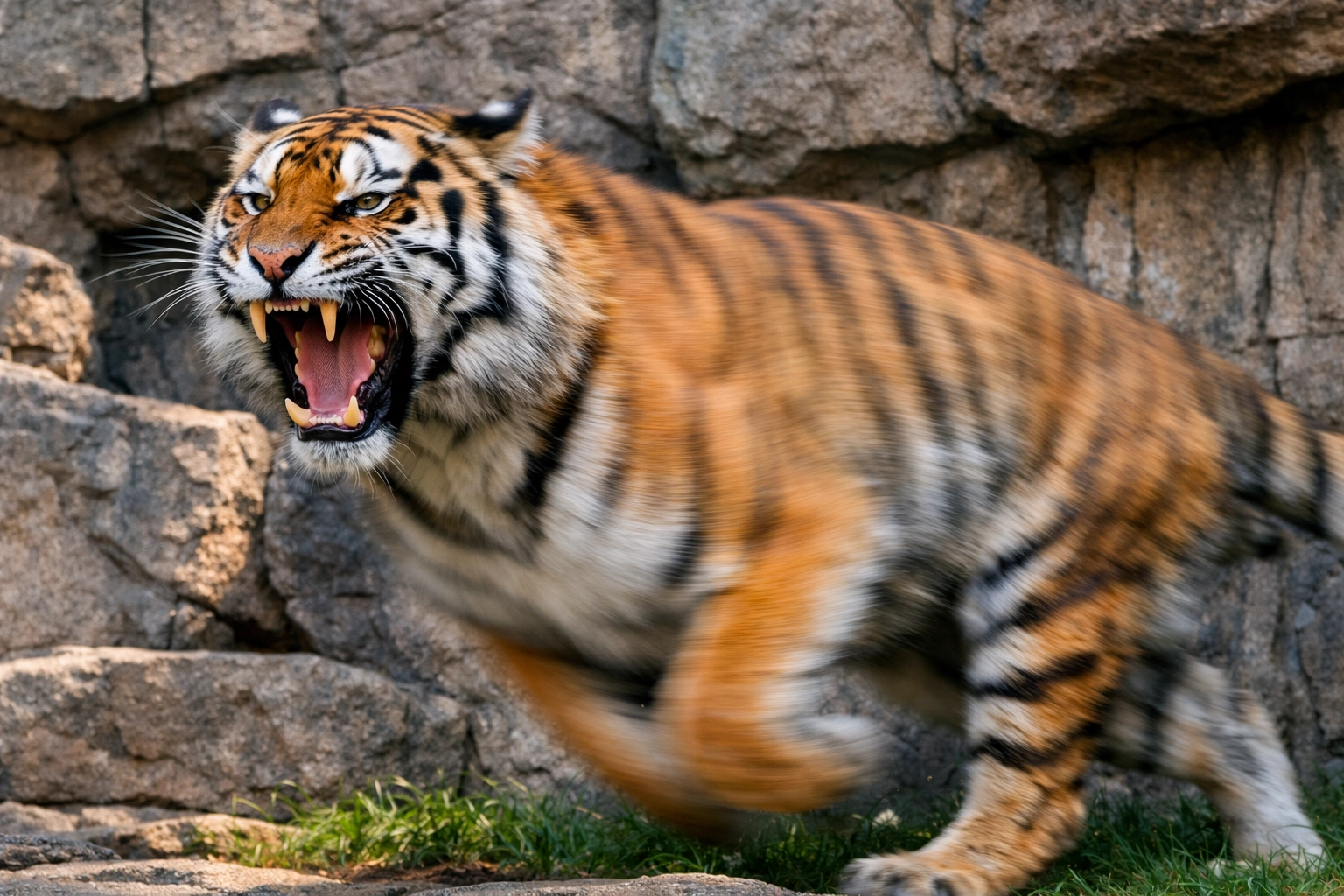
The difference between a sleeping tiger and a tiger mid-yawn? Everything.
Action shots tell stories. Static shots just document.
5. Use Motion Blur Intentionally
Blur isn't always a mistake.
Mount your camera on a tripod. Keep the background sharp. Let the animal move through the frame.
This creates:
- Sense of speed and energy
- Dynamic movement
- Professional, intentional aesthetic
- Unique perspective on familiar subjects
Works great for swimming animals, running mammals, flying birds. The sharp background proves the blur was purposeful, not accidental.
6. Find Uncommon Angles in Common Spaces
You don't need rare animals. You need fresh perspectives.
Same zebra enclosure everyone photographs? Look for:
- Reflections in water features
- Shadows cast on rocks or walls
- Fence patterns creating natural frames
- Negative space that isolates the subject
- Unusual crops that remove context
Most photographers aim for the obvious shot. You're looking for what they miss.
Walk the entire enclosure. Observe from every angle. The best shot usually isn't from the main viewing area.
7. Let Light Do the Work
Strategic lighting reveals what standard shots hide.
Align yourself so sunlight emphasizes:
- Fur or feather texture
- Movement and gesture
- Eye shine and expression
- Natural colors and iridescence
Side lighting creates depth. Backlight creates separation from backgrounds. Direct light can be harsh: or it can highlight exactly what makes an animal distinctive.
Time of day matters. Golden hour isn't just pretty: it's functional. Soft light reveals detail without blowing out highlights.
Why This Matters for Your Projects
Stock photo buyers don't want generic zoo shots.
They want images that:
- Catch attention immediately
- Work across different uses
- Feel authentic and intimate
- Tell visual stories
These seven techniques transform ordinary zoo visits into professional stock photo sessions. No safari required. No telephoto lens needed.
Just intention. Observation. Strategy.
Start Shooting Differently Today
Next zoo visit, pick one technique. Master it before trying another.
Zoom in tight on one animal. Capture ten different detail shots. Or spend thirty minutes studying behavior patterns. Or experiment with silhouettes at closing time.
One technique. Fully explored.
That's how you build a portfolio that stands out.
Need authentic animal photography for your next project? Browse our collection of professional wildlife and zoo images at Zoo Imagery( where every shot tells a story.)


