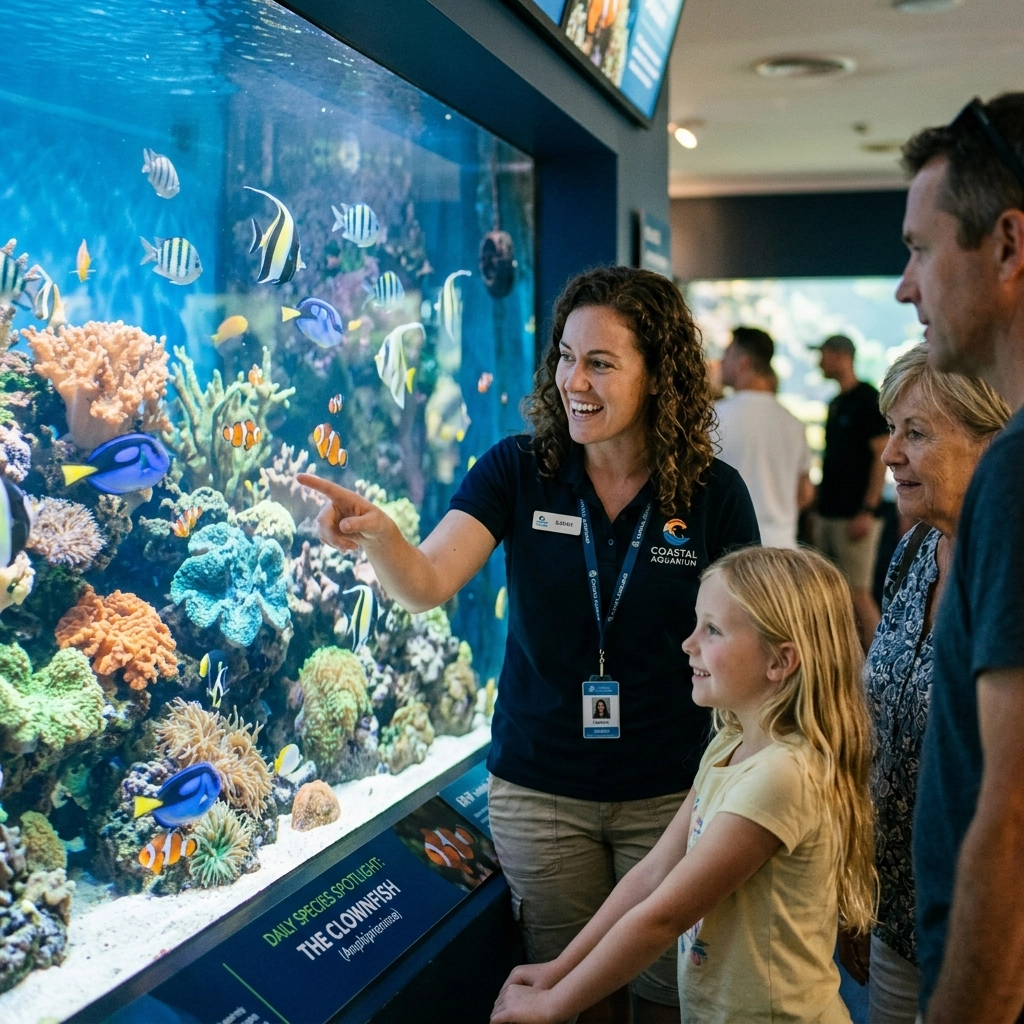
Species Spotlights Matter: Why Daily Conservation Stories Are the Key to Better Aquarium Marketing

Marketing for aquariums is changing. Static displays are no longer enough. The audience wants a connection. They want to know why a species matters. They want to see the work behind the glass.
At Zoo Imagery, we see this every day. High-quality visuals are the foundation. But the story is the bridge. Daily conservation stories are the most effective way to build that bridge.
The Shift in Audience Interest
People are tired of generic advertisements. They scroll past "Visit Us" banners. They stop for stories. Specifically, they stop for species they don't know yet.
Research shows a surprising trend. Iconic animals: the "stars" of the aquarium: get attention. But lesser-known species often drive deeper engagement. A story about a rare snail or a specific coral reef restoration project can outperform a generic shark post.
Why? Because it feels new. It feels like an inside look. It feels like a secret shared between the aquarium and the visitor.
Data: The Engagement Gap
A recent LSE study highlights a critical point. Storytelling increases engagement with wildlife conservation. The most effective stories involve human impact.
- Clicks increase when humans are part of the narrative.
- Engagement spikes when the "outrage effect" is used correctly.
- Highlighting how human behavior affects a specific animal creates a personal link.
However, clicks are only the start. The goal is long-term support.

The Science of Daily Habits
The Frontiers study provides more insight. It found that aquarium keeping and regular exposure to aquatic life activates science communication. Over time, this leads to a personal response.
Consistent, daily content creates a "latent" science advocate.
- Day 1: A visitor sees a photo of a Giant Sea Bass.
- Day 5: They read about its habitat loss.
- Day 10: They learn about local breeding programs.
- Day 30: They view the aquarium as a conservation leader, not just a weekend destination.
Daily spotlights turn a one-time visitor into a long-term advocate. It moves the needle from "entertainment" to "mission."
Species Spotlights in Practice
What does a daily spotlight look like? It isn't just a fun fact. It is a narrative.
The Giant Sea Bass
Instead of saying "they are big," talk about their return from the brink. Show the researchers measuring them. Use high-resolution imagery to show the unique patterns on their skin.
The Abalone
Focus on the "outrage effect." Explain how they almost vanished. Then, show the successful spawning in the lab. This is a story of hope. It is a story of human intervention working.
The Sea Otter
Move past the "cute" factor. Focus on their role as a keystone species. Show them as the guardians of the kelp forest.

The "Presented By" Strategy
Aquariums need sustainable ways to fund these stories. This is where sponsored species spotlights come in.
We suggest "Presented by" animal pages.
- A local business sponsors the Sea Otter page.
- Their logo sits quietly next to a high-quality conservation story.
- The brand is associated with a positive mission.
- The aquarium gets the resources to produce better content.
This avoids the "corporate" feel. It keeps the focus on the animal. It aligns the sponsor with environmental responsibility.
Zoo Imagery Milestones: May 2026
Today is May 9, 2026. We have reached a new milestone at Zoo Imagery. Our archive of conservation-focused stock photography has expanded. We now offer more specific species spotlights than ever before.
We focus on the "unseen" animals. The ones that need the most help telling their story.
- Rare invertebrates.
- Deep-sea specimens.
- Local freshwater species.
Our goal is simple. We provide the visual tools. You tell the story.

Why Daily Cadence Matters
One "big" campaign per year is a mistake. It is expensive and temporary.
Daily stories are different.
- They are cost-effective.
- They keep the aquarium at the top of the social feed.
- They build a library of content that works for years.
When you spotlight a different species every day, you show the breadth of your work. You show that every animal in your care is a priority.
Overcoming the Action Gap
The LSE research warns of the "Action Gap." People click, but they don't always act.
To fix this, every daily story needs a "What's Next."
- "Learn more about our breeding program."
- "See this animal at the aquarium this weekend."
- "Support our local coastal cleanup."
Link the story to a physical or digital action. Use the momentum of the story to drive the visitor toward the mission.
Simplicity in Visuals
Don't overcomplicate the imagery. A single, powerful photo is better than a busy collage.
- Clean backgrounds.
- Natural lighting.
- Focus on the eyes or unique textures.
Zoo Imagery specializes in these types of shots. We remove the clutter. We let the species speak for itself.
The Professional Balance
Aquarium marketing should be professional but approachable. Avoid industry jargon.
Don't say: "Ex-situ conservation efforts for teleostean fishes."
Do say: "How we are saving this fish in our labs."
Keep it simple. Keep it direct.
A Strategy for the Future
The future of aquarium marketing isn't in ticket sales alone. It is in becoming a trusted voice for the ocean.
Daily species spotlights achieve this. They prove that you are an authority. They prove that you care.
By focusing on conservation storytelling, you move beyond being a "local attraction." You become a global contributor to wildlife safety.
Summary of Benefits
- Increased Engagement: Lesser-known species spark curiosity.
- Brand Trust: Consistent stories build a reputation for conservation.
- Sponsorship Opportunities: "Presented by" pages create new revenue streams.
- Educational Impact: Daily content creates long-term science advocates.
Moving Forward
Start small. Pick one species. Tell its story over three days.
- The challenge it faces.
- The work you are doing.
- The outcome you want to see.
The visuals are ready when you are.
For more information on how we support aquarium marketing with high-quality stock imagery and storytelling tools, visit our website.
Stay updated on our latest species spotlights and company milestones.
Connect with us:
zooimagery.com
Follow us on LinkedIn


