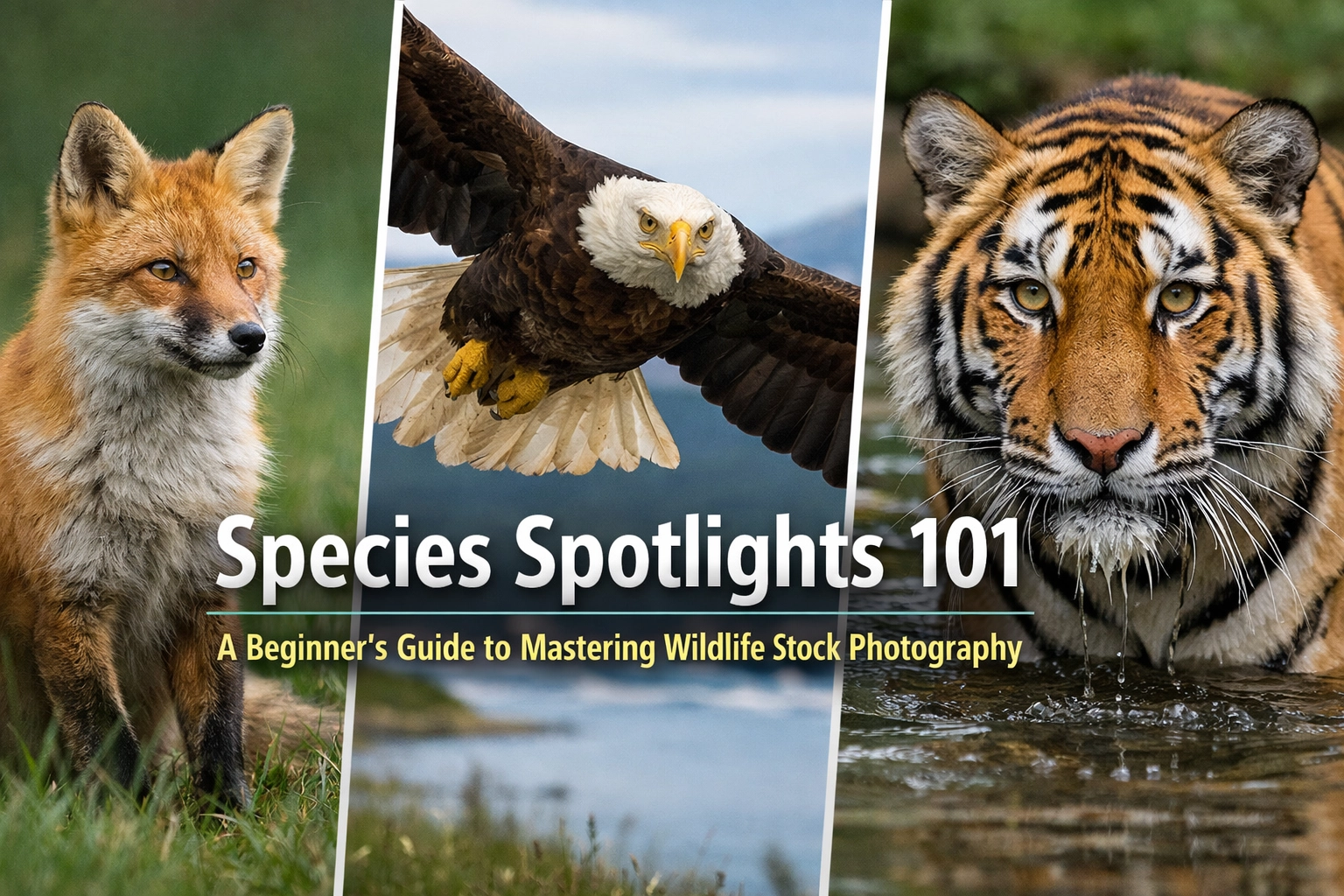
Species Spotlights 101: A Beginner's Guide to Mastering Wildlife Stock Photography
Species spotlights do more than showcase animals. They tell conservation stories. They connect audiences to wildlife. They drive engagement for zoos, aquariums, and conservation organizations.
But great species spotlight photography doesn't happen by accident. It requires the right gear, solid technique, and an understanding of what makes wildlife images work for storytelling.
Why Species Spotlights Matter
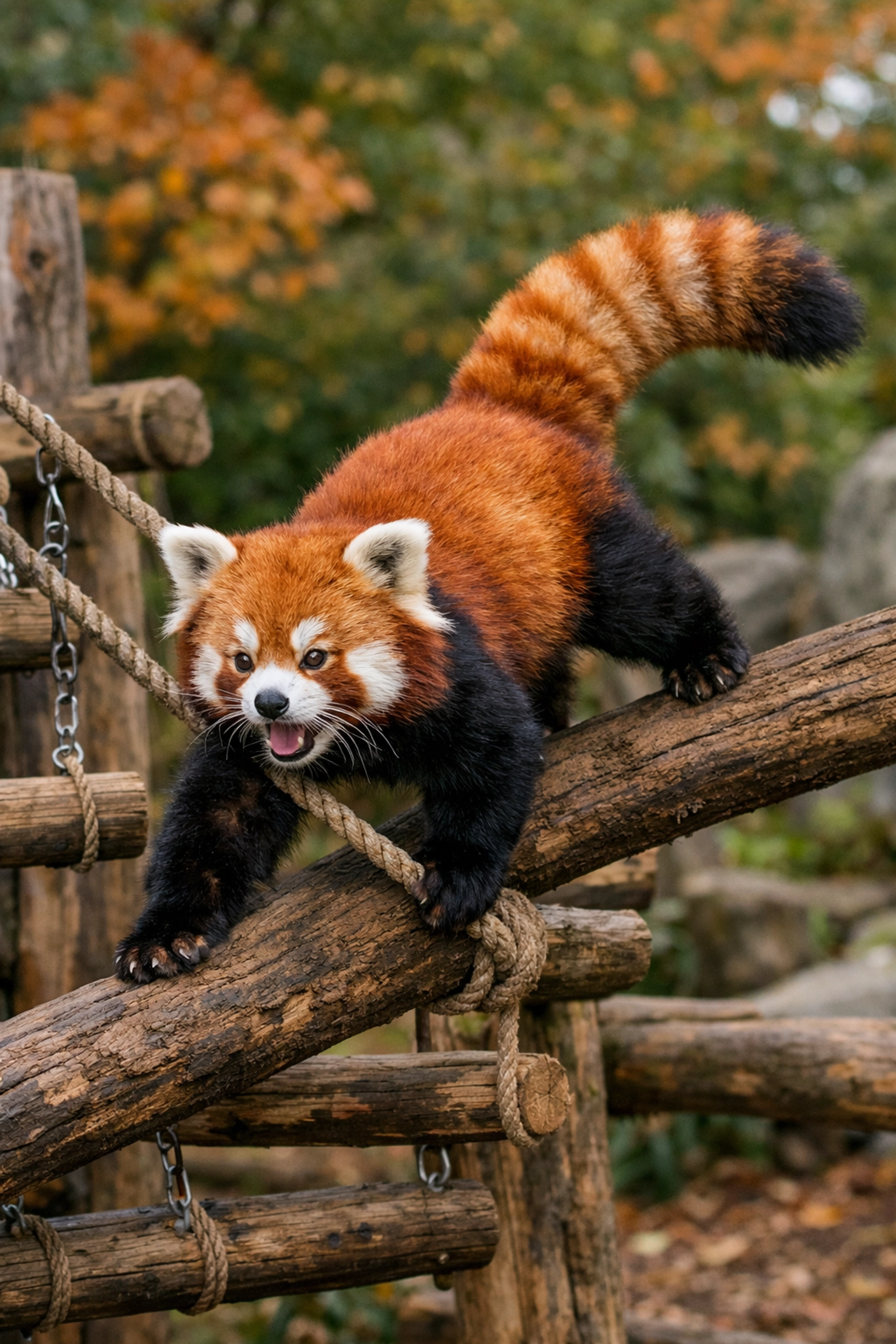
Every animal has a story. A spotted owl navigating habitat loss. A sea turtle recovering from plastic ingestion. A red panda representing successful breeding programs.
Species spotlights turn these stories visual. They give conservation efforts a face. They make abstract environmental challenges concrete and relatable.
The photography behind these spotlights needs to deliver. Sharp focus. Strong composition. Images that hold attention long enough to deliver the message.
Essential Equipment
Camera body: DSLR or mirrorless that shoots RAW format. RAW files capture more detail and give you flexibility during editing. You can recover blown highlights, adjust exposure, and fine-tune colors without destroying image quality.
Lenses: Zoom lenses are non-negotiable for wildlife work. Start with 300mm for larger animals at moderate distances. Move to 400-500mm for skittish subjects and small birds. Longer focal lengths let you fill the frame while maintaining safe distance from your subjects.
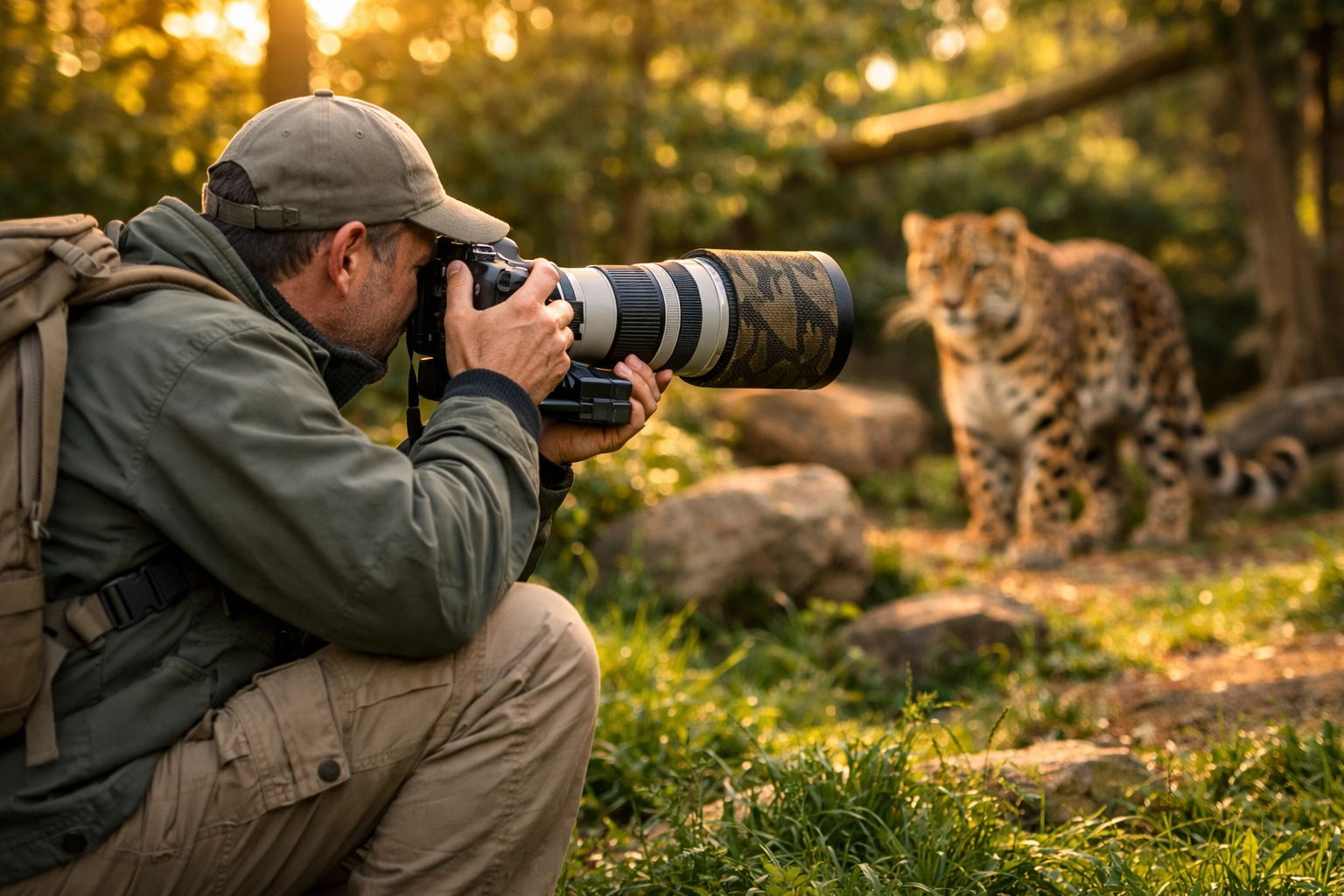
Camera features to prioritize:
- Burst speed (minimum 8 frames per second)
- Multiple autofocus points
- In-body image stabilization
- Weather sealing for outdoor shoots
These features help you capture decisive moments. Animals don't pose. They move, interact, and display behaviors on their timeline, not yours.
Technical Settings That Work
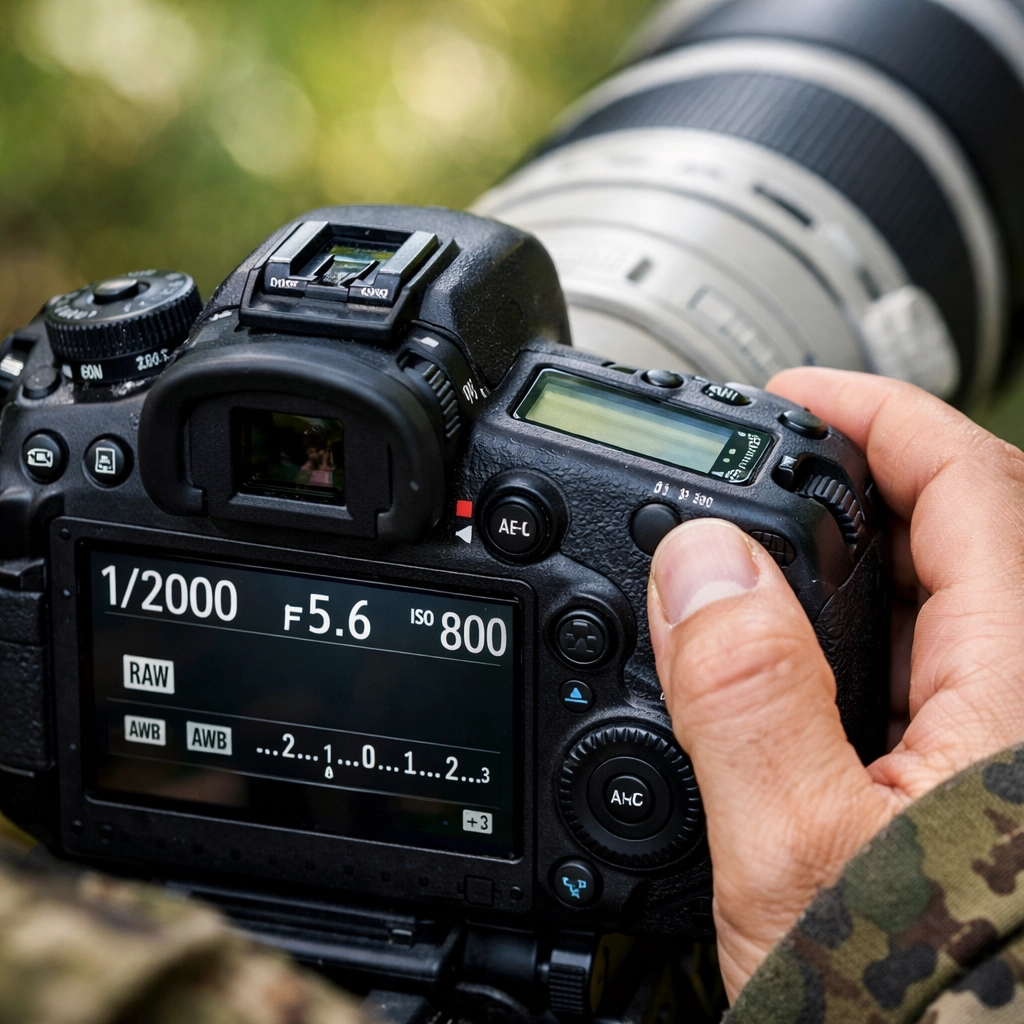
Shutter speed: Fast enough to freeze movement. A flying bird needs 1/1000s or faster. A walking elephant might only need 1/500s. Adjust based on your subject's speed and your focal length.
ISO: Increase as needed to maintain proper shutter speed. Modern cameras handle ISO 1600-3200 without significant noise. Better to have a sharp image with minor grain than a blurry image that's unusable.
Aperture: This is your creative decision.
Wide apertures (ƒ/2.8, ƒ/4, ƒ/5.6) isolate individual animals. Background melts away. Attention stays on your subject. Perfect for species spotlight hero shots.
Smaller apertures (ƒ/8, ƒ/11) work for groups. Multiple animals in a frame need adequate depth of field. Everyone should be in focus, especially with longer lenses at close distances.
Composition Basics
Eye level: Get down. Shoot from the animal's perspective, not from standing human height. Eye-level shots create intimacy and connection. They transform a "photo of an animal" into a portrait.
Rule of thirds: Place your subject at the intersecting points of an imaginary grid. Eyes or prominent facial features should sit one-third from the frame's edge. Horizons belong one-third from top or bottom, not dead center.
Background matters: Zoom in to eliminate distractions. A cleaner background keeps focus on your subject. Longer focal lengths naturally reduce depth of field, making backgrounds blur into smooth bokeh.
Focus Technique
Stationary subjects: Use center focus point. Lock on the eyes. Eyes anchor every wildlife portrait.
Moving subjects: Switch to animal tracking or multiple focus points. Modern cameras can track eyes and faces across the frame. Use 9 or 21 focus points so the camera maintains lock even if the animal moves.
Practice switching between focus modes quickly. Wildlife doesn't wait while you fumble through menus.
Conservation Storytelling Through Images
Species spotlights succeed when they tell stories, not just display animals.
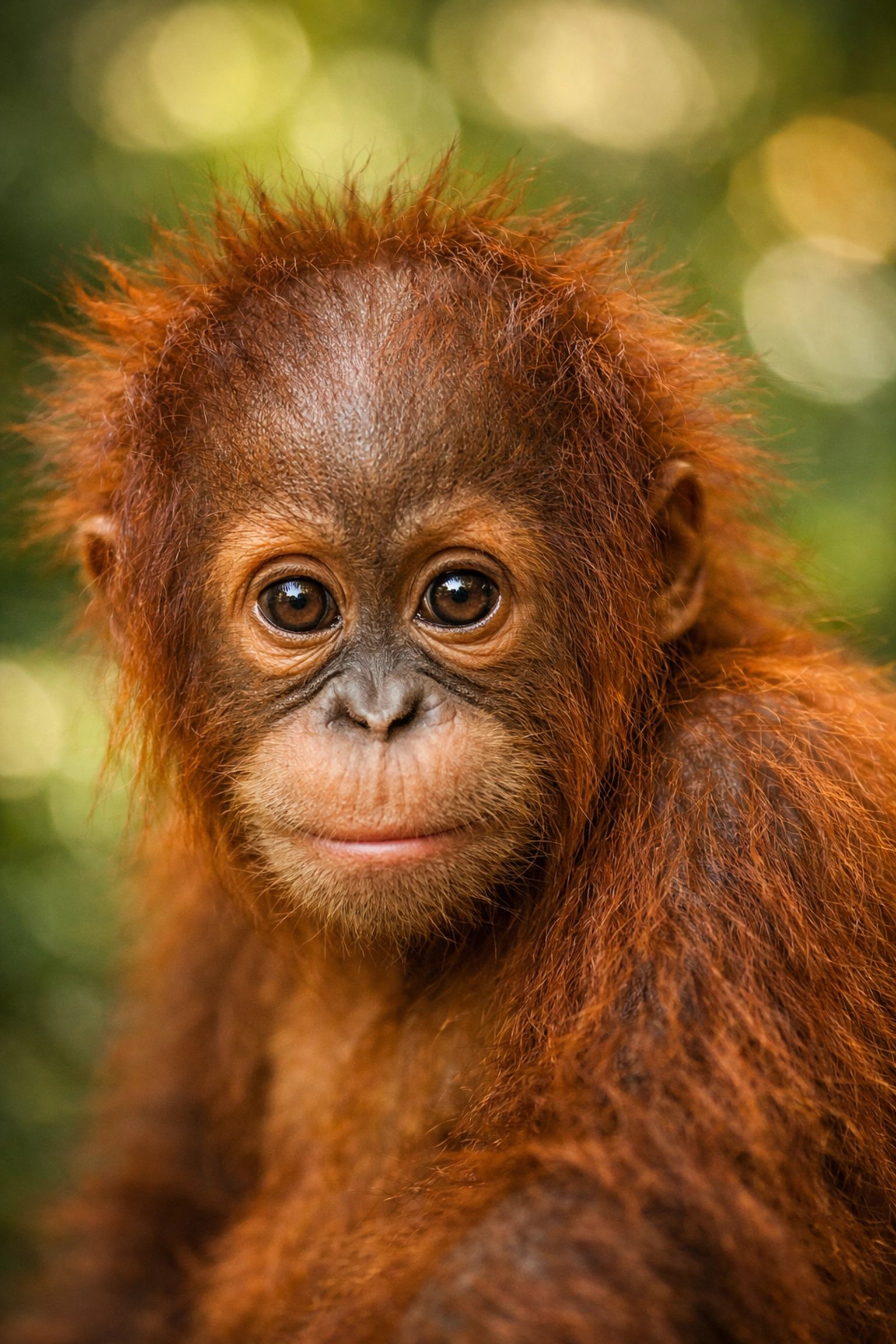
Context matters. An orangutan in a tree tells one story. An orangutan in a restored habitat with visible enrichment tells another. Include environmental details that support your conservation narrative.
Behavior over static poses. Capture feeding, playing, parenting, exploring. Behavioral shots show animals as individuals with personalities and lives. They create emotional connection.
Series over single shots. A species spotlight works best with multiple images showing different angles, behaviors, and contexts. Give your audience a complete picture of the animal's life and environment.
Making Images Work for Zoos and Aquariums
Professional wildlife photography serves marketing, education, and conservation goals simultaneously.
Landscape orientation for website headers and social media banners. Portrait orientation for mobile-first content and Instagram stories. Shoot both.
Leave negative space. Marketing teams need room for text overlays. A perfectly composed tight crop might not work for a campaign that needs to add headlines and calls-to-action.
Capture variety. Close-ups for emotional impact. Wide shots for habitat context. Medium shots for versatility. Different crops serve different purposes.
Species Spotlight Best Practices
Research your subject. Understand the animal's conservation status, behavioral patterns, and unique characteristics. This knowledge informs your shooting approach and helps you anticipate moments.
Shoot in consistent lighting. Overcast days provide even, flattering light. Harsh midday sun creates difficult shadows and blown highlights. Golden hour works for some subjects but isn't always practical with animals on their own schedule.
Document, don't just capture. Species spotlights serve educational purposes. Include shots that show scale, habitat relationships, and identifying features. Beauty matters, but so does accuracy.
Building Your Species Spotlight Portfolio
Start with accessible subjects. Local zoos and aquariums provide controlled environments and subject cooperation. You can practice technique without the unpredictability of field work.
Focus on threatened and endangered species. These animals need visibility. Quality images support conservation messaging and fundraising efforts.
Create depth in your coverage. Don't just photograph the animal itself. Document keeper interactions, habitat design, enrichment activities, and conservation program elements. Complete stories require complete coverage.
The Conservation Connection
Every species spotlight photograph should advance a larger goal. Awareness. Education. Support for conservation programs. Connection between audiences and wildlife.
Your images become tools. Marketing teams use them to drive visitation. Education departments build programs around them. Development teams illustrate grant proposals and donor materials with them.
This utility matters as much as aesthetic quality. A technically perfect image that doesn't serve conservation storytelling has limited value. A strong image that connects audiences to wildlife and inspires action? That changes outcomes.
Next Steps
Master the technical fundamentals. Build your equipment kit. Practice on accessible subjects. Study successful wildlife photography and species spotlights to understand what works.
Then get out and shoot. Mistakes teach more than theory. Each session improves your timing, anticipation, and technical execution.
Ready to see how professional wildlife stock photography elevates conservation storytelling? Visit Zoo Imagery to explore our full collection of species spotlight images, or connect with us on LinkedIn to stay updated on new conservation-focused content.


