Species Spotlight: The Gentle Giant , Elephant Conservation & How Wild Imagery Helps
Elephants are easy to recognize.
Their size helps. So does their intelligence, family structure, and expressive behavior.
But recognition is not protection.
Elephant conservation depends on continued attention, accurate information, protected habitat, and support for the people working in the field.
This sponsored species spotlight looks at why elephants matter, what they face, and how strong wildlife imagery can help keep their story visible.
Presented in partnership with global wildlife protection initiatives.
Why elephants matter
Elephants shape the places where they live.
They open paths through dense vegetation. They move seeds across long distances. They dig for water during dry periods. Their work changes the landscape and creates opportunities for other animals.
That makes elephants more than a popular subject.
They are ecosystem engineers.
A single elephant image can show part of that story. A herd moving through open land can represent habitat, migration, family, and survival at the same time.
The right photograph gives audiences a place to begin.
The conservation facts
African elephants are now recognized as two separate species:
- African forest elephant , Critically Endangered
- African savanna elephant , Endangered
- Asian elephant , Endangered
The IUCN Red List assessment reported that African forest elephant numbers fell by more than 86% over 31 years. African savanna elephant numbers decreased by at least 60% over 50 years.
The same assessment identified two major threats:
- Ivory poaching
- Habitat loss
Human–elephant conflict also increases as farms, roads, settlements, and other development divide natural habitats.
Recent conservation work continues to focus on protected areas, wildlife corridors, anti-poaching efforts, better monitoring, and cooperation with local communities.
The situation is serious.
It is not without hope. Some elephant populations have stabilized or grown in well-managed conservation areas. Strong conservation work can produce results when protection, local knowledge, and long-term planning work together.
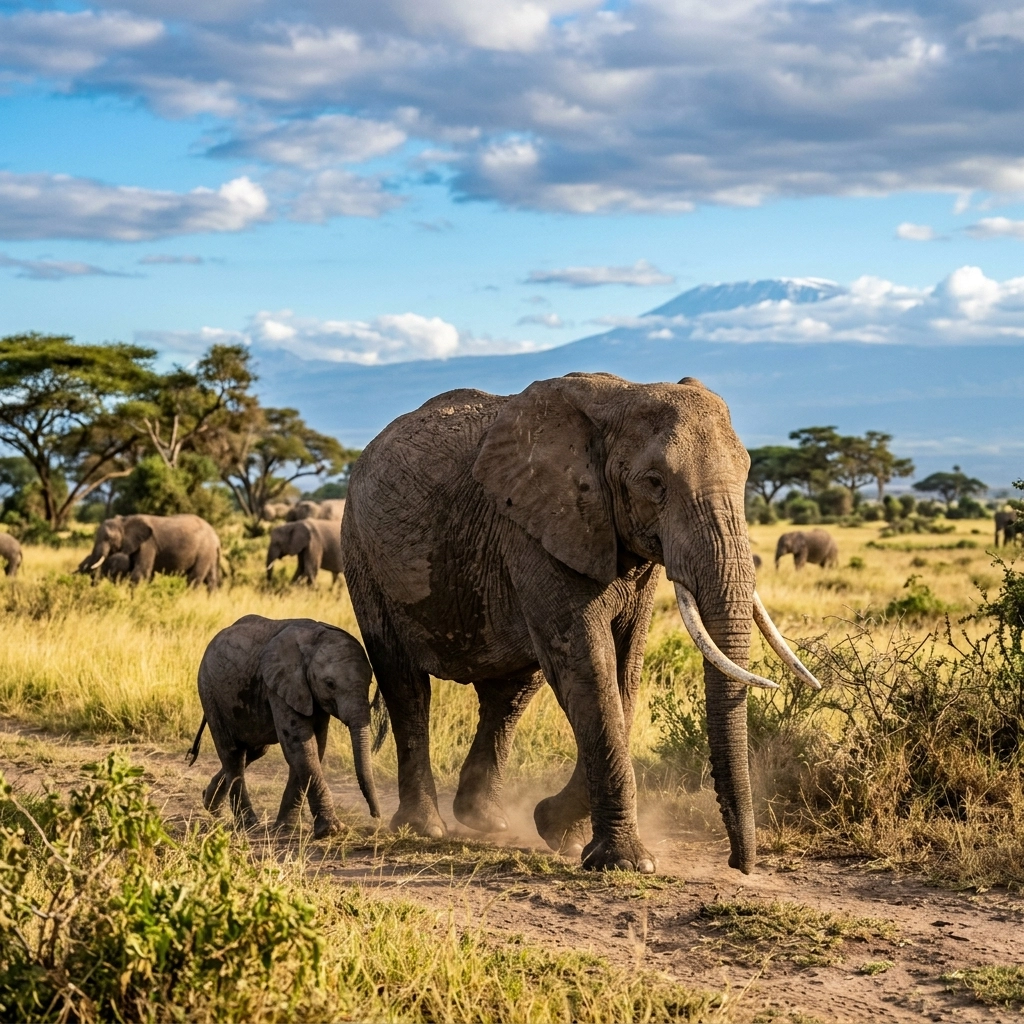
Featured image: a clear look at a complex animal
The featured image above focuses on the elephant itself.
No busy background. No staged action. No visual distractions.
The animal’s posture, skin texture, and expression carry the frame. That simplicity matters. It gives viewers time to notice details that are often missed:
- The structure of the ears
- The texture of the skin
- The shape of the trunk
- The alert position of the head
- The calm, deliberate movement
This is where animal stock photos can help conservation storytelling.
A strong image does not replace research. It makes the research easier to approach.
For a zoo, aquarium, nonprofit, classroom, editorial feature, or campaign, a high-resolution image can turn a general statement into something people remember.
Behind the lens
Wildlife photography requires patience.
Photographers work at a safe distance. They avoid disturbing the animals. They wait for natural behavior rather than creating a moment for the camera.
Telephoto lenses help capture close details without moving too near. Natural light shows the animal as it appears in its environment. Early morning and late afternoon light often reveal the depth of an elephant’s skin and the movement of a herd.
The best frames may take hours.
A trunk greeting between two elephants can last only a few seconds. A calf stepping close to its mother may happen once. A herd may change direction without warning.
The photographer’s role is simple:
- Observe
- Wait
- Stay ready
- Respect the animal
- Capture the real moment
That approach creates imagery with more value than a generic wildlife picture. It gives the audience behavior, place, and context.
Elephant families and social memory
Elephant families are led by experienced females, often called matriarchs.
The matriarch helps guide the herd toward food and water. She also carries knowledge about routes, seasonal conditions, and potential danger.
Elephants communicate through touch, sound, posture, and movement.
Some calls are below the range of human hearing. These low-frequency rumbles can travel long distances. Elephants also use physical contact to greet, comfort, and guide one another.
Young elephants learn by watching older members of the herd.
This makes a family image especially useful for a species spotlight. It shows that elephant conservation is not only about protecting individual animals. It is also about protecting relationships, knowledge, and future generations.

Every calf matters.
Elephants reproduce slowly. A female’s gestation period lasts about 22 months, one of the longest in the animal kingdom. Population recovery takes time.
That fact gives a single calf photograph more meaning. It represents a long-term investment in habitat and protection.
What a sponsored species spotlight does
A sponsored species spotlight gives one animal or animal category focused attention.
Instead of presenting a broad message about wildlife, the campaign centers on one species. The result is easier to understand and easier to share.
For elephants, a spotlight may include:
- A featured photograph
- Short conservation facts
- Information about habitat and threats
- A sponsor message
- Educational content
- Links to further resources
- Calls to support conservation
The sponsor’s role should remain clear and respectful.
The animal stays at the center.
A clean “Presented by” format can connect a sponsor with conservation education without covering the image or weakening the message. It also gives brands, zoos, and conservation partners a practical way to support species-focused storytelling.
The sponsor helps keep the subject visible.
The audience receives a clear story.
Why imagery helps
Conservation information often includes large numbers, long timelines, and complex issues.
Images make those issues easier to understand.
A photograph of a herd can support a story about habitat corridors. A close-up can support a story about intelligence and social behavior. An image of an elephant moving through a dry landscape can introduce water access, drought, and land management.
One image cannot explain everything.
It can begin the conversation.
For creative professionals and content teams, this also saves time. Searching for the right visual should not take longer than building the campaign around it.
Zoo Imagery provides animal stock photos across multiple categories and formats. The Elephants Collection gives teams a focused starting point for editorial work, social content, education, presentations, and conservation campaigns.
Both landscape and portrait images have a place:
- Landscape format for websites, banners, presentations, and editorial layouts
- Portrait format for mobile content, social posts, posters, and vertical campaigns
The format should support the message.
How zoos can extend the story
Zoos and aquariums already have an important advantage.
Their visitors are taking photographs every day.
The ZooMedia.us phone app helps zoos and aquariums turn visitor photos into shareable content. Guests can upload and distribute images from their visit. Facilities can review real-time engagement results and track campaign performance.
That creates a useful connection:
- Professional animal stock photos establish the campaign.
- Exhibit signage or digital content gives visitors context.
- Guests capture their own moments.
- Shared photos extend the story beyond the zoo.
- Engagement data helps the facility understand what connects with visitors.
The professional image and the visitor image serve different purposes.
One provides consistency and clarity.
The other provides personal experience.
Together, they can make conservation messaging more visible and more relatable.

A simple way to use elephant imagery
A conservation campaign does not need excessive copy.
Start with one strong image.
Add three useful facts.
Explain one threat.
Show one conservation response.
Then give the audience a clear next step.
For example:
Elephants shape the landscapes they share with other species.
African forest elephants are Critically Endangered.
African savanna elephants are Endangered.
Habitat protection and anti-poaching work remain essential.
That is enough to create a focused entry point.
The supporting image does the rest.
Keep the spotlight on the species
Elephants do not need exaggerated language.
Their story is already serious.
They are intelligent, social animals facing clear pressure from poaching, habitat loss, and conflict with people. They also benefit from focused conservation work, protected landscapes, and public attention.
Good imagery helps people see both sides:
- The strength of the animal
- The fragility of its future
That balance matters.
Zoo Imagery’s goal is straightforward: provide clear, useful animal photography for people who need to communicate well.
Explore the Elephants Collection or visit zooimagery.com for more animal stock photos.
For updates on species spotlights, conservation storytelling, and zoo marketing, connect with Zoo Imagery on LinkedIn.

Image storytelling keeps conservation visible. A focused species spotlight gives people a reason to look closer.


