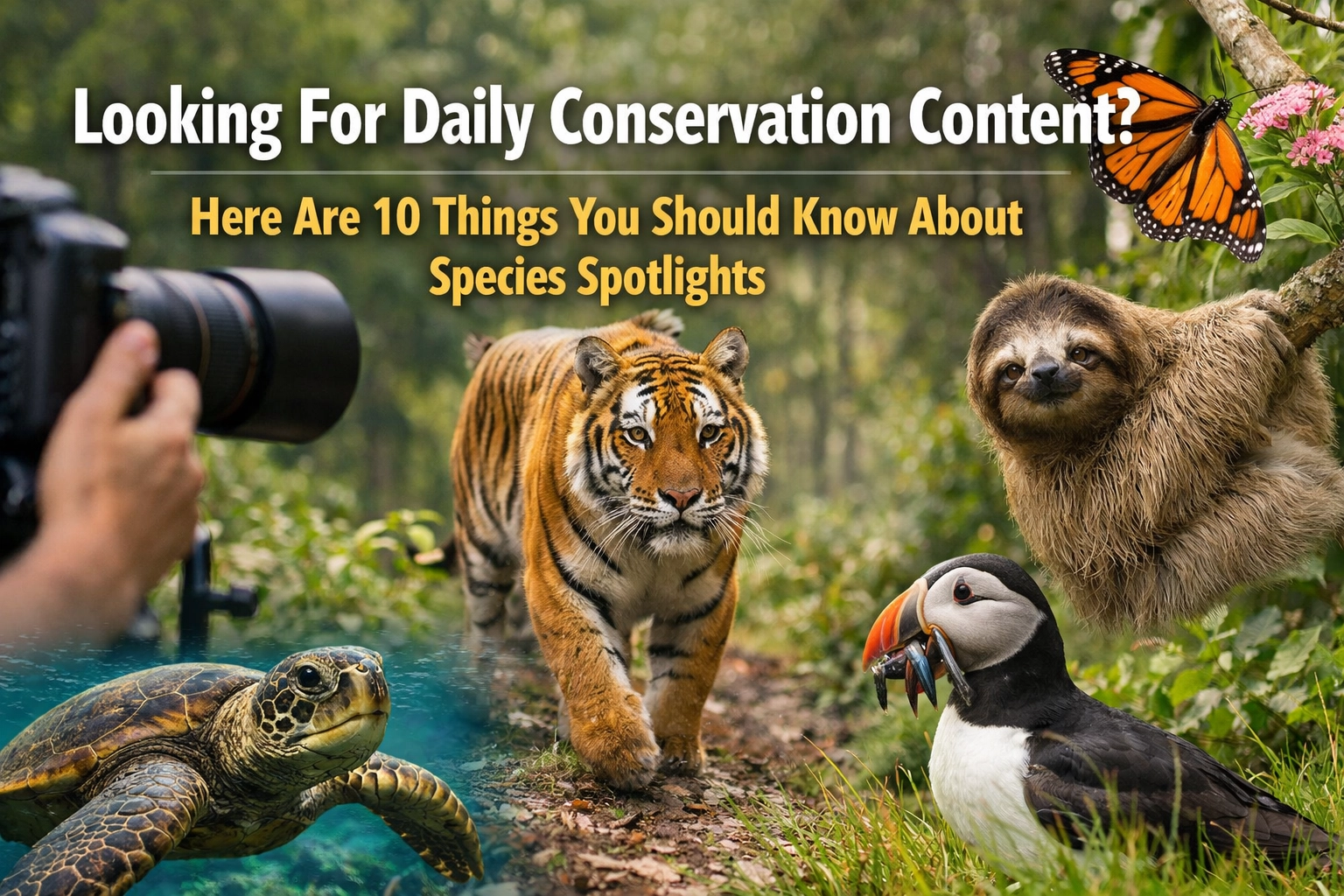
Looking For Daily Conservation Content? Here Are 10 Things You Should Know About Species Spotlights
Conservation content can't be boring anymore. Your audience scrolls past generic facts in seconds. Species spotlights work differently. They turn individual animals into characters people actually care about.
Here's what you need to know.
1. Species Spotlights Are Not Just Animal Facts
Most wildlife content dumps information. Weight. Habitat. Diet. Done.
Species spotlights tell stories. They highlight specific animals. Individual personalities. Real behaviors captured by real photographers. They connect viewers to conservation through emotion, not statistics.
This matters for zoos and aquariums. Your guests want to remember Nala the lioness, not "female African lion, 350 pounds."
2. Consistency Beats Perfection
Daily content wins. Weekly content gets forgotten.
Species spotlights work best as a regular series. Every morning. Same time. Different animal. Your audience builds a habit. They expect it. They share it.
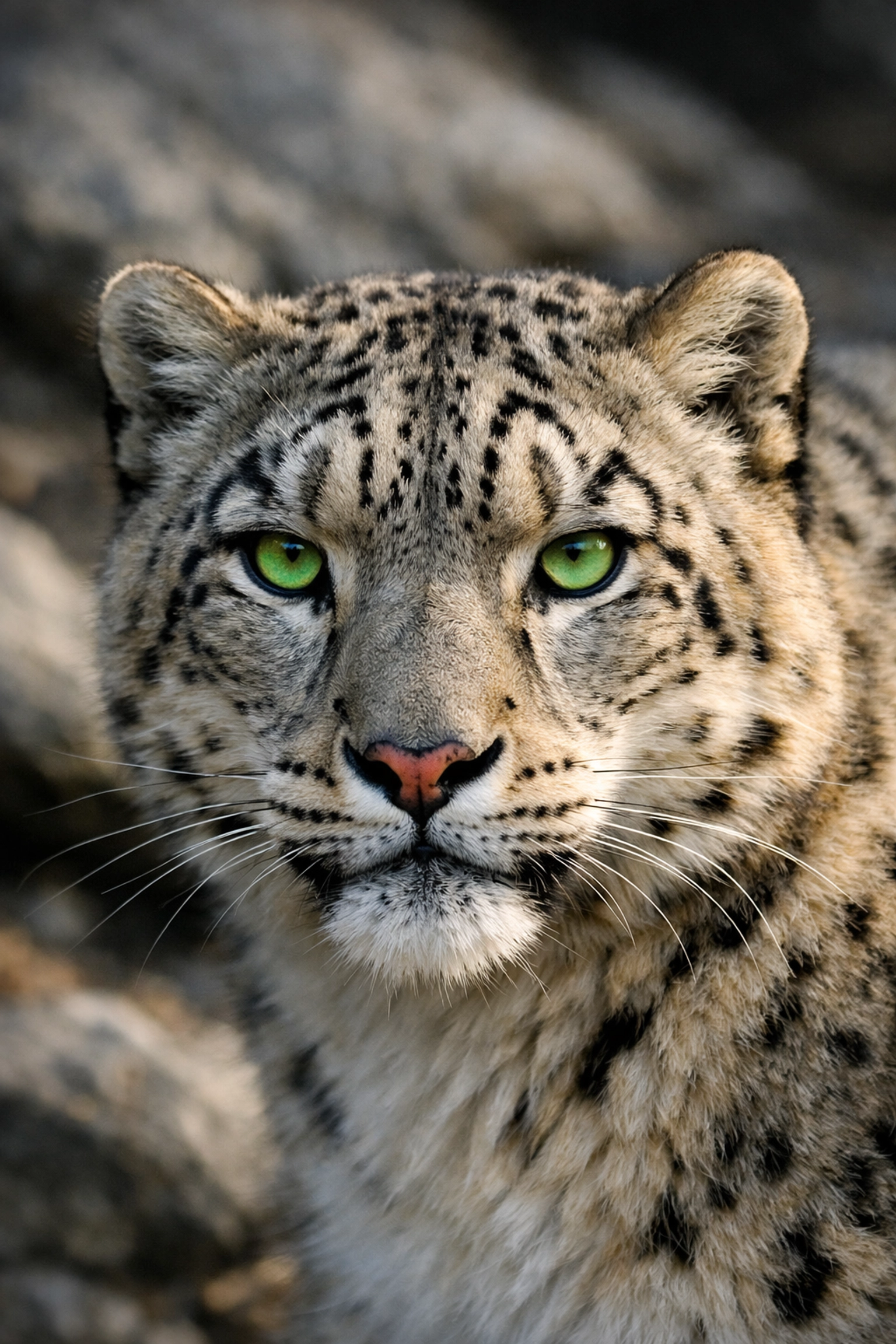
One high-quality animal photo. Three sentences about why this species matters. Two seconds to post. That's the formula.
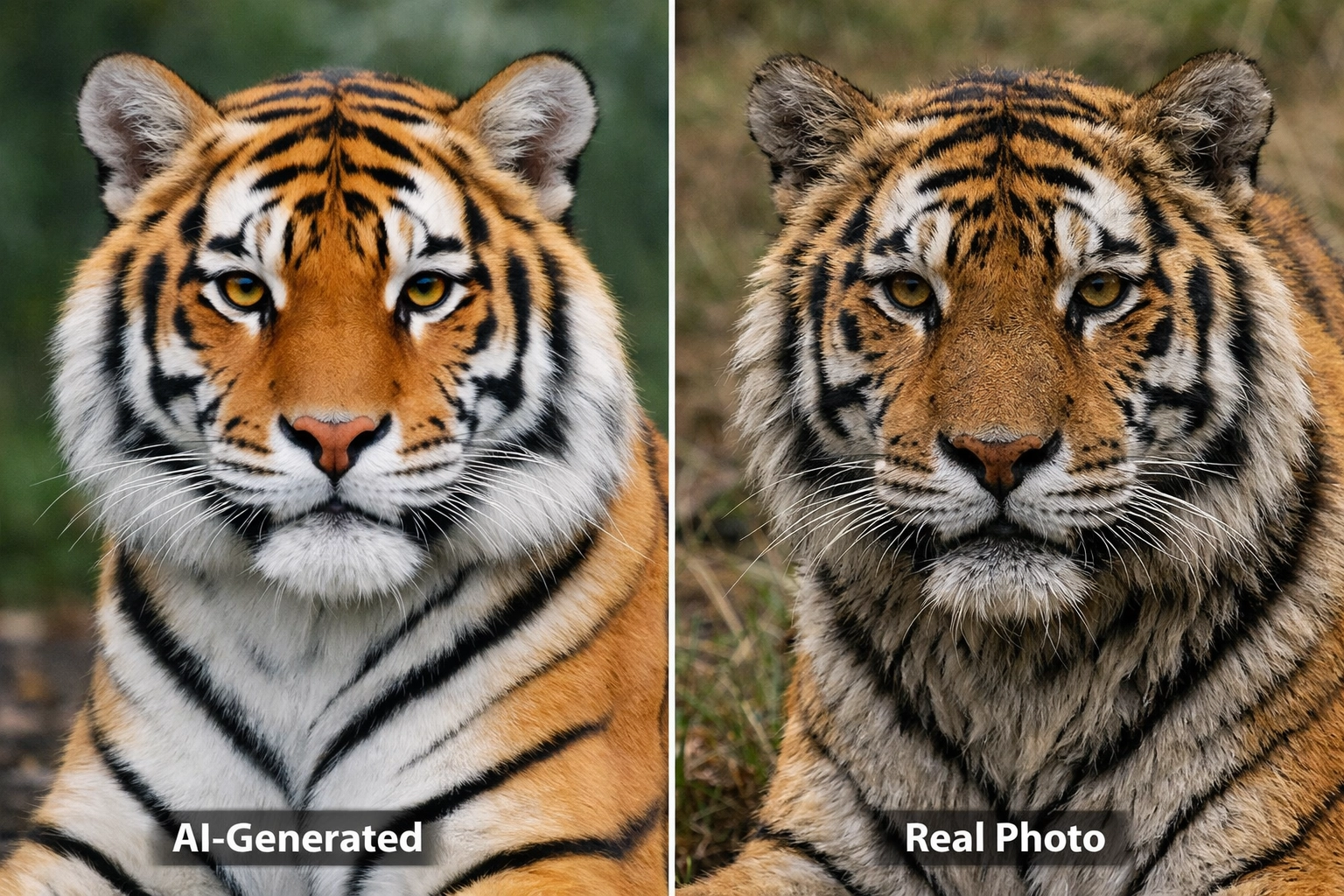
3. Real Photography Outperforms AI Every Time
AI-generated animal images look smooth. Too smooth. Viewers notice.
Real animal photography captures:
- Authentic expressions
- Natural lighting
- Genuine behaviors
- Specific moments you can't fake
Conservation storytelling needs credibility. Stock photos from actual zoos and aquariums provide that. Your audience trusts what they can verify.
4. "Presented By" Pages Change The Game
Species spotlights become more valuable when they link to dedicated pages. These "Presented by" pages serve multiple purposes.
They showcase:
- High-resolution animal photography
- Conservation status updates
- Partner organization recognition
- Educational resources
Your sponsors get visibility. Your audience gets depth. Your conservation message reaches further.
5. Every Species Has A Story Worth Telling
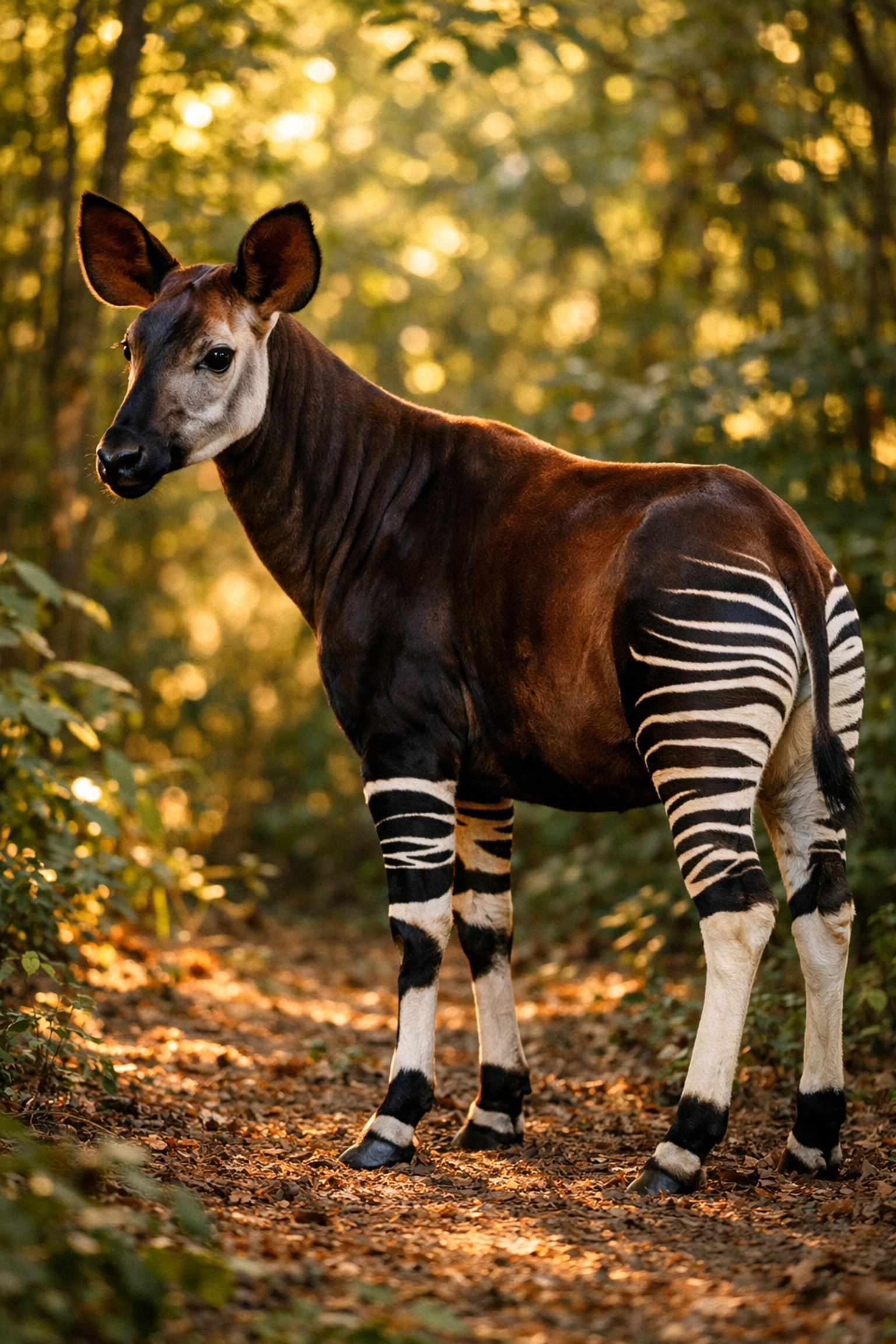
You don't need charismatic megafauna only. Penguins and tigers perform well, yes. But so do okapis. Axolotls. Native fish species.
Lesser-known animals often generate more engagement. People love learning about creatures they've never heard of. Novelty drives shares. Shares drive awareness.
The key: find the compelling angle. Every species has one.
6. Conservation Data Should Be Simple
Endangered status matters. Habitat loss matters. But complex scientific language doesn't resonate.
Instead of: "Experiencing significant population decline due to anthropogenic habitat fragmentation and poaching pressures."
Try: "Fewer than 4,000 left in the wild. Habitat disappearing fast."
Simple facts stick. Dense information gets ignored.
7. Visual Quality Determines Performance
Blurry photos kill conservation content. Poorly composed shots get scrolled past. Dark images disappear in feeds.
Professional animal stock photography changes everything:
- Sharp focus on the subject
- Proper lighting that shows detail
- Compelling composition that draws the eye
- Both portrait and landscape orientations
Quality visuals aren't optional. They're the entire foundation. People stop for beautiful animal photos. Then they read your conservation message.
8. Your Content Needs Distribution Strategy
Creating species spotlights is step one. Getting them seen is step two.
Multiple platforms multiply impact:
- Website blog posts
- Social media (LinkedIn performs well for professional conservation content)
- Email newsletters
- Digital displays at your facility
- Partner organization channels
Each platform has different requirements. Your blog can go deep. Social posts need to hit fast. Email can blend both approaches.
9. Sponsorship Opportunities Are Built-In
Species spotlights naturally integrate sponsor recognition. Conservation organizations need funding. Corporate partners need visibility. This format serves both.
A single sponsored species spotlight includes:
- Company logo on dedicated page
- "Presented by" attribution
- Link to sponsor website
- Association with positive conservation work
Everyone wins. The species gets attention. The sponsor gets recognition. Your organization gets support.

10. Measurement Matters More Than You Think
Track everything:
- Page views per spotlight
- Time spent on page
- Social shares and engagement
- Click-through to main website
- Newsletter open rates for species content
Data reveals patterns. Which species resonate most? What posting times perform best? Where does your audience engage?
These insights shape future content. You stop guessing. You start knowing.
Making It Work For Your Organization
Species spotlights succeed when you commit. One-off posts don't build momentum. Irregular schedules lose audiences. Half-hearted content gets ignored.
But consistent, quality spotlights compound. Your archive grows. Your SEO improves. Your audience expands. Your conservation message reaches people who'd never visit your facility.
The barrier isn't complexity. It's consistency.
Start simple:
- Pick your posting schedule
- Source quality animal photography
- Write brief, compelling descriptions
- Link to more information
- Repeat daily

Your Next Step
Conservation content doesn't have to be complicated. Species spotlights work because they're simple. One animal. One story. One chance to make someone care.
The photography matters most. Real animals. Real moments. Real impact.
Ready to build your species spotlight series? Check out Zoo Imagery's collection for professional animal stock photography that brings conservation stories to life. Or connect with us on LinkedIn to see how zoos and aquariums are using daily content to amplify their conservation work.
Your next compelling species story is waiting.


