Lion Spotlight: Clear Images for Conservation Stories
Daily species spotlight : August 20, 2026
A strong lion image can do more than fill a page.
It can help explain habitat loss. Show pride behavior. Support a conservation campaign. Give people a reason to stop, look, and learn.
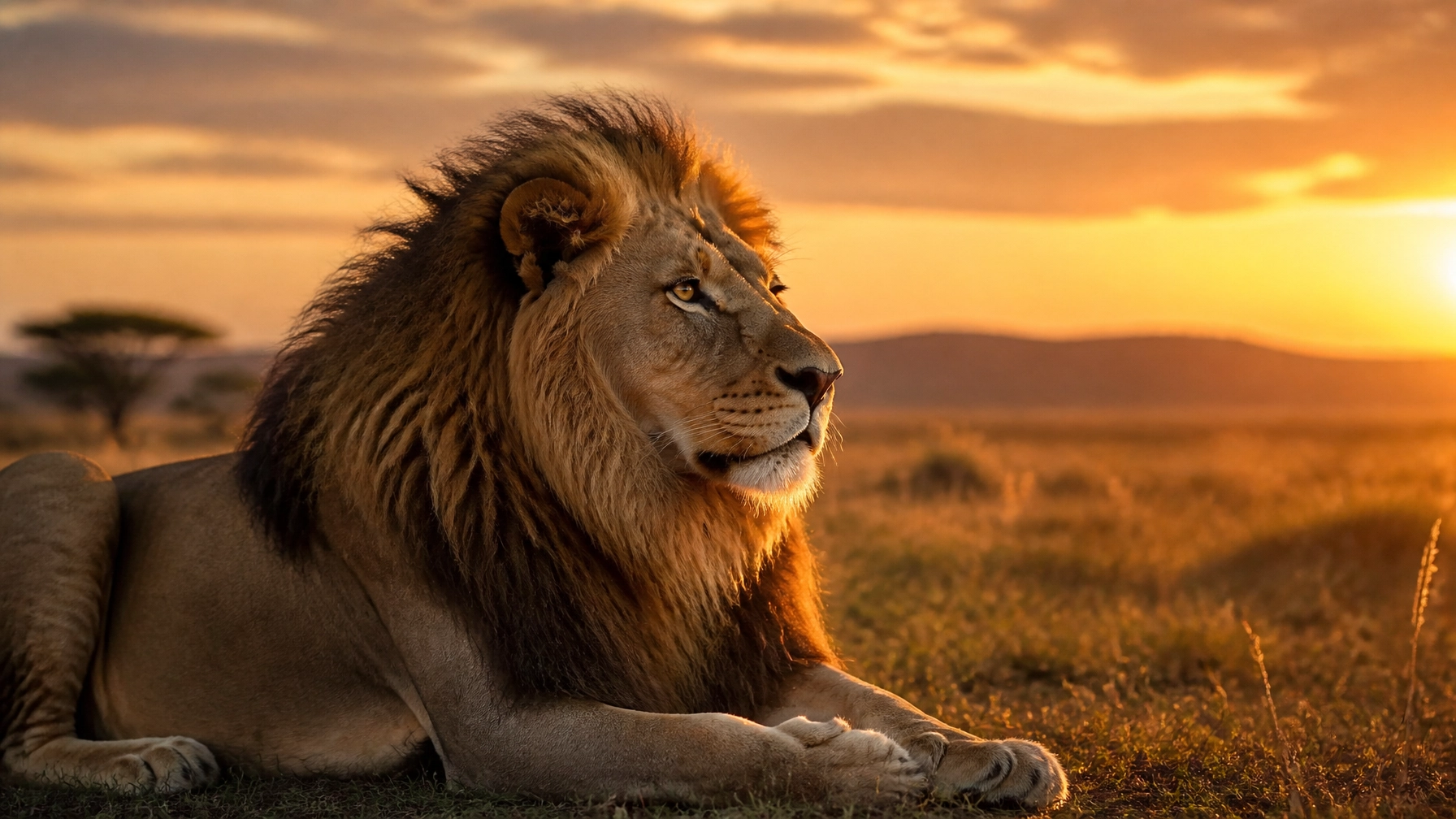
Today’s featured image shows a male lion resting in the open savanna. The warm light picks up the texture of his mane and keeps his eye as the focal point.
Simple. Clear. Useful for a conservation story.
The featured lion image
This image works because it gives the viewer three things at once:
- A clear view of the lion
- Natural habitat in the background
- Open space for text or campaign design
That last point matters for creative teams.
The image can work as:
- A website hero image
- A social media post
- An educational graphic
- A species spotlight
- A conservation report cover
- A zoo exhibit feature
- A “Presented by” campaign page
The composition is also flexible. The lion sits to the left, while the open sky and landscape create room on the right for a headline, logo, or short message.
For conservation work, context helps. A close portrait can create an emotional connection. A wider image can show where the animal lives and what may be at stake.
A few lion facts
Lions are social cats.
Most wild cats live alone or in small family groups. Lions live in prides. A pride usually includes related females, their cubs, and one or more adult males or male coalitions.
More quick facts:
- Lions are mainly active at night and around dawn or dusk.
- Lionesses often work together when hunting.
- Pride members raise young communally.
- Males may form coalitions to compete for access to prides.
- Lions can live in savannas, open woodlands, dry forests, scrub, and some desert environments.
- Their prey includes zebra, wildebeest, buffalo, antelope, and other medium-to-large animals.
- A lion’s range can be very large when prey is limited.
The IUCN SSC Cat Specialist Group lists the lion as Vulnerable. The Convention on Migratory Species reports an estimated 23,000 adult and subadult lions in Africa and about 670 in India, with important uncertainty around those figures.
The same CMS summary reports that the lion’s current range is estimated at only 7.4% of its historical range.
The main pressures are familiar:
- Habitat loss
- Declining prey populations
- Snaring and illegal killing
- Livestock losses
- Human-lion conflict
- Fragmented populations
Clear images do not solve these problems on their own.
They help people understand them.

Behind the image: patience is part of the work
Wildlife photography often looks active from the outside.
In practice, much of the work is waiting.
A photographer may spend a long time in one position before the animal does anything. Lions rest for much of the day, especially during hot hours. The best moment may last only a few seconds: a head turn, a glance, a greeting, or a cub stepping into the light.
A useful field approach:
- Keep a safe distance.
- Use a long lens.
- Stay quiet.
- Avoid baiting or calling to the animal.
- Watch body language.
- Let the behavior happen naturally.
- Be ready before the action starts.
Early morning and late afternoon usually provide softer light. They also tend to bring more activity.
The featured male lion has a calm pose, but the image still feels alert. His eye catches the light. His body remains relaxed. That small detail gives the photograph its focus.
The technical lesson is straightforward:
Focus on the eye. Wait for natural behavior. Let the setting support the story.
Why image clarity matters in conservation
Conservation stories often need to work across several formats.
One image may appear in a campaign post, a web page, a presentation, and a printed handout. Low-quality or poorly framed images create extra work. They may also weaken the message.
A clear image gives teams more options.
Useful image qualities include:
- Sharp detail
- Natural color
- Clean composition
- Landscape and portrait formats
- Enough background space for design
- A believable setting
- Behavior that matches the story
The image should also be used honestly.
A lion portrait should not be presented as proof of a specific location unless the location is known. A conservation campaign should explain the issue around the image. The photo starts the conversation. Accurate information carries it forward.
Explore the Lions “Presented by” page
Zoo Imagery’s Lions page gives teams a focused place to explore lion imagery.
You can also visit the broader Lions collection.
The page fits a simple “Presented by” format:
- One featured species
- Strong, relevant photography
- Short educational context
- A clear campaign message
- Space for a zoo, organization, or sponsor
A zoo can use a lion page to support an exhibit or visitor education program. A conservation group can use it to explain threats and field work. A creative team can use it as a starting point for a campaign.
For zoos and aquariums, imagery can also connect with visitor participation. The ZooMedia.us app helps institutions encourage guests to share photos and track engagement around picture marketing.
The goal is simple: make it easier for people to notice animals, share what they see, and return to the story.

Sponsored species spotlight
Sample campaign label: Presented by Savanna Guardians Fund
Hypothetical sponsor. Sample campaign concept only.
Savanna Guardians Fund is a sample sponsor name for a lion conservation campaign.
A campaign like this could pair strong lion images with practical information about coexistence:
- Protecting natural habitat
- Maintaining healthy prey populations
- Reducing livestock losses
- Supporting local conservation teams
- Improving monitoring and research
- Sharing accurate information with visitors
The campaign would not need a complicated message.
A short page could say:
Lions need space, prey, and safe ways to share landscapes with people.
The photography would show the animal. A second image could show pride behavior. A third could show the people and practices connected to coexistence.
That mix matters.
Lion conservation is not only about the animal in the frame. It also includes land management, livestock protection, local knowledge, protected areas, and long-term monitoring.

A useful structure for your next lion story
If you are building a lion campaign, keep the page easy to scan:
- Lead with one clear image.
- Name the species and the issue.
- Add three or four verified facts.
- Explain one conservation action.
- Show how people connect to the work.
- End with one simple next step.
Avoid packing every fact into one paragraph.
Use short sections. Give the images room. Make the message easy to understand on a phone.
Good conservation communication does not need to be loud.
It needs to be accurate, visible, and consistent.
Find the right image
Explore the Zoo Imagery Lions collection for animal photography that can support your next story.
Visit zooimagery.com to explore more species and formats.
You can also follow Zoo Imagery on LinkedIn for new species spotlights, conservation stories, and image updates.
Small story. Clear image. Better awareness.


