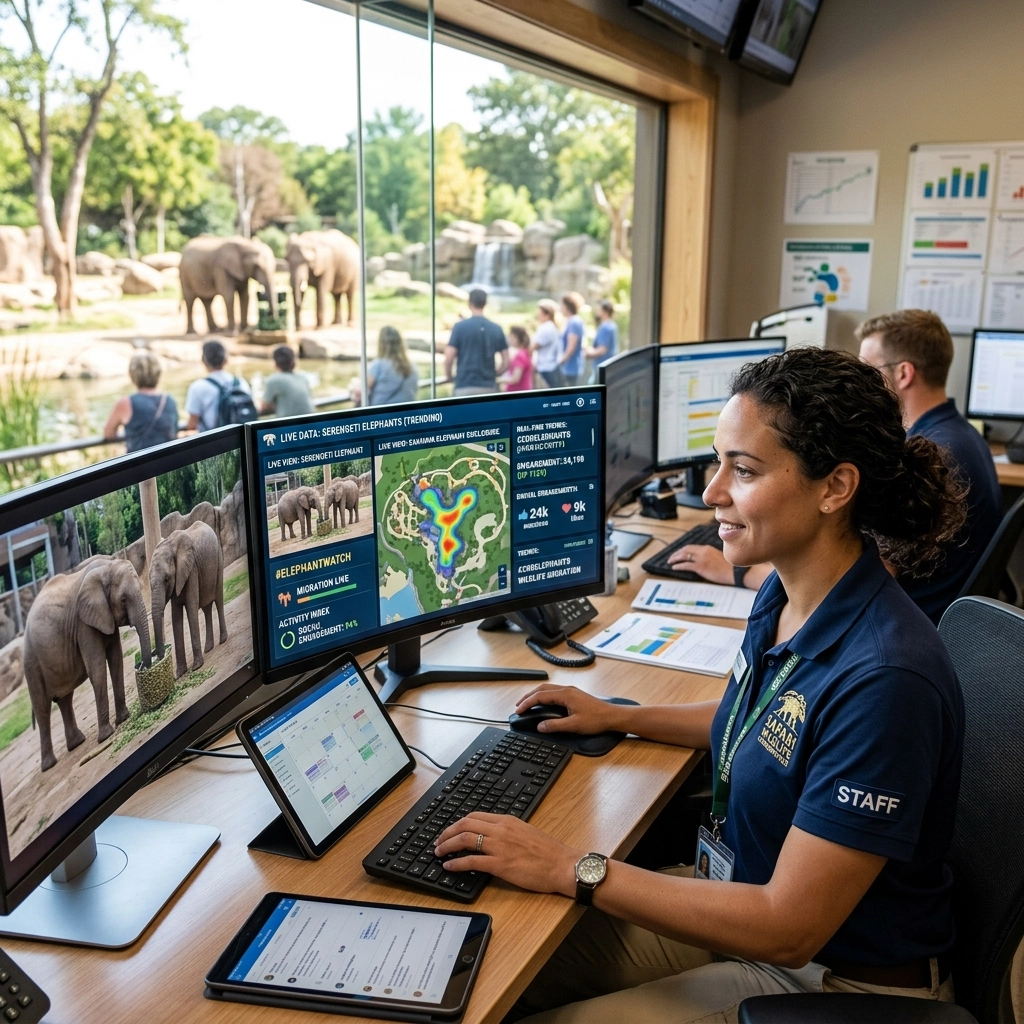
How to Integrate Real-Time Wildlife Trends With Your Zoo’s Daily Digital Strategy
Wildlife interest moves fast. A viral video of a red panda or a sudden breakthrough in rhinoceros conservation can capture public attention in hours. For zoos and aquariums, the challenge isn't just watching these trends: it’s moving with them.
The goal is to move from passive observation to active participation. Your digital strategy should reflect the pulse of your animals and the global conservation landscape in real time.
The Shift From Static to Fluid
Traditional marketing plans often rely on monthly calendars. In 2026, a month is too long. Visitors want to see what is happening now.
Why Real-Time Matters
- Relevance: Aligning with global wildlife news keeps your brand in the conversation.
- Authenticity: Raw, real-time updates build trust better than polished, weeks-old content.
- Urgency: Notifying visitors that an animal is active encourages immediate visits.

1. The Daily Beat: Transforming Your Morning Routine
Your digital day should start where the animals are.
Audit Your Data Sources
Check your internal feeds before you check your emails.
- Camera Traps: What did the nocturnal species do last night?
- GPS Tracking: Are the migratory birds on site moving differently?
- Keeper Logs: Any notable milestones, like a first step or a successful health check?
Quick-Turn Content
Don't wait for a film crew. Use simple, high-quality stock imagery or quick mobile clips. If a specific species is trending globally: perhaps due to a conservation breakthrough in the wild: highlight your residents of that species immediately.
2. Practical Data Integration
Integrating technology isn't about being "high-tech." It’s about being useful.
AI and Behavioral Insights
Use AI to process hours of exhibit footage. AI can identify patterns: like when the tigers are most likely to play. Share this data with your audience.
- The Message: "Our data shows the tigers are most active at 10:15 AM today."
- The Result: Better visitor satisfaction and focused attendance.
IoT-Enabled Wayfinding
If your zoo has a mobile app, use real-time positioning. Send a notification to visitors on-site when an animal is near a viewing window. This turns a standard walk into a guided, successful search for wildlife.

3. Storytelling Through Species Spotlights
Avoid buzzwords like "sustainability" or "synergy." Focus on the animal.
Sponsored Species Campaigns
Create a "Presented by" page for specific animals. This allows corporate partners to support a species directly.
- Feature the animal: High-quality imagery from Zoo Imagery.
- State the impact: Explain exactly where the support goes. Habitat repair. Medical supplies. Food.
- Real-time updates: Show the partner’s impact through live updates of the animal they support.
Field to Exhibit Connection
If you support wild conservation in Kenya, and those researchers tag a lion, share that data. Connect the lion in your zoo to its wild counterparts. This makes global conservation feel local and manageable.

4. ESG-Aligned Campaigns Without the Clutter
Environmental and Social Governance (ESG) is about action. Your digital strategy should prove that action daily.
Transparency is Key
Instead of a "Green Initiative" post, show a video of your composting system in action. Instead of "Community Outreach," share a photo of a local school group learning about bird migration.
Simple Messaging
- Action: We planted 50 native trees today.
- Result: More shade for the lemurs and more homes for local birds.
- Call to Action: Come see the new habitat.
5. Building a Tech Stack for Daily Use
You don't need a massive budget. You need the right tools.
Visual Assets
Keep a library of high-quality images ready. When a trend hits, you need to post immediately. Having a membership to a digital media library ensures you aren't scrambling for a photo of a pangolin when pangolins are trending.
Automation Tools
Use tools that pull live data into social templates. If a sensor detects a specific temperature in the reptile house, it can trigger a post explaining how those animals stay cool. This is automation with a purpose.

6. Measuring Success
Success isn't just about "likes." It's about engagement and physical attendance.
Metrics That Matter
- Dwell Time: Are people staying longer at exhibits you post about?
- Repeat Visits: Does real-time data encourage people to come back more often?
- Conversion: Are digital updates leading to more memberships or animal sponsorships?
Location Analytics
Observe how visitors move through the park after receiving a real-time notification. If a "Live Feeding" alert at the otter exhibit pulls people from across the park, the strategy is working.
7. Implementation: A Step-by-Step Guide
Start small. Scale fast.
- Select a Pilot Species: Choose one animal with high visibility and good data sources (like a camera feed).
- Set Up Daily Check-ins: Assign 15 minutes each morning to review that animal’s data.
- Post One Update: Share a behavioral fact or a "status: active" post.
- Monitor Engagement: See how the audience reacts to the "live" nature of the post.
- Expand: Gradually include more species and more data points.

The Goal: Active Immersion
Technology should never replace the experience of seeing an animal in person. It should enhance it. By integrating real-time wildlife trends, you are giving your audience a reason to care every single day.
You aren't just a destination they visit once a year. You become a daily source of inspiration and education.
How We Help
At Zoo Imagery, we provide the visual tools you need to tell these stories. High-quality, professional stock photography and digital media solutions designed specifically for the needs of zoos and aquariums.
Maintain your daily strategy with ease. Provide your visitors with the views they deserve.
Connect with us to learn more:
- Visit our website: zooimagery.com
- Follow our updates: LinkedIn
- Learn about our work: About Us
Keep it simple. Keep it real. Keep it daily.


