Daily Press Release: Species Spotlights & Conservation News – August 9, 2026
Daily Briefing – August 9, 2026
- Date: August 9, 2026
- Focus: Amur tiger reintroduction, Central Asian habitat restoration, animal photography, guest engagement technology.
- Goal: Direct conservation updates and platform progress.
Conservation Story: Umit Returns Tigers to Central Asia
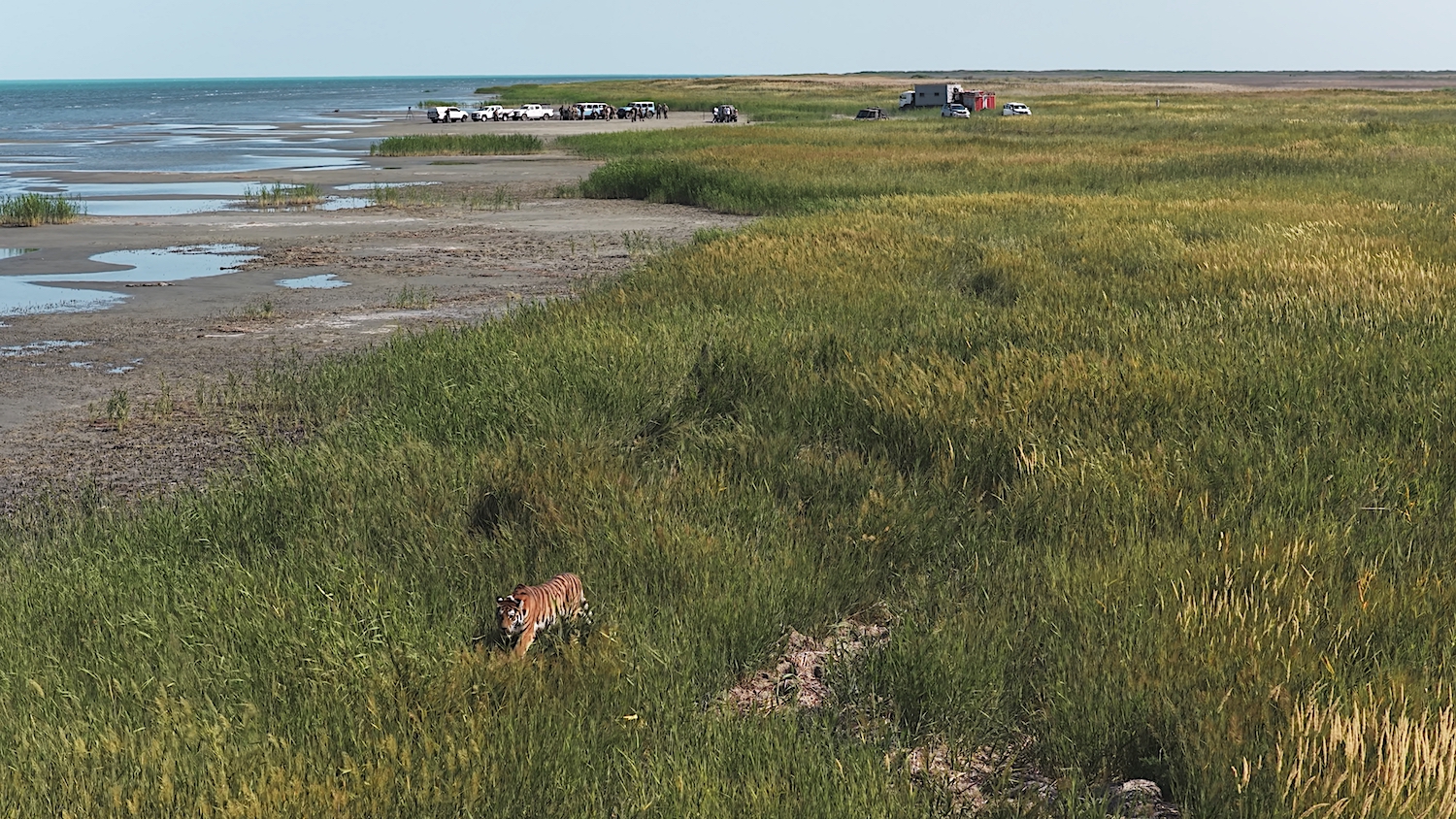
Kazakhstan released a female Amur tiger named Umit into the Ile-Balkhash Nature Reserve on August 5, 2026.
The release marks the return of tigers to Central Asia after a 70-year absence.
Umit is the first tiger released into Kazakhstan since the regional Turan tiger disappeared. The Turan tiger, also called the Caspian tiger, once lived across river forests, wetlands, and floodplains in Central Asia.
The species was declared extinct after decades of habitat loss, hunting, and declining prey populations.
Umit’s name means “hope” in Kazakh.
Her release is part of a long-term program to restore a tiger population in the Ili River delta and around Lake Balkhash. The program uses Amur tigers as a close genetic and ecological replacement for the extinct Turan tiger.
The Amur tiger is native to the Russian Far East. It is adapted to cold forests, deep snow, and large seasonal changes. Conservation planners selected the subspecies because of its close relationship to the extinct Central Asian tiger and its ability to survive in demanding habitats.
Before release, Umit completed veterinary and behavioral assessments. She was fitted with a satellite tracking collar. Conservation teams can now monitor her movements, habitat use, and behavior without regular physical contact.
The work does not end with the release.
A successful reintroduction requires:
- Protected habitat
- Reliable water sources
- Strong prey populations
- Anti-poaching measures
- Human–wildlife conflict planning
- Long-term scientific monitoring
The Ile-Balkhash region has been prepared for this purpose. Habitat protection began years before the first tiger entered the reserve. Teams have worked to restore riparian forests and wetlands and rebuild populations of wild boar, Bukhara deer, roe deer, and other prey animals.
The reserve covers more than 400,000 hectares of important habitat. Its river delta, reed beds, and wooded areas provide cover and access to water.
The project also includes adaptation enclosures, veterinary facilities, camera traps, tracking systems, and trained field teams.
According to The Astana Times, Umit’s movements are being monitored through satellite data, camera traps, and field observations.
The United Nations Development Programme project also connects tiger recovery with broader habitat restoration in the Ili-Balkhash landscape.
Umit is one part of a larger plan. Other Amur tigers remain in adaptation facilities while specialists assess their health and readiness for release.
The process will be gradual.
The goal is a stable, reproducing tiger population. The wider goal is a restored ecosystem that can support large predators, prey species, wetlands, and local communities.

Species Spotlight: Amur Tigers (Panthera tigris altaica)
The Amur tiger is the largest tiger subspecies.
It is also known as the Siberian tiger.
Anatomy
Amur tigers have:
- Large heads and powerful jaws
- Strong shoulders and forelimbs
- Wide paws for moving through snow
- Thick fur for cold climates
- Striped coats that break up their outline
- Long tails used for balance
- Sharp retractable claws
Their large paws spread their weight across soft snow. Their dense coats provide insulation during freezing winters.
The coat is usually orange with black stripes and a white underside. Each tiger has a unique stripe pattern.
The stripes help the tiger blend into grass, reeds, woodland shadows, and broken light. They also make individual animals easier for researchers to identify through camera traps.
Adult males are generally larger than females. Females usually hold smaller territories and may remain closer to established prey areas.
Amur tigers are strong swimmers. They can cross rivers and move between forest patches, wetlands, and open areas when searching for food.
Habitat
Amur tigers are associated with the forests of eastern Russia and nearby parts of China.
Their habitat can include:
- Birch and conifer forests
- River valleys
- Dense shrubs
- Wetlands
- Reed beds
- Seasonal grasslands
The restored Ile-Balkhash landscape differs from the cold forests of the Russian Far East. It includes dry terrain, river woodland, reed beds, and wetland habitat.
This makes monitoring important.
Conservation teams need to understand how the tigers move through the landscape, where they rest, which prey they select, and how they respond to nearby human activity.
A tiger needs more than a protected boundary. It needs enough connected habitat to hunt, rest, move, and reproduce.
Diet
Amur tigers are carnivores.
Their prey can include:
- Wild boar
- Deer
- Roe deer
- Elk
- Smaller mammals
- Birds and fish when available
A healthy tiger landscape requires a healthy prey base.
This is why habitat restoration and prey recovery are central to the Kazakhstan program. Releasing a predator without restoring its food supply would not produce a lasting population.
Conservation Status
Tigers are listed as Endangered.
The Amur tiger has recovered from very low numbers in parts of its historic range, but it remains vulnerable.
Its main threats include:
- Habitat loss
- Fragmented forests
- Declining prey
- Poaching
- Illegal wildlife trade
- Human–wildlife conflict
- Roads and other infrastructure
Small populations are also at risk from limited genetic diversity and local disasters.
Tiger conservation depends on connected landscapes and cooperation across borders. The return of tigers to Kazakhstan demonstrates this clearly. The animals come from one region. The restored habitat is in another. Scientists, governments, protected areas, and conservation organizations must work together.

Why Species Images Matter
A clear species image supports conservation communication.
It gives audiences an immediate connection to the animal. It also helps explain anatomy, habitat, behavior, and threats in a format people can use across campaigns and educational materials.
For the Amur tiger, useful imagery may include:
- Full-body movement shots
- Close-ups of the face and eyes
- Paw prints in snow
- Tigers beside rivers or wetlands
- Mother and cub behavior
- Habitat and prey scenes
- Field monitoring activity
- Camera trap documentation
The best image depends on the message.
A close portrait can support a species profile. A landscape image can show habitat scale. A field image can explain monitoring and restoration work.
Zoo Imagery provides animal photography in landscape and portrait formats for creative professionals, marketers, educators, and conservation teams.
Browse the Wild Tigers collection for related animal imagery.
Company Milestone: More Than 1,000,000 Verified Animal Assets
Zoo Imagery has surpassed 1,000,000 verified high-resolution animal photography assets.
The library includes:
- Polar bears
- Wild tigers
- Giraffes
- Lions
- Elephants
- Pandas
- Hyenas
- Birds
- Fish
Images are available in landscape and portrait formats.
The collection supports campaign work, editorial content, social media, presentations, educational materials, and conservation storytelling.
Quality control remains central to the library. Verified assets give customers a dependable starting point when a project needs accurate, usable animal photography.
ZooMedia.us App Updates
The ZooMedia.us phone app is rolling out across 50+ partner zoos and aquariums.
Current updates include:
- Real-time language translation
- Smart venue and IoT integration
- Guest photo sharing
- User-generated content tools
- Real-time engagement results
- ROI tracking
The app helps zoos and aquariums turn guest photos into shareable content.
Visitors take and share images from the venue. Facilities can follow engagement as it happens. Teams can review results and understand which activities generate attention.

Translation features support visitors who speak different languages. Smart venue and IoT integration connects the app with facility experiences and visitor touchpoints.
The purpose is simple:
- Make photo sharing easier
- Extend the visitor experience
- Encourage return visits
- Track engagement
- Support better marketing decisions
ZooMedia.us is built for zoos and aquariums that want practical picture marketing tools without adding unnecessary steps for guests.
Connect With Zoo Imagery
Explore the Zoo Imagery animal photography library.
Learn more about guest engagement and picture marketing through ZooMedia.
Follow company updates on LinkedIn.
Umit’s release is one step in a long conservation effort.
Strong images help more people see why that effort matters.


