Daily Press Release: Species Spotlights & Conservation News – August 20, 2026
FOR IMMEDIATE RELEASE
August 20, 2026
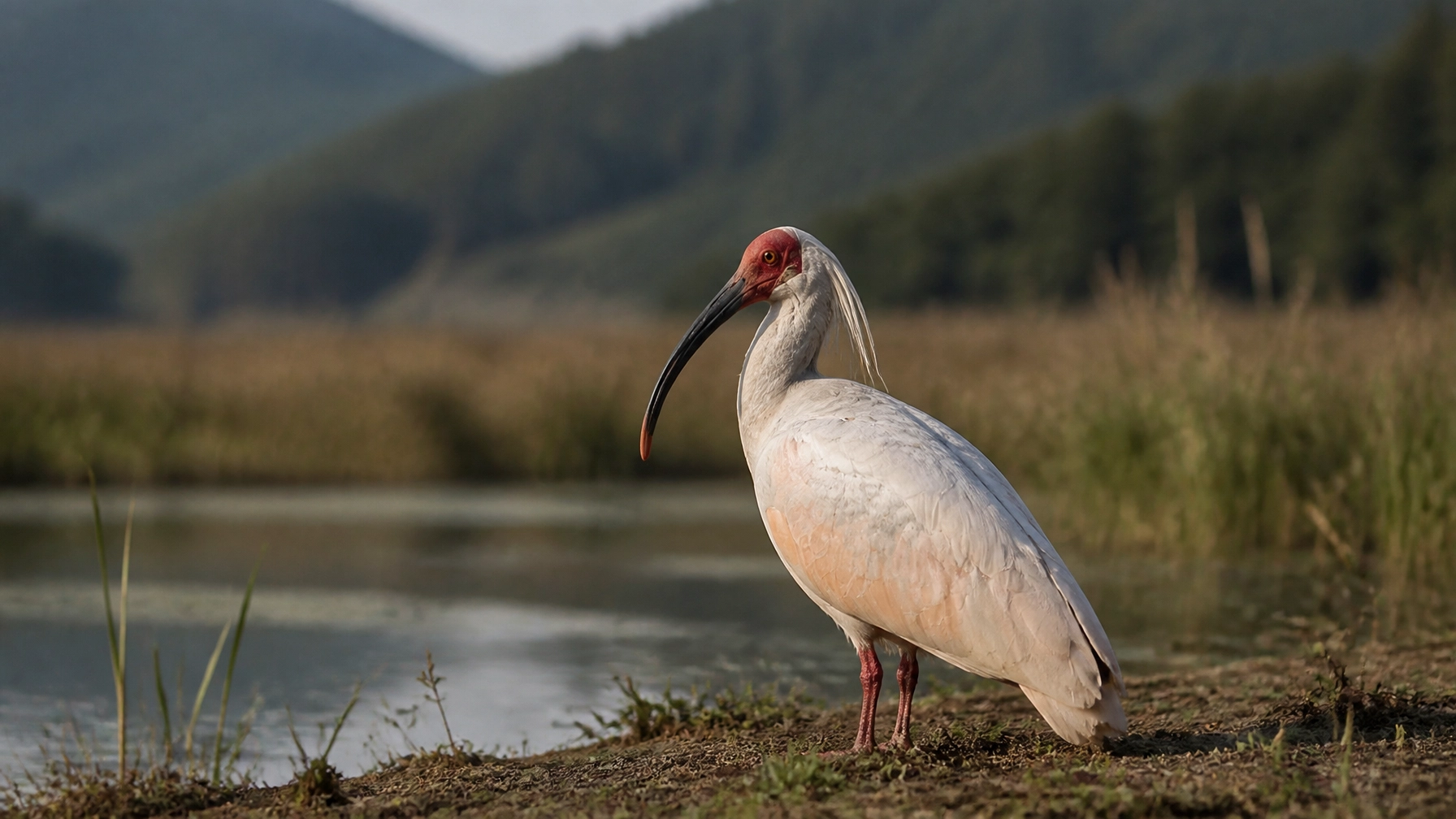
Crested Ibis Recorded in Gwangneung Forest for the First Time
A crested ibis (Nipponia nippon) was spotted on August 11, 2026, in Gwangneung Forest in Pocheon, northeast of Seoul.
This is the first recorded sighting of the species in the forest.
Gwangneung Forest is a UNESCO Biosphere Reserve and an important site for biodiversity research and protection.
The bird was identified by a yellow leg ring. The ring shows that it came from the captive-breeding and reintroduction program operated by the Upo Ibis Restoration Center in Changnyeong, 347 kilometers southeast of Seoul.
Korea National Arboretum officials are working with the restoration center to confirm the bird’s release date and movement history.
The sighting will also be added to the forest’s official biodiversity inventory.
Read the reports from Yonhap and The Korea Times.
Why This Sighting Matters
The crested ibis disappeared from South Korea after its last known sighting near the Demilitarized Zone in 1979.
The decline was linked to:
- Wetland and rice-paddy loss
- Agricultural pesticide use
- Deforestation
- Reduced habitat connections
- Pressure on feeding and nesting areas
South Korea later began a long-term captive-breeding and reintroduction effort.
The Upo Ibis Restoration Center became a central part of that work. Birds bred in captivity have been released near Upo Wetland and other suitable areas.
Wild chicks were recorded in 2021.
The new Gwangneung Forest record adds another point to the recovery story.
It suggests that released crested ibises are moving beyond their original southern release sites. They may be finding viable habitat corridors that connect wetlands, agricultural land, and forest areas.
The bird’s movement history may provide useful information about how reintroduced populations travel across South Korea.
The next step is simple:
- Confirm the bird’s release date
- Trace its known movements
- Review the route to Gwangneung Forest
- Monitor future sightings
- Add the record to long-term biodiversity data
One bird does not establish a new population.
It does provide evidence that restored wildlife can use a wider landscape when habitat remains available.

Species Spotlight: Crested Ibis
The crested ibis is an endangered wading bird native to East Asia.
The IUCN Red List classifies the species as Endangered.
Physical traits
The crested ibis has:
- White plumage
- A soft pinkish tinge during the breeding season
- A bare red face
- A long, curved black bill
- A crest made of plume feathers
- Long legs suited to shallow water and muddy ground
Its appearance changes slightly during breeding season. The white feathers can take on a pink tone, adding to the bird’s distinctive profile.
The red face and long bill are useful identification features. The yellow leg ring provided the clearest connection to South Korea’s reintroduction program in this sighting.
Habitat
Crested ibises use a mix of wetland and forest environments.
Typical habitat includes:
- Rice paddies
- Marshes
- Shallow streams
- Mudflats
- Wet grasslands
- Forest edges
- Mature trees used for roosting
The species needs more than one habitat type.
It feeds in shallow water and wet ground. It rests and roosts in trees. It may travel between wetlands and forest areas during the day.
This makes habitat corridors important.
A protected wetland may not be enough if nearby feeding areas are isolated. A forest may not support the species without access to shallow water and open ground.
Gwangneung Forest’s location makes the sighting especially useful for conservation research. The bird may have used a series of connected habitats to move north from the Changnyeong region.
Diet
Crested ibises find food by probing mud and shallow water with their long bills.
Their diet can include:
- Small fish
- Frogs
- Insects
- Snails
- Crayfish
- Other small aquatic animals
Healthy wetlands support this food supply.
Clean water also matters. Pesticides and other pollutants can reduce available prey and affect bird health.
The species’ feeding behavior makes it a clear example of the connection between water quality, farming practices, habitat protection, and wildlife recovery.

A Recovery That Still Needs Protection
The crested ibis is a conservation recovery story.
It is also a reminder that recovery takes time.
Captive breeding can increase a population. Release programs can return animals to former range. But lasting recovery depends on conditions outside the release area.
The species still needs:
- Safe wetlands
- Low pesticide exposure
- Available feeding areas
- Mature forest roosts
- Connected habitat
- Continued monitoring
- Public support
The Gwangneung Forest sighting shows why conservation teams track individual animals.
A leg ring can reveal where a bird came from. A camera record can show where it traveled. A new location can expand researchers’ understanding of the species’ range.
These details support better decisions.
They also help the public see conservation as practical work. It involves breeding centers, habitat management, field monitoring, data collection, and cooperation between institutions.

Using Animal Photography for Conservation Communication
Zoo Imagery’s daily editorial series brings together:
- A current conservation story
- A species spotlight
- Clear animal facts
- Practical uses for photography
- A connection to zoo and aquarium communication
The format is designed for teams that need useful animal content without unnecessary complexity.
A crested ibis image can support:
- A species education page
- A wetland conservation campaign
- A zoo exhibit panel
- A school activity
- A social media post
- A wildlife newsletter
- A conservation report
- A “Presented by” animal page
- A sponsored species spotlight
- An environmental or community-focused campaign
Different images serve different purposes.
A portrait shows physical traits.
A wetland image explains habitat.
A behavior photograph shows how the animal feeds or moves.
A wider landscape image can connect the species to conservation work beyond the animal itself.
Zoo Imagery provides animal photography in both landscape and portrait formats. The library includes birds, fish, polar bears, giraffes, lions, elephants, wild tigers, pandas, and hyenas.
The goal is straightforward:
Give creative professionals, marketers, content creators, zoos, and aquariums clear images for clear communication.
ZooMedia.us Extends the Visitor Story
Professional photography is one part of public engagement.
Visitor photography is another.
The ZooMedia.us app helps zoos and aquariums make it easier for guests to share photos from their visits.
The app supports:
- Visitor photo sharing
- User-generated content
- Branded galleries
- Easy uploads
- Real-time engagement results
- ROI tracking
A visitor takes a photo.
The visitor shares it.
The zoo or aquarium gains content that can continue the conversation after the visit.
That content can support exhibit promotion, education, conservation messages, and future visitation. It can also show which animal experiences generate the strongest response.
For conservation communication, the connection matters.
A visitor photo of a bird, fish, elephant, or big cat can become the starting point for a larger message about habitat, care, research, or species protection.
Closing Note
The crested ibis disappeared from South Korea for decades.
A banded bird has now been recorded in a forest where the species had never been documented.
Officials will continue tracing its release history and movements.
The record will be added to the biodiversity inventory of Gwangneung Forest.
The work continues.
For animal photography, species spotlights, and conservation storytelling, visit Zoo Imagery.
For company news and daily updates, follow Zoo Imagery on LinkedIn.


