Daily Press Release: Species Spotlights & Conservation News – August 16, 2026
FOR IMMEDIATE RELEASE
August 16, 2026
India Records 891 Asiatic Lions in 2025
India’s Asiatic lion population reached 891 wild lions in 2025.
The figure comes from the May 2025 Asiatic Lion Population Estimation in Gujarat’s Greater Gir landscape. It represents a 32% increase from 674 lions in 2020 and more than 70% growth over the past decade.
The result is an important conservation milestone for a population that once faced near-extinction pressure.
The recovery is linked to long-term habitat protection, anti-poaching work, veterinary care, monitoring, and cooperation with local communities. The population has also expanded beyond the core Gir protected area into surrounding landscapes, including Barda Wildlife Sanctuary.
The Government of India reports that the lions now range across approximately 35,000 square kilometers in 11 districts of Gujarat. The official announcement is available through the Press Information Bureau of India.
Growth brings new responsibilities.
More lions are living in areas shared with people. Roads, open wells, power lines, disease, and human–lion conflict remain serious concerns. Conservation must now protect both the animals and the communities living near them.
This is the central lesson of the latest population estimate:
Recovery is progress. It is not the end of the work.

What Makes the Asiatic Lion Different?
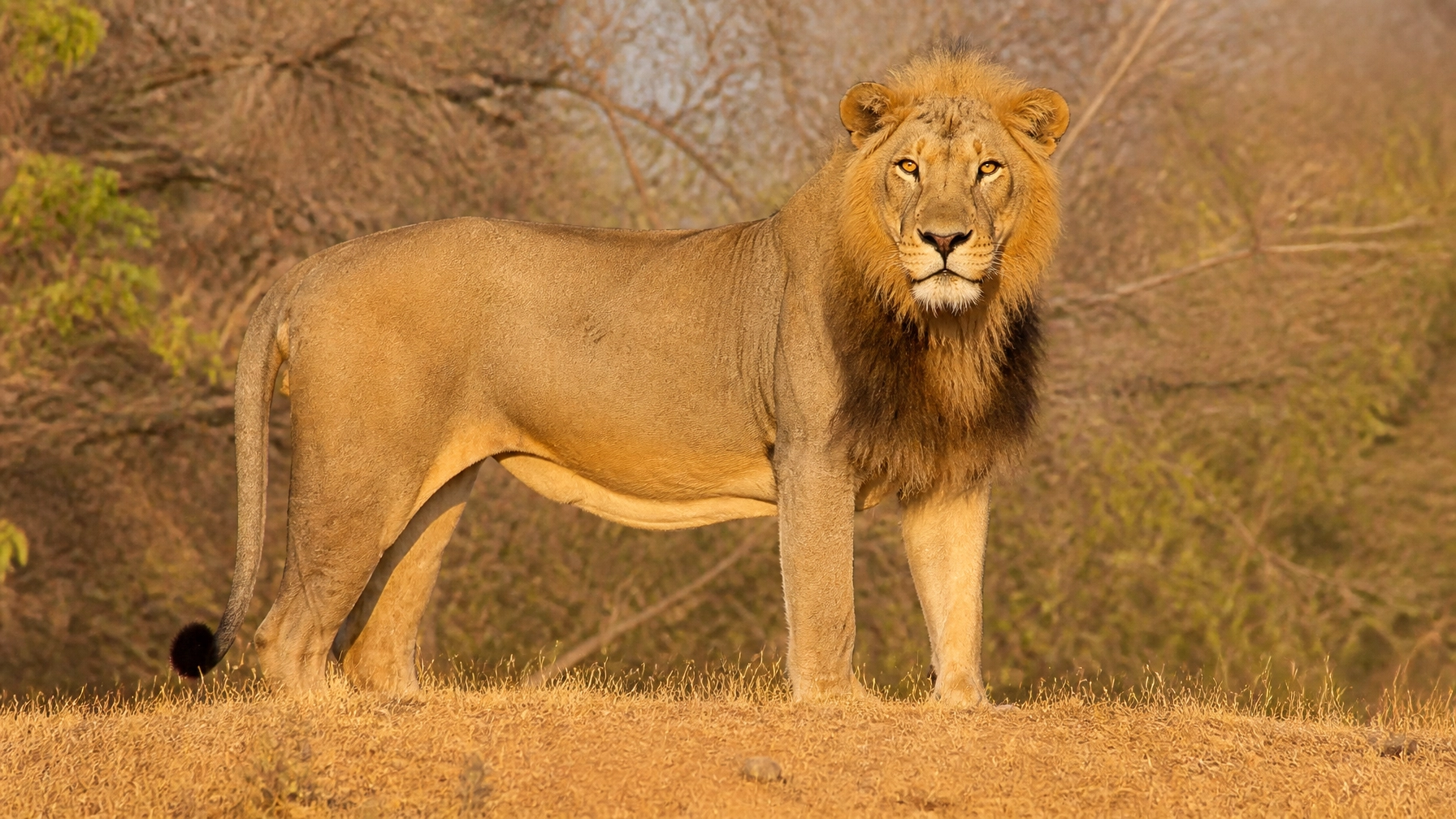
The Asiatic lion is a subspecies of lion known scientifically as Panthera leo persica.
Its remaining wild population lives in Gujarat, India. This makes the Asiatic lion one of the world’s most geographically limited big cats.
Key traits include:
- A tawny coat
- A distinct fold of skin along the belly
- A shorter, less full mane in many males
- A visible tail tuft
- Strong social bonds
- Family groups, known as prides
- A diet based mainly on wild ungulates and other available prey
Asiatic lions are slightly smaller, on average, than many African lions. Their mane is often less developed, which can leave the ears more visible. These traits help distinguish them, but individual lions vary.
For decades, the entire wild population was concentrated around Gir. That created a major risk. A disease outbreak, natural disaster, or other large event could affect a large share of the species at once.
The population’s spread into nearby habitats offers more room. It also increases the need for safe wildlife corridors and careful planning around roads, farms, villages, wells, and power infrastructure.
The IUCN Red List lists the Asiatic lion as Endangered.
Asiatic Lions and African Lions
Asiatic and African lions belong to the same species, but they live in different regions and face different conservation conditions.
Asiatic lions
- Found in Gujarat, India
- One surviving wild population
- Smaller overall range
- Often shorter, less full manes
- Visible belly fold
- Increasing contact with human settlements
- High concern about disease and population concentration
African lions
- Found across parts of sub-Saharan Africa
- Populations spread across many countries
- Usually larger ranges
- Often fuller manes in adult males
- Many different habitat types, including savannas, grasslands, woodlands, and semi-deserts
- Populations divided by farms, roads, fences, and other development
- Conflict with livestock owners remains a major threat
African lions are also under pressure from habitat loss, declining prey, illegal killing, and poorly managed wildlife tourism.
The two forms share important behaviors. Lions are social cats. They rest for long periods, communicate through vocalizations and scent marking, defend territories, care for young, and work together when hunting or protecting a pride.
Their social nature is one reason lions connect strongly with the public. A single lion can draw attention. A pride can communicate family, care, conflict, and survival in one image.

The Main Threats Facing Lions
Lion conservation depends on practical protection in the places where lions live.
Habitat loss
Agriculture, roads, mining, settlements, and other development can reduce available habitat. Fragmented land makes it harder for lions to move, find prey, and maintain healthy populations.
Human–wildlife conflict
Lions may kill livestock when wild prey is limited or when habitat brings them close to farms. Livestock losses can create pressure for retaliatory killing.
Local communities are part of the conservation solution. Better livestock protection, compensation systems, early warning programs, and safe land-use planning can reduce conflict.
Disease
A disease outbreak can spread quickly through a concentrated population. Asiatic lions face particular concern because their wild range remains limited.
Monitoring, veterinary care, and responsible population management are important safeguards.
Unsafe infrastructure
Open wells, roads, railways, power lines, and fencing can injure or kill wildlife. As lions expand into new areas, infrastructure must be designed with movement routes in mind.
Declining prey
Lions need healthy prey populations. Protecting habitat also protects deer, antelope, wild pigs, and other species that support the wider ecosystem.
Illegal killing
Poaching and retaliatory killing continue to affect lions in parts of Africa. Strong enforcement, local partnerships, and reliable conservation funding remain necessary.
Good conservation reporting should include these facts. It should show progress without hiding risk.
A Daily Press Release Format for Conservation Storytelling
Zoo Imagery is marking a company milestone with this daily press release format.
Each release brings together three elements:
- A current conservation story
- A clear species spotlight
- A practical connection to animal photography and zoo marketing
The goal is simple.
Make important animal stories easier to understand. Give creative teams reliable subjects for their content. Help zoos and aquariums communicate the work behind animal care, habitat protection, education, and public engagement.
A strong conservation image does not replace facts. It gives those facts a clear place to begin.
For publishers, educators, marketers, and nonprofit teams, animal photography can support:
- Species pages
- Conservation campaigns
- Educational posts
- Social media
- Annual reports
- Presentations
- “Presented by” animal pages
- Sponsored species spotlights
- Environmental and community-focused campaigns
Zoo Imagery provides professional animal photography in landscape and portrait formats. The library includes lions, polar bears, tigers, giraffes, elephants, pandas, hyenas, birds, fish, and other animal categories.
Visit the Zoo Imagery library or learn more about Zoo Imagery.
ZooMedia.us Helps Visitors Join the Story
Conservation communication does not have to move in one direction.
Zoos and aquariums can invite visitors to contribute their own photos and experiences. The ZooMedia.us app helps make that possible.
The platform supports:
- Easy photo uploads
- Personal galleries
- Sponsor options
- Branding features
- Visitor-generated content
- Real-time engagement results
- ROI tracking
A visitor takes a photo.
The visitor shares it.
The zoo receives a new opportunity to continue the conversation after the visit.
That connection can help turn a single animal encounter into a longer story about habitat, care, research, and conservation.
The approach is direct. Use professional photography where clarity and consistency matter. Use visitor photos where personal experience matters. Give both a clear conservation purpose.
Zoo Imagery previously covered this approach in “How Zoos Are Turning Visitor Photos Into Conservation Wins”.

Why the Lion Story Matters
The rise to 891 Asiatic lions shows what sustained conservation work can achieve.
It also shows why public understanding matters.
People need clear information about:
- Where lions live
- How populations are measured
- Why habitat connections matter
- What threats remain
- How communities and institutions can help
Images can make these points easier to share. A lion portrait can introduce a species. A pride image can show social behavior. A habitat image can explain the value of protected land. A visitor photo can show how public engagement supports the wider mission.
The best stories combine all three:
The animal.
The place.
The work required to protect both.
Zoo Imagery supports that process with animal photography and picture marketing tools for zoos, aquariums, creative professionals, marketers, and content creators.
Closing Note
India’s 2025 Asiatic lion estimate is a strong conservation result.
The population reached 891.
The range expanded.
The work continues.
Lion conservation now depends on protecting habitat, reducing conflict, improving infrastructure, monitoring disease, and keeping the public connected to the species.
Zoo Imagery will continue sharing daily species spotlights and conservation news in a clear, useful format.
For animal photography and conservation storytelling: Visit Zoo Imagery.
For daily updates and company news: Follow Zoo Imagery on LinkedIn.


