Daily Press Release: Species Spotlights & Conservation News
August 14, 2026
Two conservation milestones lead today’s update:
- A rescued Sumatran orangutan has given birth in the wild.
- Kazakhstan has released its first wild tiger in more than 70 years.
Both stories show what long-term conservation work can achieve.
They also show why clear, accurate animal imagery matters.
Sumatran Orangutan: From Traffickers to Freedom
Bulan is a female Sumatran orangutan (Pongo abelii).
She was rescued from wildlife traffickers and sent to a rehabilitation program in Indonesia. About 7.5 years ago, conservation teams returned her to the Jantho Orangutan Release Area in Aceh, northern Sumatra.
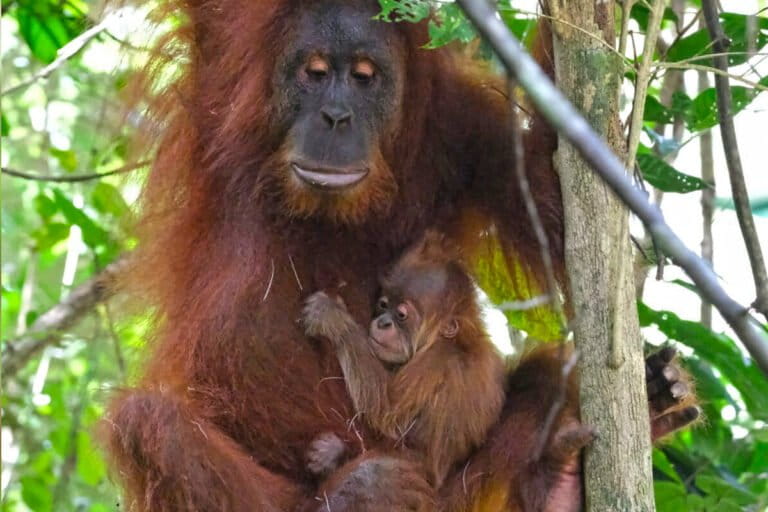
On May 22, 2026, fieldworkers saw Bulan moving through the forest canopy with a male infant.
The baby was later named Badar. The name means “full moon.” Bulan means “moon” in Indonesian.
Badar is the 10th confirmed birth in the Jantho release area since the program began in 2011.
This is more than a successful birth.
It is evidence that a rescued orangutan can recover, adapt, reproduce, and raise young in the wild.
The Jantho program was created for orangutans recovered from illegal trade and human-wildlife conflict. The reserve provides forest habitat, food sources, and space for released animals to establish natural behavior.
The program also connects to the larger Leuser Ecosystem, one of the most important remaining habitats for Sumatran orangutans.
The progress is real. The risks remain serious.
A 2026 study cited by Mongabay estimated that only about 11,694 Sumatran orangutans remain in the wild. The study also reported a 19.5% decline between 2011 and 2023.
Deforestation remains the main threat.
Habitat fragmentation and conflict with people add pressure.
Bulan and Badar offer a clear message:
Rehabilitation works best when it is followed by protected habitat.
Tiger Reintroduction: A Return to Kazakhstan
On July 31, Kazakhstan released an adult female Amur tiger named Umit into the Ile-Balkhash State Nature Reserve.
Umit means “hope” in Kazakh.
She is the first tiger to live in Kazakhstan’s wild in more than 70 years.
The country’s native Caspian, or Turan, tiger disappeared from Kazakhstan in the middle of the 20th century. Habitat loss, hunting, declining prey populations, and human expansion removed the conditions tigers needed to survive.
The new project focuses on the southern Lake Balkhash region and the Ili River delta.
Before Umit’s release, conservation teams prepared the landscape. They:
- Protected the reserve.
- Restored habitat.
- Increased prey populations.
- Built adaptation enclosures.
- Added veterinary facilities.
- Trained local specialists.
- Improved tracking and monitoring systems.
Umit was assessed for health, behavior, hunting ability, and response to people before release.
She now wears a GPS and satellite tracking collar. Teams are monitoring her movements around the clock through satellite data, camera traps, and field observations.
The other three tigers transferred from Russia remain under care:
- An adult male named Amur.
- A cub named Turan.
- A cub named Ussuri.
Future releases will depend on veterinary and behavioral assessments.
The project uses Amur tigers because genetic research has found a close relationship between Amur and extinct Turan tigers. The goal is to restore a self-sustaining tiger population to Central Asia.
The process will take time.
The return of one tiger is an important first step. A stable population will require healthy habitat, enough prey, protection from poaching, and cooperation with nearby communities.
Read the full report from The Astana Times.
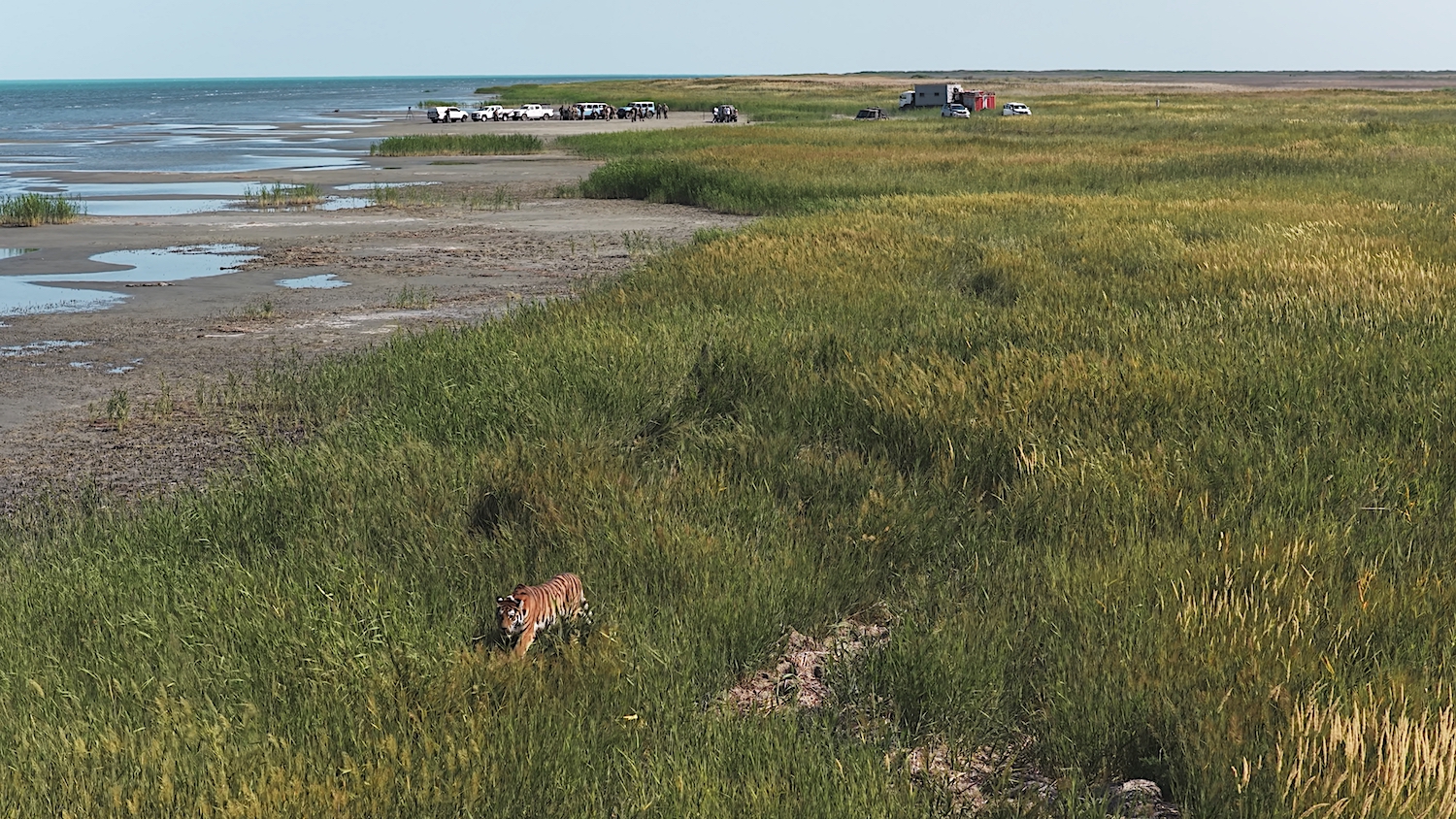
Photo credit: amur-tiger.ru, via The Astana Times.
Species Spotlight: Wild Tigers
Wild tigers need more than protected borders.
They need connected habitat.
They need water.
They need prey.
They need safe movement routes.
They also need consistent monitoring over many years.
This is why tiger conservation is never limited to one animal. A reintroduction project affects the wider ecosystem.
Tigers sit at the top of the food chain. Their presence can indicate that an area still supports a functioning web of wildlife.
For marketers, educators, and conservation teams, tiger imagery can help explain this relationship.
A strong species spotlight should cover:
- The animal.
- Its habitat.
- Its role in the ecosystem.
- The threats it faces.
- The work supporting its recovery.
- The next step.
Zoo Imagery’s Wild Tigers library gives creative professionals access to animal photography for campaigns, educational materials, presentations, and digital content.
Landscape and portrait formats support different uses:
- Website banners.
- Social posts.
- Print materials.
- Species profiles.
- Conservation reports.
- Exhibit screens.
Species Spotlight: Sumatran Orangutans
Orangutans are slow-growing animals with long lifespans and extended family care.
A young orangutan depends on its mother for years. That makes every successful birth important for a small and pressured population.
Bulan’s story gives conservation teams a practical example of what success can look like:
- Rescue from illegal trade.
- Rehabilitation.
- Release into protected forest.
- Adaptation to life in the wild.
- Reproduction.
- Care of a healthy infant.
The story also shows the value of follow-up work.
Release day is not the end of conservation. Teams must continue tracking animals, protecting habitat, managing conflict, and checking population health.
Images help make that work visible.
A clear photograph can show an animal’s condition, behavior, habitat, and relationship with its surroundings. It can support a report or make a public story easier to understand.
Zoo Imagery Update
Zoo Imagery continues to build a high-quality, diverse animal photography library.
The goal is simple:
Help professionals find the right image faster.
A focused library can save time and reduce the need for costly custom production. It gives creative teams a reliable starting point for animal-related projects.
Our categories include:
The library supports conservation storytelling, species spotlights, educational work, brand campaigns, and ESG-aligned communications.
We focus on useful images.
Clear subjects.
Natural behavior.
Landscape and portrait formats.

ZooMedia.us for Zoos and Aquariums
Zoo Imagery also supports zoos and aquariums through the ZooMedia.us phone app.
The app helps guests share photos taken during their visit.
That creates user-generated content for the venue.
It can help zoos and aquariums:
- Make photo sharing easier.
- Encourage visitor participation.
- Extend the reach of exhibit stories.
- Create authentic social content.
- Track engagement in real time.
- Measure campaign results and ROI.
The approach is direct.
Visitors take photos.
They share them.
The venue gains more content and clearer engagement data.

This supports species spotlights, exhibit promotions, conservation campaigns, and visitor communication.
Professional animal photography and visitor-generated content serve different purposes. Together, they give zoos and aquariums more ways to tell accurate, useful stories.
Why These Stories Matter
Bulan’s birth shows the value of rehabilitation and protected habitat.
Umit’s release shows the scale of a long-term reintroduction effort.
Neither outcome happened quickly.
Both required preparation, cooperation, monitoring, and continued care.
The same principle applies to conservation communication.
Good stories need good information.
They also need clear images that help people see the animal, the place, and the work involved.
Zoo Imagery helps creative professionals, marketers, and content creators find those visuals in one place.
We also help zoos and aquariums turn visitor photos into measurable engagement.
Explore Zoo Imagery for animal photography and marketing solutions.
Follow Zoo Imagery on LinkedIn for daily species spotlights, conservation news, and company updates.


