Daily Press Release: Species Spotlights & Conservation News
Presented by Zoo Imagery
August 12, 2026
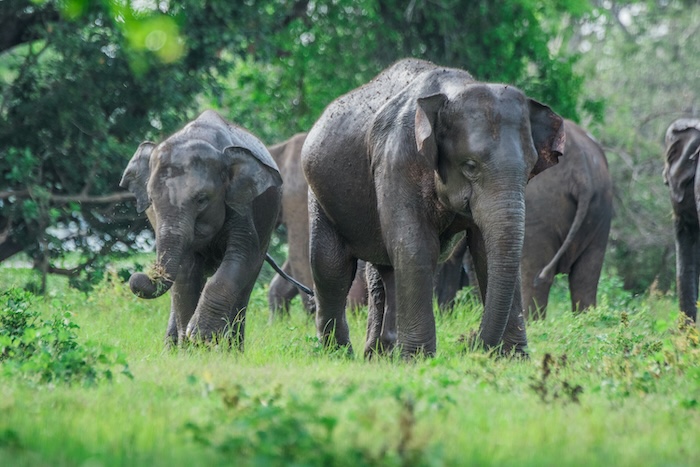
Today is World Elephant Day.
This year’s conservation news shows several practical ways to protect elephants and the people who share their habitat:
- Legal protection for movement corridors in Sri Lanka
- Thermal-imaging drones in Kenya
- DNA research from elephant dung
- A major population increase for Asiatic lions in India
- Better ways for zoos and aquariums to turn visitor photos into measurable engagement
World Elephant Day: protecting movement
Elephants need space.
They move between feeding areas, water sources, forests, farms, and seasonal habitats. When roads, farms, buildings, or fences block these routes, conflict becomes more likely.
Sri Lanka has taken a legal step to protect several important pathways.
According to a statement reported by Newswire, three major elephant corridors have been officially gazetted and opened in the Hambantota and Monaragala districts:
- Watahira Kanda
- Hadapanagala
- Koholankala
The corridors are intended to restore traditional elephant routes and reduce encounters between elephants, farmers, and villages.
Gazetting gives the routes formal recognition. It also helps limit development that could further divide elephant habitat.
The Sri Lankan government is also working on related measures:
- Clearing invasive plants near reservoirs
- Restoring water sources inside forests
- Creating grassland and enrichment areas
- Improving warning systems near railway lines
- Building and maintaining electric fences
- Expanding medical support for injured elephants
Corridors alone do not solve human-elephant conflict. They must remain open. They must be managed well. Local communities must be part of the plan.
Still, legal protection is an important starting point.
Kenya: thermal drones in Amboseli
In Kenya’s Amboseli ecosystem, conservation teams are using thermal-imaging drones to track elephants at night.
Amboseli National Park and its surrounding community lands are not separated by a complete perimeter fence. Elephants move between the park, farms, settlements, and neighboring habitats.
That movement is natural.
For farmers, it can mean damaged crops, lost income, and dangerous nights spent guarding fields.
A recent Mongabay report describes how thermal drones help conservation teams detect elephants in low light and respond before encounters become more serious.
The drones can:
- Locate elephants after dark
- Track herd movement
- Warn nearby communities
- Help rangers respond quickly
- Guide elephants away from farms
- Support anti-poaching and habitat monitoring
In May and June 2026, Big Life Foundation data recorded the use of thermal drones in 78 elephant-related incidents in and around Amboseli. In 33 cases, the drones helped guide elephants away from farms and back toward safer areas.
The technology does not replace local knowledge, rangers, fencing, or community agreements.
It adds speed and visibility.
That matters in a landscape where elephants can move quickly and where a delayed response can lead to crop loss or injury.
Drone use also requires care. Operators need permits. Flights must avoid unnecessary disturbance. Research published in Scientific Reports indicates that elephants may become accustomed to drones used for observation, while low and erratic flights can cause them to move away.
The purpose should remain clear:
Detect early. Respond carefully. Reduce harm.

Elephant dung can reveal hidden populations
In dense or fragmented forests, counting elephants by sight is difficult.
Researchers may not see every animal. Herds can move through thick vegetation. Small populations may be spread across disconnected forest patches.
DNA from elephant dung offers another method.
Field teams collect fresh dung samples. Scientists extract DNA from the outer layer of the sample. Each usable sample can produce a genetic profile linked to one individual elephant.
When researchers compare profiles across samples, they can identify:
- Individual elephants
- Sex
- Relatedness
- Population size
- Movement between forest areas
- Genetic connection between groups
A study summarized by Research Matters tested this method in the fragmented forests of Kodagu, Karnataka.
Researchers collected 144 dung samples. DNA analysis produced usable results from 124 samples. The team identified roughly 33 to 34 individual elephants, close to the known population of 34.
The genetic method estimated about 39 elephants, with an uncertainty range that included the known number.
Traditional dung-count methods produced a much higher estimate.
The difference matters.
Reliable population counts help conservation teams decide where to protect habitat, where to restore connections, and how to monitor small groups over time.
Dung DNA is also non-invasive. Researchers do not need to capture or handle elephants.
In fragmented forests, that makes the method useful for tracking populations that are difficult to observe directly.

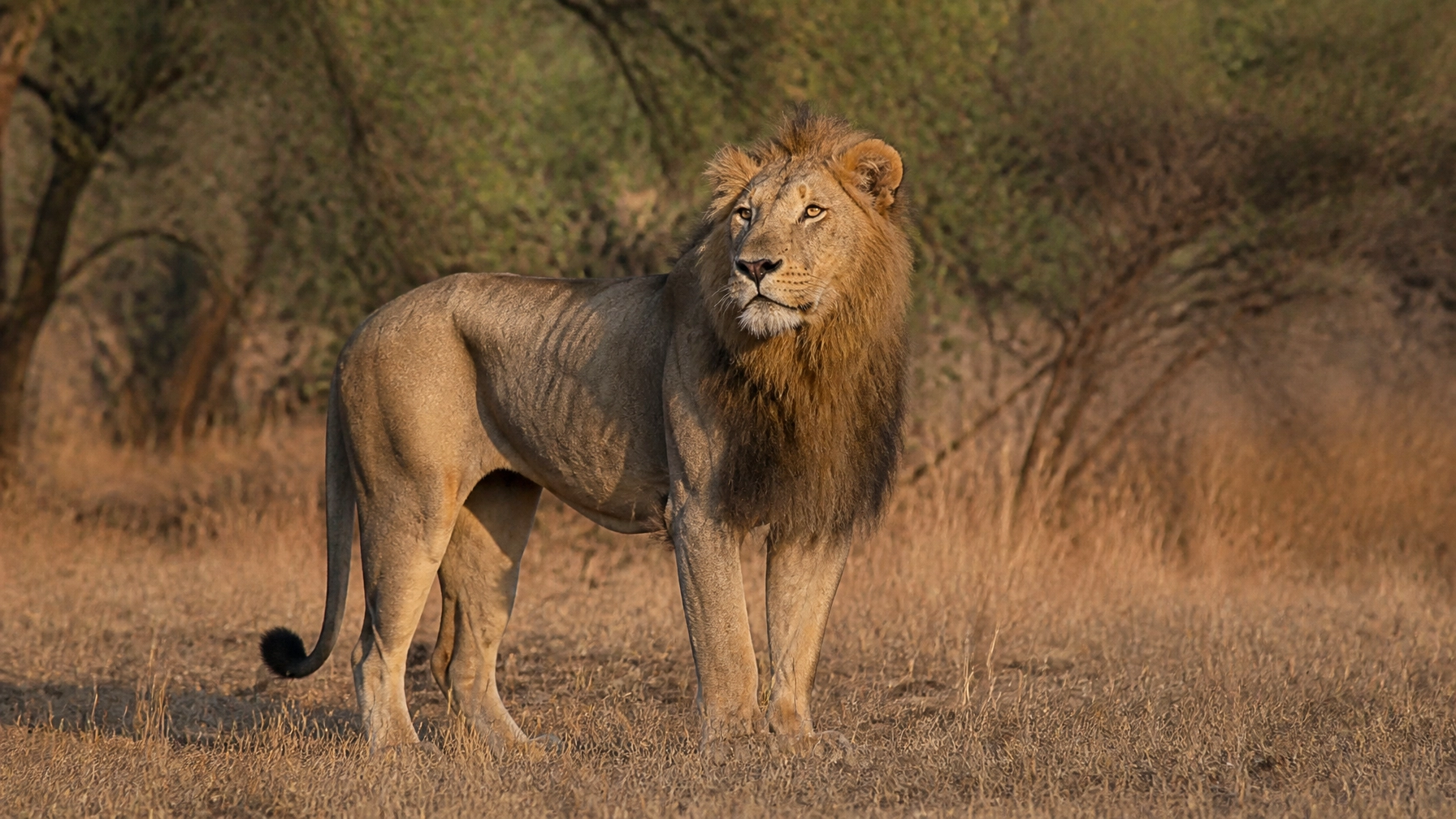
Species spotlight: Asiatic lions
India’s Asiatic lion population has reached 891 individuals.
That is a 32% increase since 2020, when the population was recorded at 674.
The figures come from India’s 2025 Asiatic Lion Population Estimation in Gujarat. All wild Asiatic lions live in and around the Gir landscape.
The increase is a significant conservation milestone.
The population has also expanded beyond the core protected areas. Lions now use a wider network of sanctuaries, community lands, and connecting habitats across the Saurashtra region.
The recovery still needs careful management.
A larger population does not remove the risks. Asiatic lions remain concentrated in one broad region. Disease, habitat pressure, conflict, and limited genetic diversity remain concerns.
The 891 figure is good news.
It is also a reminder that population growth must be matched with:
- Safe habitat
- Connected landscapes
- Reliable monitoring
- Veterinary readiness
- Community support
- Protection beyond park boundaries
Read more about the Asiatic lion population increase.
For projects that need professional lion photography, visit the Zoo Imagery lions collection.
ZooMedia.us: making visitor photos useful
Conservation stories need attention.
Zoos and aquariums already have a strong source of authentic content: their guests.
The ZooMedia.us phone app helps zoos and aquariums turn guest photos into real-time engagement.
Visitors can share the photos they take during their visit. Marketing teams can use that content to encourage participation, show real visitor experiences, and connect animal stories with conservation messages.
The platform supports:
- Guest photo sharing
- Real-time engagement results
- ROI tracking
- User-generated content
- Visitor participation
- Picture marketing campaigns
The model is simple.
A guest takes a photo. The guest shares it. The zoo receives useful content and a measurable engagement signal.
That connection can support campaigns about habitats, animal care, research, or species protection.
Visitor photos do not replace professional photography. Both have a role.
Use professional animal images for:
- Website headers
- Campaign artwork
- Educational materials
- Press releases
- Social media templates
- Sponsored species spotlights
Use guest photos for:
- Participation
- Visitor stories
- On-site moments
- Community sharing
- Post-visit engagement
See the Zoo Imagery conservation storytelling guide for practical examples.

The conservation message
Today’s stories point to one clear idea:
Conservation works best when it connects animals, habitat, people, and information.
Sri Lanka is protecting movement routes.
Kenya is using faster monitoring to reduce conflict.
Scientists are using DNA to find elephants that surveys may miss.
India’s Asiatic lions are increasing, while their future still depends on careful planning.
Zoos and aquariums can help keep these stories visible. Good images make complex issues easier to understand. Visitor participation makes the message more personal. Clear results help teams improve their work.
Zoo Imagery provides high-quality animal photography in landscape and portrait formats, including lions, elephants, polar bears, tigers, giraffes, pandas, hyenas, birds, and fish.
For zoo and aquarium teams, ZooMedia.us adds a practical way to turn guest photos into measurable engagement.
Find the right animal images at zooimagery.com.
Follow Zoo Imagery on LinkedIn for more species spotlights, conservation news, and marketing ideas.
Publishing note: Prepared for WordPress publication.


