Daily Newsletter: Sustainable Wildlife Marketing Insights – August 16, 2026
Today’s focus
Evidence-led conservation communication.
The shift is simple:
- Fewer vague claims
- More proof
- Clearer partner roles
- Specific guest actions
- Regular progress updates
“Helping wildlife” is not enough.
Audiences want to know:
- Which place?
- Which species?
- Which partner?
- What action?
- What changed?
This is good for conservation.
It is also better marketing.
Industry trend: proof over green language
Wildlife organizations are moving away from broad environmental language.
Terms such as “green,” “sustainable,” and “making a difference” have limited value when they stand alone.
They do not show:
- The conservation problem
- The organization’s role
- The location of the work
- The people involved
- The measured result
A stronger message gives each claim a clear source.
For example:
“We support wetland protection.”
Better:
“We are participating in EAZA’s Wetlands for Life campaign, which supports wetland protection, restoration, and creation. The campaign includes fundraising for selected projects, public learning, species recording, water-quality work, and water-saving guidance.”
The second statement gives people something they can check.
It also leaves room for honesty. A zoo may support a field project without claiming that it manages the entire project. A campaign may be working toward an outcome without claiming that the outcome has already been achieved.
That distinction matters.
Real-world example: EAZA Wetlands for Life
The EAZA Wetlands for Life campaign runs from 2026 to 2027.
Its focus is wetlands. This includes:
- Lakes and rivers
- Marshes and swamps
- Peatlands
- Estuaries and deltas
- Mangroves
- Coral reefs
- Human-made ponds and reservoirs
Flamingos are the campaign’s ambassador species.
The campaign connects the familiar animal in the exhibit with the wider ecosystem that supports it.
That connection gives marketers a stronger story structure:
-
The species
Flamingos attract attention. -
The ecosystem
Wetlands support biodiversity, water supplies, climate resilience, and livelihoods. -
The risk
Wetlands are among the most threatened ecosystems in the world. -
The response
Institutions can support selected field projects, improve wetland areas, record species, improve water quality, and reduce water use. -
The evidence
Report the activities and outcomes separately.
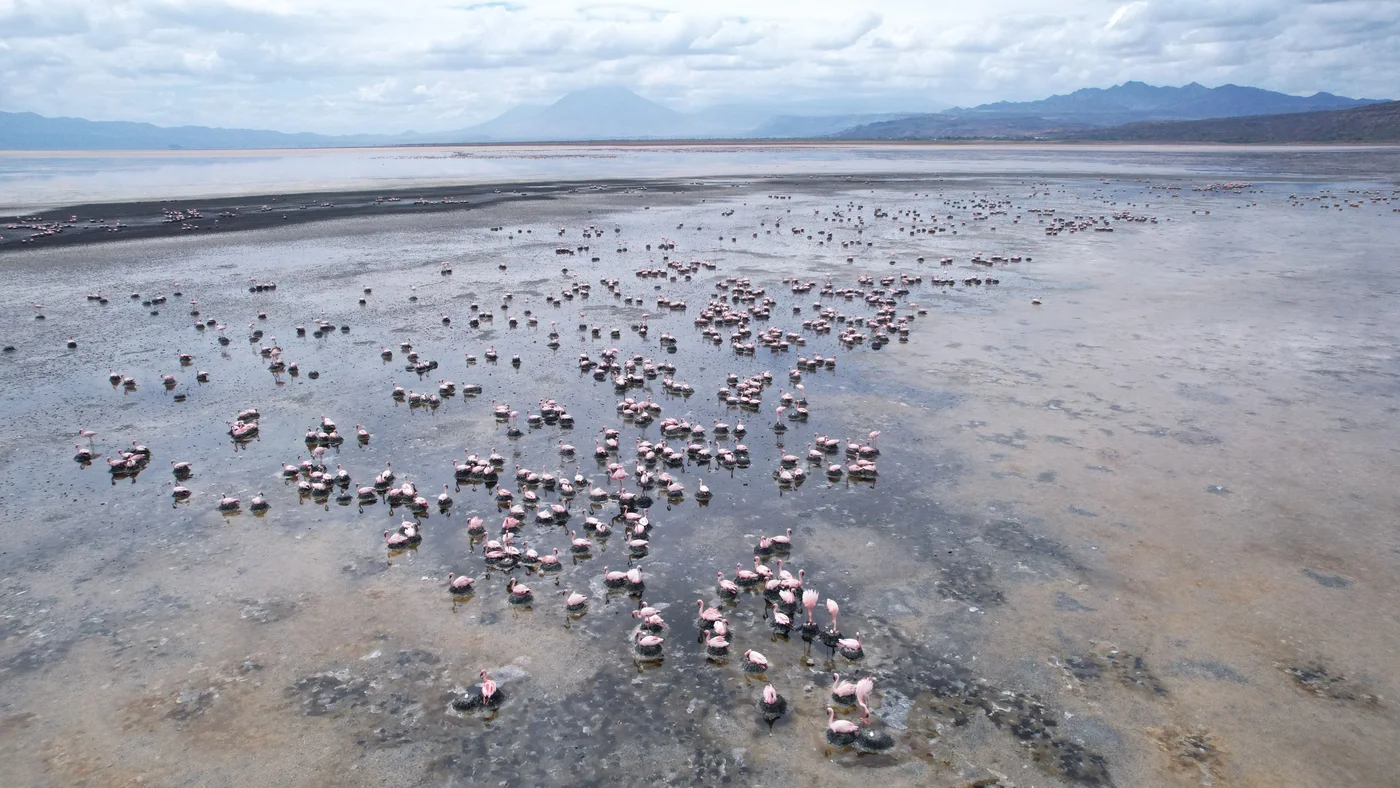
One campaign project focuses on Lake Natron, a critical site for lesser flamingos.
This is a useful model for local marketing.
Do not stop with:
“Flamingos need wetlands.”
Add the conservation link:
“Our Wetlands for Life activity connects visitors with the importance of wetland habitats and supports a shared campaign that includes work at sites such as Lake Natron.”
Then show the next update:
- What activity took place
- Which partners were involved
- How many people participated
- What funds or resources were directed
- What the field partner reported
- What remains unresolved
This is transparent communication.
It does not need dramatic language.
Beyond zoo walls: the AZA SAFE model
The AZA SAFE: Saving Animals From Extinction program offers another useful example.
SAFE brings zoos, aquariums, field partners, researchers, and communities together around species-level action plans.
The work can include:
- Habitat restoration
- Wild population monitoring
- Community education
- Reintroduction support
- Law enforcement partnerships
- Research
- Public engagement
The important point is location.
The story does not end at the exhibit.
It continues in reefs, forests, wetlands, grasslands, and communities.
One example is Coral SAFE. The program links aquarium expertise with reef restoration in Florida and the Bahamas.
Reported measures include:
- More than 170,000 corals out-planted
- At least 85% first-year survival for those out-planted corals
- 16 coral species spawned at four AZA-accredited institutions
These numbers do not tell the whole story.
They do provide a clear starting point for communication.
An aquarium can explain:
- What it does on site
- Which field partners receive support
- How coral restoration works
- What survival means
- How results are monitored
- What the public can do next
This is a practical way to communicate the “beyond zoo walls” role.
It also prevents overclaiming.
Say:
“We support coral restoration through partners.”
Do not say:
“We are restoring the world’s reefs.”
The first statement is precise. The second is not.
The sustainable marketing strategy: build a proof loop
Use one campaign page, one recurring content format, and one simple reporting cycle.
1. Start with one verified claim
Choose a single conservation statement.
Examples:
- “Our wetland garden supports native species.”
- “We support a selected field project.”
- “Guests helped record wetland species.”
- “Our aquarium supports coral restoration.”
Add:
- Source
- Date
- Location
- Partner
- Measurement method
If the result is not available yet, say so.
“Data collection began in June. The first update will be published in September.”
That is stronger than a vague success claim.
2. Show the work
Use three image types:
- Animal or habitat image
- Staff or partner image
- Guest image
Professional photography can establish the subject clearly. Guest photography can show participation. Staff photography can show the work behind the message.
Use Zoo Imagery when you need consistent, high-quality animal images in landscape or portrait formats.

3. Add a guest action
Keep the action small.
For a wetlands campaign:
- Photograph a wetland species
- Record an observation through iNaturalist
- Join a local cleanup
- Visit a native planting area
- Reduce garden fertilizer use
- Share a campaign image with one verified fact
Guest participation should connect to the conservation goal.
A photo share by itself is engagement.
A photo share paired with a species record, donation, pledge, or learning action is more useful.
4. Use guest photos as evidence of engagement
The Zoo Imagery visitor-photo model treats user-generated content as more than a social feed.
Guest photos can help marketers track:
- Participation
- Reach
- Shares
- Repeat engagement
- Content themes
- Post-visit activity
Tools such as the ZooMedia.us app can make sharing easier and provide real-time engagement and ROI tracking.
The important step is reporting what the numbers mean.
Do not publish only:
“Our campaign reached 50,000 people.”
Add:
- 2,400 guest photos shared
- 680 wetland observations submitted
- 310 visitors joined the follow-up activity
- 14 partner updates published
- One campaign report issued
The figures should match the action.
5. Close the loop
Return to guests with an update.
Use a short monthly format:
What we asked
Share a wetland photo and record a species.
What happened
Guests submitted observations from the zoo grounds and nearby parks.
What we learned
The records showed which native plants and insects were present.
What happens next
The horticulture team will review planting and mowing practices.
This makes the guest part of a visible process.

A simple content template
Use this structure for social posts, email updates, and exhibit screens:
The place
Name the wetland, reef, forest, or local habitat.
The species
Identify the animal. Avoid using only a common name when a scientific name adds clarity.
The threat
State one documented pressure.
The response
Explain the organization’s role.
The partner
Name the field organization, community, researcher, or network.
The measure
Report one activity or outcome.
The guest action
Give one next step.
The update date
Tell people when they will hear more.
This format is short enough for daily marketing.
It is detailed enough to build trust.
Today’s checklist
Before publishing a conservation claim, ask:
- Is the claim specific?
- Is the source visible?
- Is the location named?
- Are partners credited?
- Is our role described accurately?
- Are activities separated from outcomes?
- Is the result current?
- Can guests take one clear action?
- Will we report back?
If the answer is no, revise the message.
Closing note
The strongest wildlife marketing does not make the largest claim.
It makes the clearest one.
Connect the animal to its ecosystem.
Connect the visit to a practical action.
Connect the action to a partner.
Then report what changed.
Explore Zoo Imagery for animal photography and zoo marketing support. Follow Zoo Imagery on LinkedIn for more daily insights.


