Daily Newsletter: Sustainable Wildlife Marketing Insights – August 13, 2026
Thursday, August 13, 2026
For zoo and aquarium marketers.
Today’s focus:
- Wetlands as a campaign platform
- Visitors as citizen scientists
- Shark education built with local communities
- Branded partnerships that keep conservation visible
- A practical “Presented by” model
The common point:
Conservation works better when people can see their role.
1. Wetlands for Life: one issue, many actions
EAZA’s Wetlands for Life campaign runs through 2026 and 2027. Wetlands International is an official partner.
The campaign brings together zoos and aquariums around the protection, restoration, and creation of wetlands.
The subject is broad:
- Lakes and rivers
- Marshes and peatlands
- Mangroves and estuaries
- Floodplains and tidal areas
- Coral reefs
- Human-made ponds and reservoirs
Flamingos serve as the ambassador species.
The campaign gives participating institutions several practical paths:
- Fundraising for selected wetland projects
- Visitor learning experiences
- Wetland restoration on or near zoo grounds
- Species recording through iNaturalist
- Water quality improvements
- Water-saving measures
Wetlands International describes the partnership as a way to combine EAZA’s public reach with field expertise.
Marketing use
Do not reduce the campaign to a flamingo poster.
Build a content series around one local wetland question:
- Where does our water come from?
- Which wetland species live nearby?
- What happens when wetlands disappear?
- What can visitors change at home?
Use one question per week.
Connect every post to one action. A habitat visit. A species survey. A water-saving step. A conservation project.
Sustainable practice
Use evidence from the campaign partners.
Name the ecosystem. Name the species. Name the action.
Avoid broad claims such as “saving the planet.” They are difficult to measure and easy to dismiss.
A stronger message:
“This week, record wetland species on zoo grounds through iNaturalist.”
Specific actions build trust.
2. Dublin Zoo: visitors collect useful data
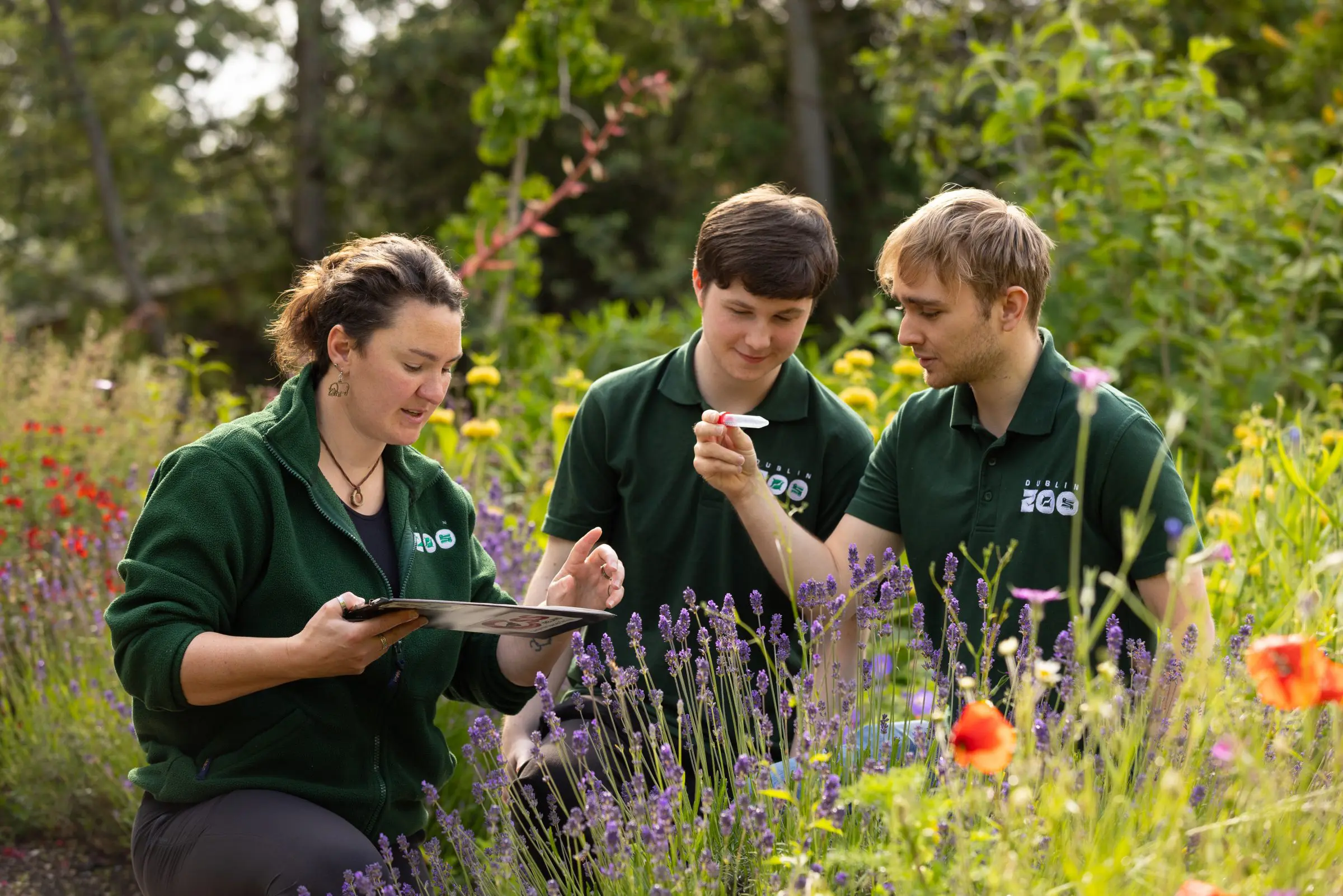
Dublin Zoo’s Spotted on Site project turns visitors into participants in biodiversity research.
Visitors use the free iNaturalist app to record wild plants, insects, birds, and other native or naturally occurring species on zoo grounds.
Since autumn 2024:
- More than 1,400 observations
- More than 380 species
The project is part of BIAZA’s Spotted on Site campaign, created with iNaturalist.
The value is practical.
Visitor photos help build a record of the zoo’s wider living environment. The data can show where local wildlife is present. It can help teams identify areas that need protection or improvement.
Marketing use
Give visitors a simple task.
Not:
“Learn more about biodiversity.”
Instead:
“Photograph one wild species before you leave.”
Make participation easy to explain:
- Download the app.
- Join the zoo project.
- Photograph a wild species.
- Upload the observation.
Create a weekly result:
- Most observed species
- New species recorded
- A map of observation areas
- A staff-selected photo
- A habitat improvement linked to the data
Sustainable practice
Credit the public contribution.
Do not present visitor participation as decoration. Explain how the records are used.
Share limits, too. A photo may suggest an identification. It may still need confirmation. Clear communication is more useful than overstating the result.
A citizen science campaign can support education, research, local habitat management, and visitor engagement at the same time.
3. Shark education must include local voices
In June, the Sandals Foundation, Georgia Aquarium, and Friends of the Environment completed a week of shark education in Abaco and Nassau.
The program included:
- Students
- Fishers
- Environmental groups
- Tourism staff
- Community residents
In Abaco, 10 stakeholders joined a train-the-trainer workshop. The goal is to reach at least 100 additional people by December 2026.
School sessions in Fox Town and Coopers Town reached 40 students.
In Nassau, 15 Sandals Royal Bahamian team members and technical stakeholders joined shark awareness sessions.
The program connected shark health with:
- Ocean health
- Local livelihoods
- Tourism
- Food security
- Biodiversity
- Island resilience
Friends of the Environment brought local knowledge and community experience. Georgia Aquarium brought education and scientific expertise. The Sandals Foundation helped connect the program to Caribbean communities.
Marketing use
Build conservation campaigns with the people who live closest to the issue.
Feature local educators, fishers, students, and community organizations. Let partners explain what matters in their own words.
Use a short content structure:
- The species
- The local concern
- The person taking action
- The next step
This creates better stories than a distant institutional statement.
Sustainable practice
Define the intended result before publishing.
For this partnership, the planned reach of at least 100 additional people gives the campaign a clear measure.
Use simple reporting:
- People trained
- Students reached
- Sessions held
- Follow-up activities
- Local partners involved
Not every result appears immediately. Report what happened. Do not imply long-term ecological change from a short education program.
4. Branded collaborations need a conservation link
Singapore Oceanarium’s Hangyodon Marine Discovery collaboration ran from November 28, 2025, to January 4, 2026.
The Sanrio partnership used interactive installations, character appearances, photo moments, and guided programming about coral care, marine life, and pollution.
The campaign shows a current industry trend:
Popular characters can bring new audiences into wildlife and ocean education.
The risk is clear.
A character can become the main story. Conservation can become background decoration.
Marketing use
Set the conservation message before the partnership launches.
For example:
- One character moment
- One species fact
- One habitat message
- One visitor action
Use branded content to direct attention toward the animal, ecosystem, or care work.
Sustainable practice
Measure more than attendance and social reach.
Track:
- Participation in education activities
- Questions asked
- Conservation content viewed
- Visitor actions completed
- Follow-up engagement
A collaboration is stronger when the educational purpose remains visible after the photo opportunity ends.
5. A practical “Presented by” campaign model
“Presented by” campaigns give a sponsor a clear place in a conservation story without taking over the story.
The model works best when the sponsor supports a defined activity.
Example: Wetlands for Life
Presented by: A local water utility, outdoor brand, or responsible business partner
Conservation focus: Wetland protection and water quality
Zoo activity: A visitor wetland survey using iNaturalist
Content assets:
- A short species profile
- A wetland habitat image
- A staff explanation
- A visitor observation
- A monthly result
- A clear action for the public
Sponsor role:
- Support the survey
- Help fund habitat improvements
- Provide technical knowledge
- Share the campaign responsibly
Zoo role:
- Lead the conservation message
- Verify information
- Report results
- Keep the activity accessible
Public role:
- Observe
- Learn
- Record
- Act
Zoo Imagery can support this structure with clear animal and habitat visuals in landscape and portrait formats. Browse bird photography, fish photography, and other animal image categories.

For visitor-generated campaigns, the ZooMedia.us phone app helps guests share photos from zoo or aquarium visits. Teams can view engagement results and track campaign response.
Keep the structure simple:
Presented by [partner].
Supporting [specific conservation action].
Reported through [clear measure].
6. Checklist for zoo and aquarium marketers
Before publishing a conservation campaign, check:
Conservation
- Is there a clear species or ecosystem?
- Is the concern specific?
- Is there a real action?
- Is a credible partner involved?
- Can the result be reported?
Community
- Are local voices included?
- Is the activity accessible to visitors?
- Can people participate without specialist knowledge?
- Are contributions credited?
Content
- One message per post
- One useful image
- One action
- One link
- Plain language
- No inflated claims
Measurement
- Participation
- Education reach
- Observations recorded
- Funds raised
- Habitat work completed
- Follow-up actions
Visuals
- Use real field, habitat, and animal images
- Show the action, not only the species
- Use portrait formats for mobile posts
- Use landscape formats for web and email
- Add descriptive alt text
Closing note
The strongest wildlife marketing does not add noise to conservation work.
It makes the work easier to see.
Today’s examples show three reliable approaches:
- Organize a shared campaign around a threatened ecosystem.
- Give visitors a useful role.
- Build partnerships around local action and clear reporting.
Find animal photography and marketing support at zooimagery.com.
Follow Zoo Imagery on LinkedIn for more wildlife marketing and conservation communication insights.


