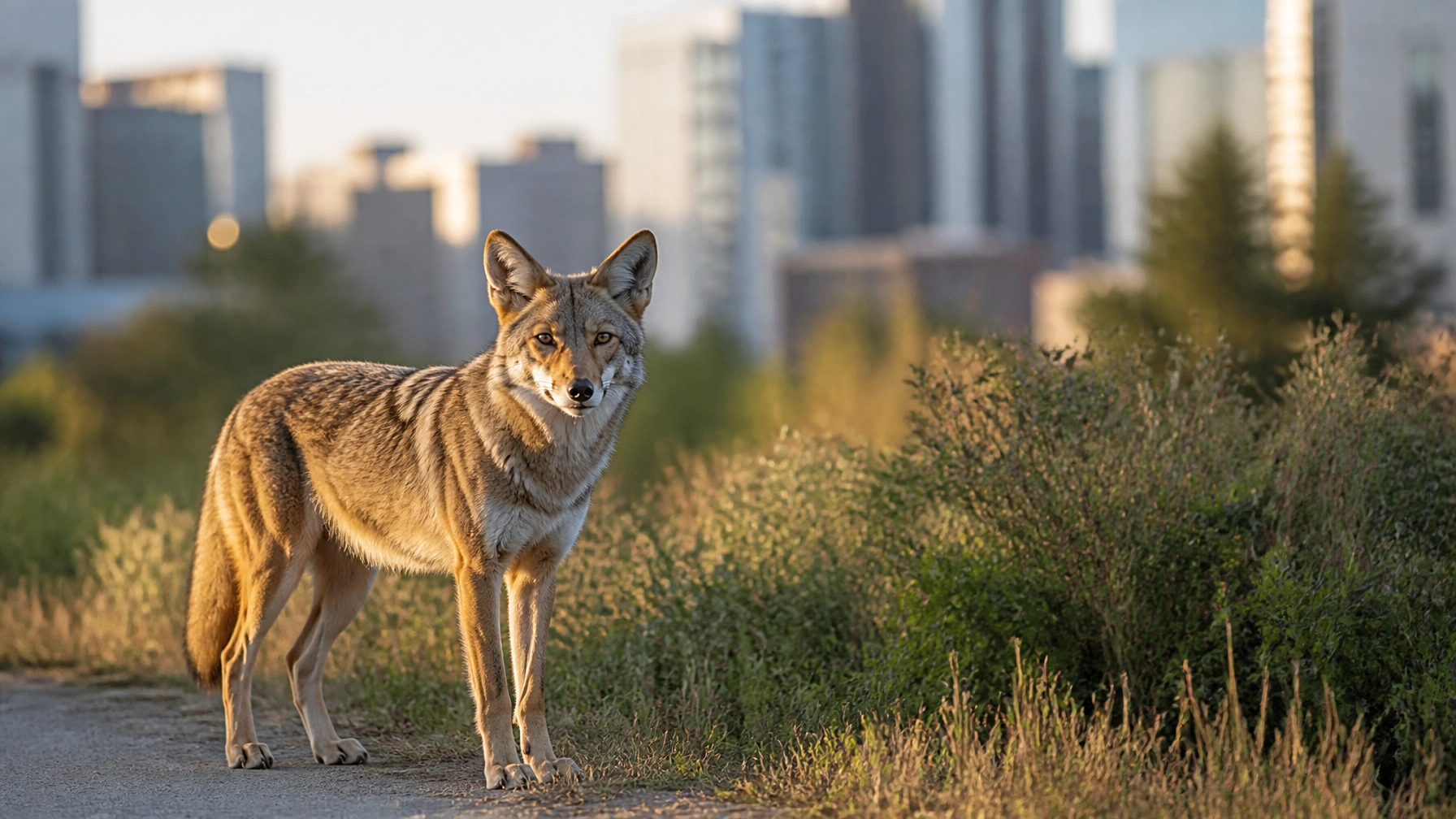
Daily Newsletter: Sustainable Wildlife Marketing Insights
Monday, August 10, 2026
A useful shift in zoo and aquarium marketing:
Less general awareness.
More clear action.
The strongest conservation campaigns help people understand:
- What is happening
- Why it matters locally
- What they can do next
They also connect the message across exhibits, events, retail, email, social media, and visitor photography.
Campaign example: Oakland Zoo’s local neighbors
In April 2025, Oakland Zoo launched “Get to Know Your Bay Area Neighbors”.
The campaign focused on human-wildlife coexistence. Five local species were paired with familiar Bay Area identities:
- Coyote : The Creative
- Raccoon : The Engineer
- Black-crowned night heron : The Influencer
- Black bear : The Foodie
- Mountain lion : The Free Spirit
The creative approach made local wildlife easier to recognize.
The campaign also gave visitors practical next steps:
- Secure food and garbage
- Keep dogs leashed
- Drive slowly near wildlife crossings
- Avoid rodenticides
- Keep a safe distance
- Plant native species
- Join local cleanup work
This is the important part.
The campaign did not stop at animal facts. It connected identity, place, and behavior.

Oakland Zoo also connected the campaign to its wider conservation work. The 2025–2027 Conservation Strategic Plan lists human-wildlife coexistence as a central focus.
The public campaign ran alongside:
- Earth Day events
- Volunteer work near Arroyo Viejo Creek
- Conservation partner booths
- Community education
- A digital quiz
- Guidance for living with Bay Area wildlife
Marketing takeaway:
Build one message into several useful experiences.
A campaign can begin with an animal story. It can continue with an event, a quiz, a staff interaction, a social post, and one simple action at home.
Trend: local wildlife is becoming a stronger entry point
People often connect more quickly with wildlife they may see near home.
A raccoon behind a garbage bin.
A heron near a city lake.
A coyote crossing a trail.
A seal near a harbor.
These stories make conservation immediate.
For zoos and aquariums, local wildlife content can support several goals:
- Build community relevance
- Explain regional conservation work
- Increase repeat visits
- Give educators useful material
- Create stronger social content
- Support local partnerships
The message should stay specific.
Avoid:
Protect nature for future generations.
Use:
Keep pet food indoors to reduce wildlife visits.
Avoid:
Support biodiversity.
Use:
Plant native species near the creek.
Simple language makes the action easier to remember.
Trend: visitors want the next step
A visitor may understand that plastic harms marine animals.
That does not always change behavior.
The next step must be visible and easy.
ZSL London Zoo’s sustainability work and its #OneLess campaign show the value of connecting a conservation issue with a daily choice.
The message is direct:
- Carry a reusable bottle
- Refill it
- Avoid unnecessary single-use bottles
- Keep plastic out of waterways
This approach is useful for aquariums and zoos because it links the visitor experience to a behavior that can happen immediately.
A water refill point can become part of the story.
So can:
- A clear sign near food service
- A short keeper talk
- A penguin or sea turtle interpretation panel
- A social post showing the action
- A reminder in the post-visit email
One note for accurate communications: public ZSL material confirms its plastic reduction and #OneLess work. It does not currently verify a specific 2025 installation named “Re:Water” featuring penguins. Check campaign records before using that title in published content.

The lesson remains useful:
Connect the animal to one decision visitors can make today.
Trend: conservation stories now include operations
Visitors notice when an organization’s message matches what it does.
This is why operational choices matter in marketing.
Examples include:
- Reusing event banners
- Reducing disposable food packaging
- Managing waste in public view
- Using reclaimed materials in displays
- Explaining water use in animal habitats
- Showing how merchandise supports conservation
- Sharing improvements honestly
Mandai Wildlife Group’s Good Threads is a strong example of this approach.
The upcycled clothing capsule used salvaged fabrics and reused materials. Its designs turned everyday clothing into practical tools:
- A shirt with space for reusable items
- Shorts that convert into a tote
- A hat that converts into a bag
- Pants with a detachable waste pouch
The project connected clothing, waste reduction, and wildlife conservation.
The timing should be stated accurately. Public coverage identifies Good Threads as a limited-edition capsule launched in 2024, not a new 2025 collection. It was still a useful reference point in 2025 for organizations considering how their own products and operations can support conservation communication.
Marketing takeaway:
Show the work behind the message.
Do not make a broad claim about responsible operations without an example.
Instead, show:
- What material was reused
- What changed
- Who made it
- What the visitor can do
- Which conservation program benefits
Specific details build trust.
A practical campaign structure
A strong conservation campaign can use five parts.
1. One clear issue
Choose one.
- Urban wildlife
- Marine plastic
- Native habitat
- Sustainable seafood
- Species recovery
- Wildlife trade
- Water use
Too many issues weaken the message.
2. One recognizable animal
The animal should help explain the issue.
Examples:
- Penguin and plastic pollution
- Sea turtle and ocean debris
- Coyote and shared urban space
- Lion and community-based conservation
- Elephant and habitat protection
Use the animal as a guide.
Do not use it as decoration only.
3. One local connection
Explain how the issue appears in the visitor’s region or daily life.
For an aquarium:
Storm drains carry litter toward the bay.
For a zoo:
Unsecured food can attract wildlife to homes.
For a conservation center:
Roads can divide habitat and increase animal crossings.
The local detail gives the campaign a place.
4. One action
Keep it small.
- Refill a bottle
- Secure a trash bin
- Keep dogs leashed
- Choose certified seafood
- Join a planting day
- Share a verified conservation story
- Report injured wildlife to the right organization
A short action is more useful than a long list.
5. One proof point
Show that the organization is involved.
This may include:
- A field partner
- A restoration project
- A response team
- A research program
- A community training effort
- A change to zoo operations
The proof point should link the campaign to real work.
Image strategy for conservation communications
Images should support the action.
Choose photographs that show:
- The animal in a real habitat
- A clear relationship with place
- Natural behavior
- Local landscape
- Visitors taking part without becoming the main subject
- A practical conservation activity
Avoid images that imply behavior the campaign is asking visitors to stop.
For example:
- Do not show people crowding wildlife
- Do not show visitors feeding animals outside approved settings
- Do not show disposable products beside a plastic reduction message
- Do not use dramatic distress imagery when a calm action would be clearer
Use both landscape and portrait formats.
Landscape images work well for:
- Website headers
- Email banners
- Campaign landing pages
- Digital displays
Portrait images work well for:
- Social posts
- Stories
- Mobile campaigns
- Visitor-generated content

For teams building regular content, a shared animal image library reduces production time.
Zoo Imagery provides animal photography in multiple categories and formats. Images can support species pages, newsletters, campaigns, social posts, and conservation stories.
Aquarium note: make ocean issues visible
Aquarium marketers can apply the same structure.
Start with one animal.
Add one local waterway.
Explain one source of harm.
Give one behavior.
Show one project already underway.
For example:
Sea turtles depend on healthy coastal habitats. Litter from streets can reach the ocean through storm drains. Use a reusable bottle and dispose of waste correctly. Our conservation partners track habitat health and support coastal protection.

The language is plain.
The message is complete.
This week’s checklist
Before publishing a conservation campaign, ask:
- Is the issue clear in one sentence?
- Is the animal connected to the issue?
- Is the local relevance obvious?
- Is there one practical action?
- Can visitors complete that action today?
- Do our operations support the message?
- Have we confirmed every campaign date and partner name?
- Does the image show the animal accurately?
- Can the story work across email, social, web, and on-site channels?
- Can we report a real result without overstating it?
Good conservation marketing does not need more words.
It needs a clear connection between the animal, the place, the problem, and the next action.
For animal photography and campaign support, visit Zoo Imagery. You can also follow Zoo Imagery on LinkedIn for more zoo and aquarium marketing insights.


