Daily Blog: Animal Photography & Zoo Marketing – July 23, 2026
Presented by Zoo Imagery.
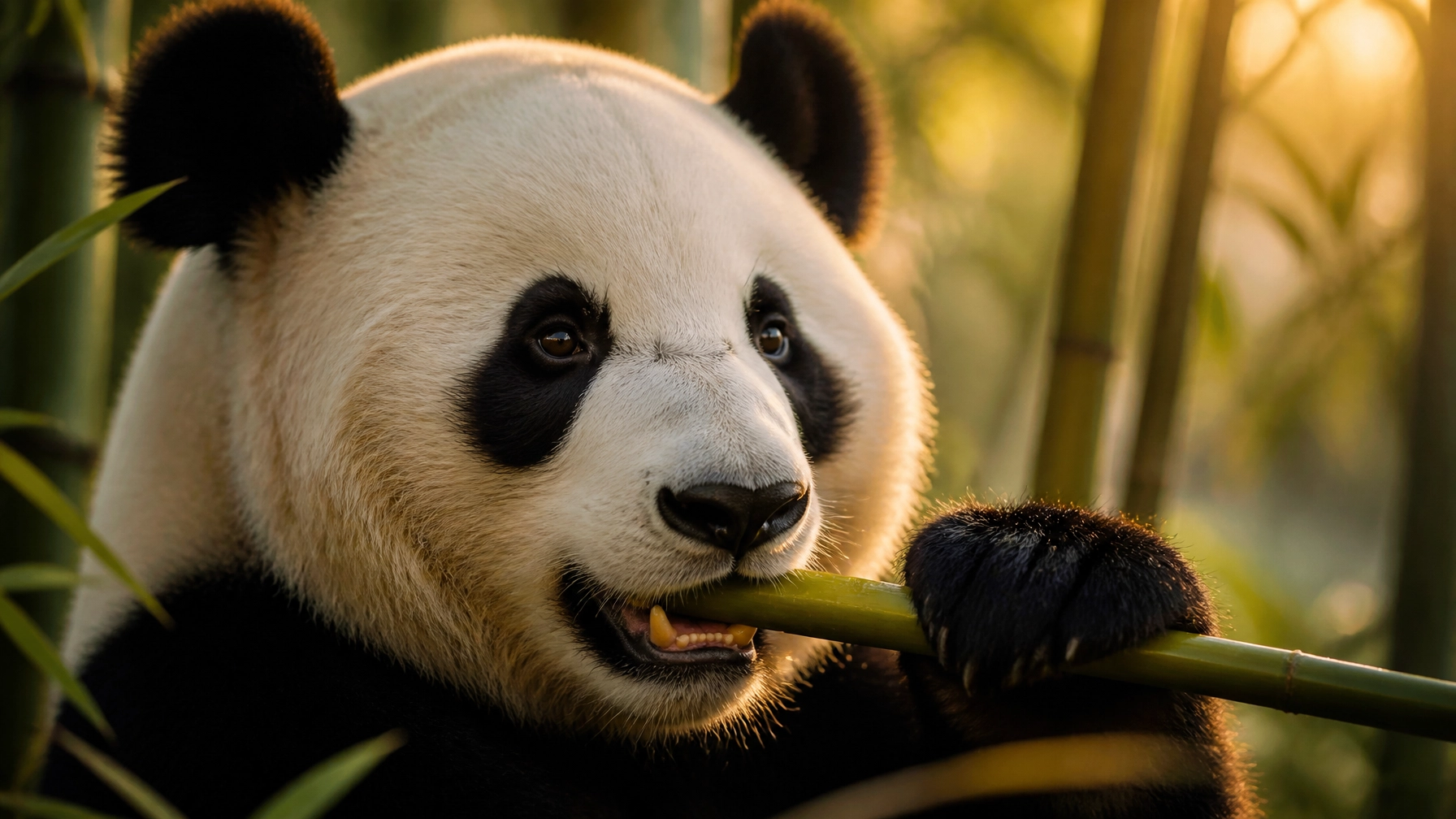
The Species Spotlight: Giant Panda
The Giant Panda (Ailuropoda melanoleuca).
Solitary. Quiet. Iconic.
Central China’s mountain dweller.
A bear like no other.
Physical Profile:
- Coloration: High-contrast black and white.
- Markings: Black ears, eye patches, legs, and shoulders.
- Coat: Thick, woolly, insulating.
- Size: 165–350 pounds.
- Length: 4–6 feet.
Unique Anatomy:
The panda possesses an enlarged wrist bone.
Functions as a thumb.
Enables a firm grip on bamboo stalks.
Paired with powerful jaws and large molars.
Engineered for crushing.
The Bamboo Obsession
99% of their diet is bamboo.
Shoots. Stems. Leaves.
Low nutrient density requires high volume intake.
Daily Feeding Habits:
- Consumption: 20–84 pounds of bamboo.
- Duration: 10–12+ hours spent eating.
- Energy: Minimal activity to conserve calories.
Pandas are technically omnivores.
Occasionally supplement with other plants or small rodents.
Rarely.
Bamboo remains the priority.

The Conservation Win
A success story in wildlife management.
Numbers are rising.
Status: Vulnerable. (Previously Endangered).
Current Statistics:
- Wild Population: ~1,864 individuals.
- Captive Population: ~600 in zoos and breeding centers.
- Habitat: Fragmented mountain ranges in Sichuan, Shaanxi, and Gansu.
Zoos play a vital role.
International breeding programs.
Research.
Public awareness.
Photography Behind-the-Scenes: The High Contrast Challenge
Photographing pandas is a lesson in dynamic range.
Deep blacks meet bright whites.
Cameras often struggle to balance both.
The Zoo Imagery Approach:
We look for overcast days.
Flat, diffuse light.
It softens the transition between the black eye patches and white face.
Prevents "blown-out" highlights.
Technical Tidbit:
Spot metering is essential.
We meter for the white fur.
Then underexpose by 0.3 to 0.7 stops.
This preserves the delicate texture of the fur in post-production.
The result: Clarity. Depth. Authenticity.

Tips for Your Next Zoo Visit
Capturing professional-grade shots from the visitor path.
1. Timing
Mornings are best.
Pandas are active.
Feeding happens early.
Mid-day is for sleeping.
2. Composition
Fill the frame.
Use a long lens (200mm+).
Eliminate fences.
Focus on the eyes.
Wait for a "micro-expression": a yawn or a tilt of the head.
3. Glass and Mesh
Get close to the glass.
Lens hood pressed flat.
Reduces reflections.
Eliminates glare.
4. Ethical Observation
No flash.
No tapping.
Respect the boundaries.
The best shots come from patience, not interference.
ZooMedia.us: Marketing Through Authenticity
High-quality photography drives engagement.
Our ZooMedia.us app empowers this.
It turns guests into content creators.
User-generated content (UGC).
Real-time sharing.
Benefits for Zoos:
- Engagement: Guests share their own panda captures.
- Reach: Organic social media growth.
- ROI Tracking: Data-backed marketing results.
- Connection: Bridging the gap between the animal and the visitor.
We provide the professional stock library.
The app provides the platform.
The animal provides the inspiration.

Daily Reflections
July 23, 2026.
The Giant Panda remains a symbol of conservation hope.
Their survival is a collective effort.
Photography documents this journey.
Explore more species spotlights:
About Zoo Imagery
We provide stunning animal photography.
Saving you time.
Saving you money.
Helping zoos thrive.
Connect with us:
Visit ZooImagery.com
Follow us on LinkedIn


