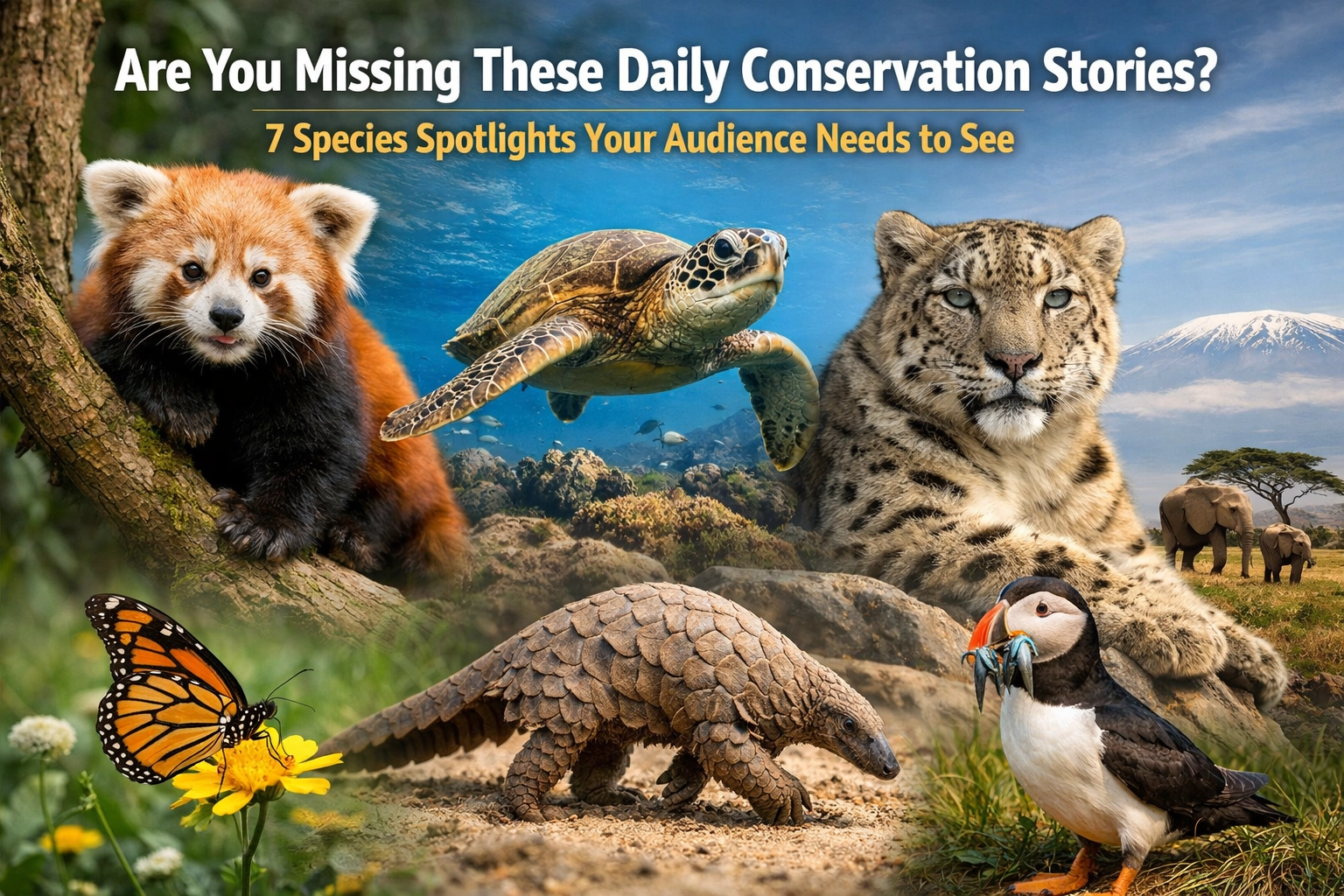
Are You Missing These Daily Conservation Stories? 7 Species Spotlights Your Audience Needs to See
Conservation happens in the quiet moments. A researcher spots movement in murky water. A camera trap clicks in the dark. A population count comes back higher than expected.
These stories don't always make headlines. But they should.
At Zoo Imagery, we believe every species has a story worth telling. Visual storytelling brings these narratives to life: turning data points into moments that move people to care.
Here are seven species spotlights your audience needs to see right now.
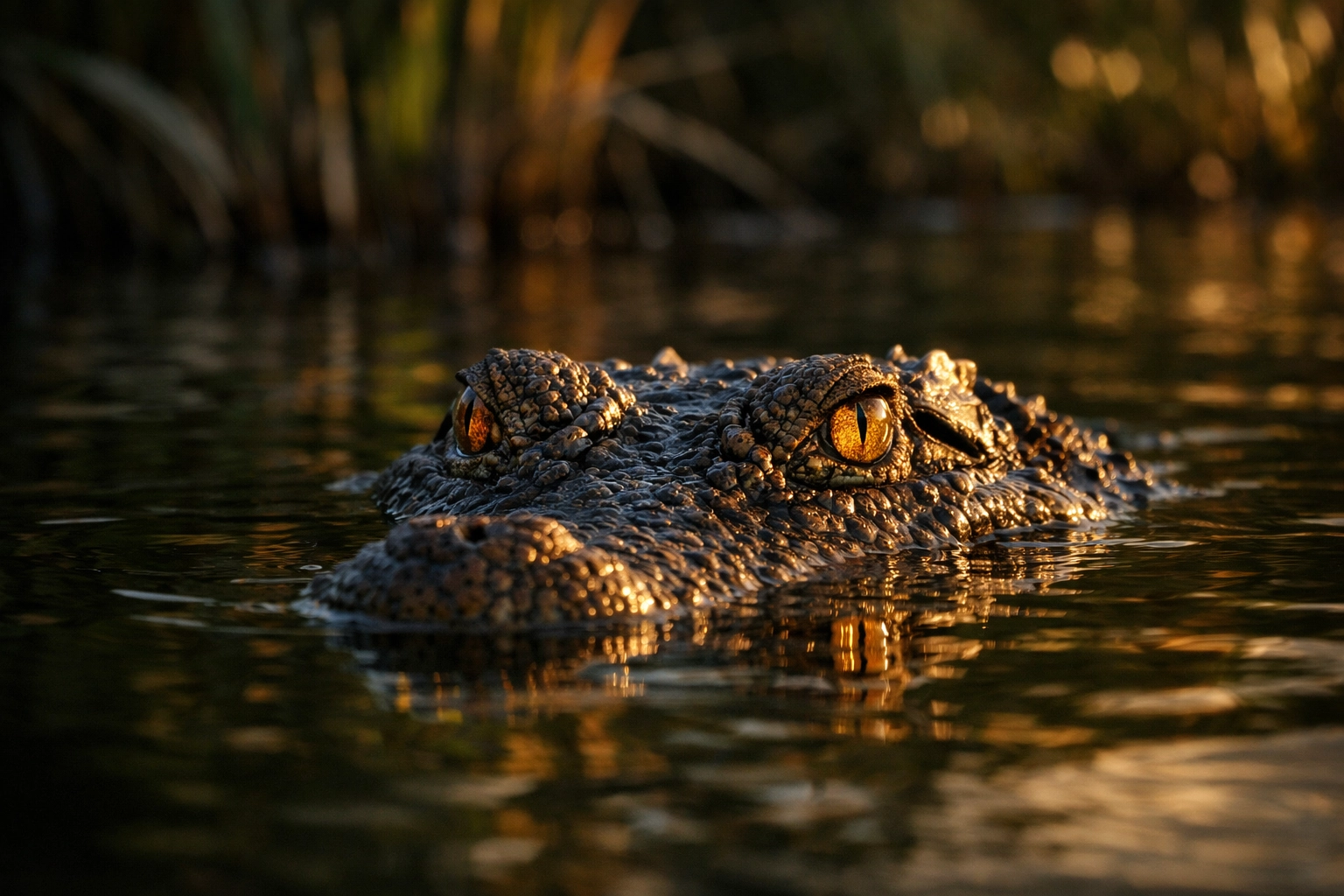
1. Siamese Crocodile: Back from the Dead
Status: Critically Endangered
Population: 500-1,000 mature individuals
Scientists thought this species was extinct in the 1990s. Then came 2000. A rediscovery that changed everything.
Today, Siamese crocodiles occupy just 1% of their former habitat. Poaching continues. Illegal egg collection threatens every generation. Habitat loss compounds the pressure.
But here's what matters: their ecological role can't be replaced. They control prey populations. Create habitats for other species. Their recovery means ecosystem recovery.
The visual story here is powerful. Dark water. Ancient reptiles. Survival against impossible odds.
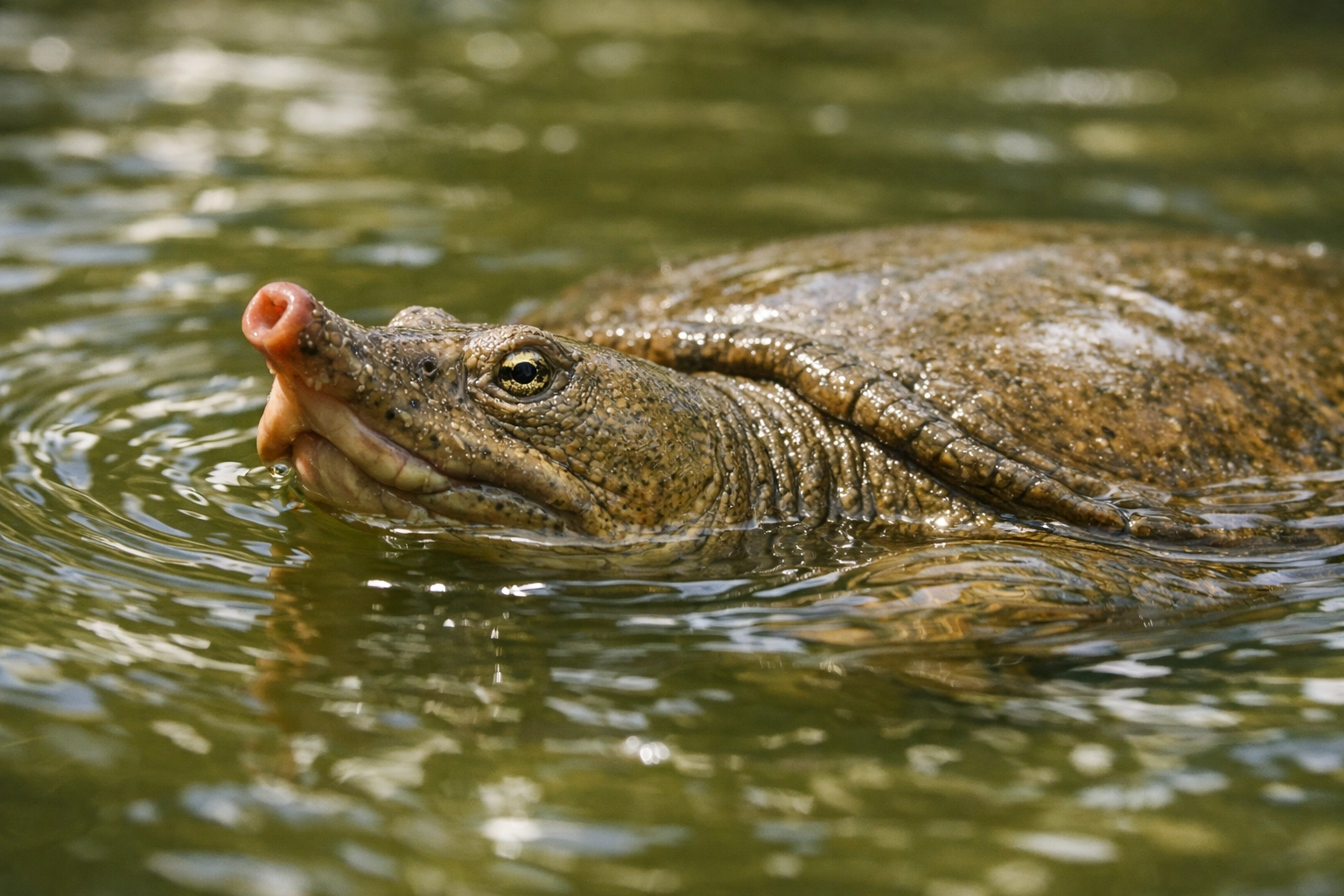
2. Swinhoe Softshell Turtle: A 130kg Miracle
Status: Critically Endangered
Known individuals: 2
Experts had given up hope.
Then a 130kg female appeared in Dong Mo Lake, Vietnam. One turtle. One chance. One male lives in Suzhou Zoo, China.
Conservation teams are searching for a mate. Every day counts. Every sighting matters.
This is edge-of-extinction storytelling. The kind that makes people stop scrolling.
3. Diyarbakir Loach Fish: 50 Years of Silence
Status: Critically Endangered
Last seen: 1970s (until 2021)
Fifty years. No sightings. No signs. No hope.
The Batman River Dam went up in 1986. Habitat fragmented. Populations isolated. The Diyarbakir loach disappeared.
2021 changed the story. The fish reappeared. Scientists intensified search efforts. More populations might exist.
Sometimes species hold on in ways we don't expect. In places we stopped looking.
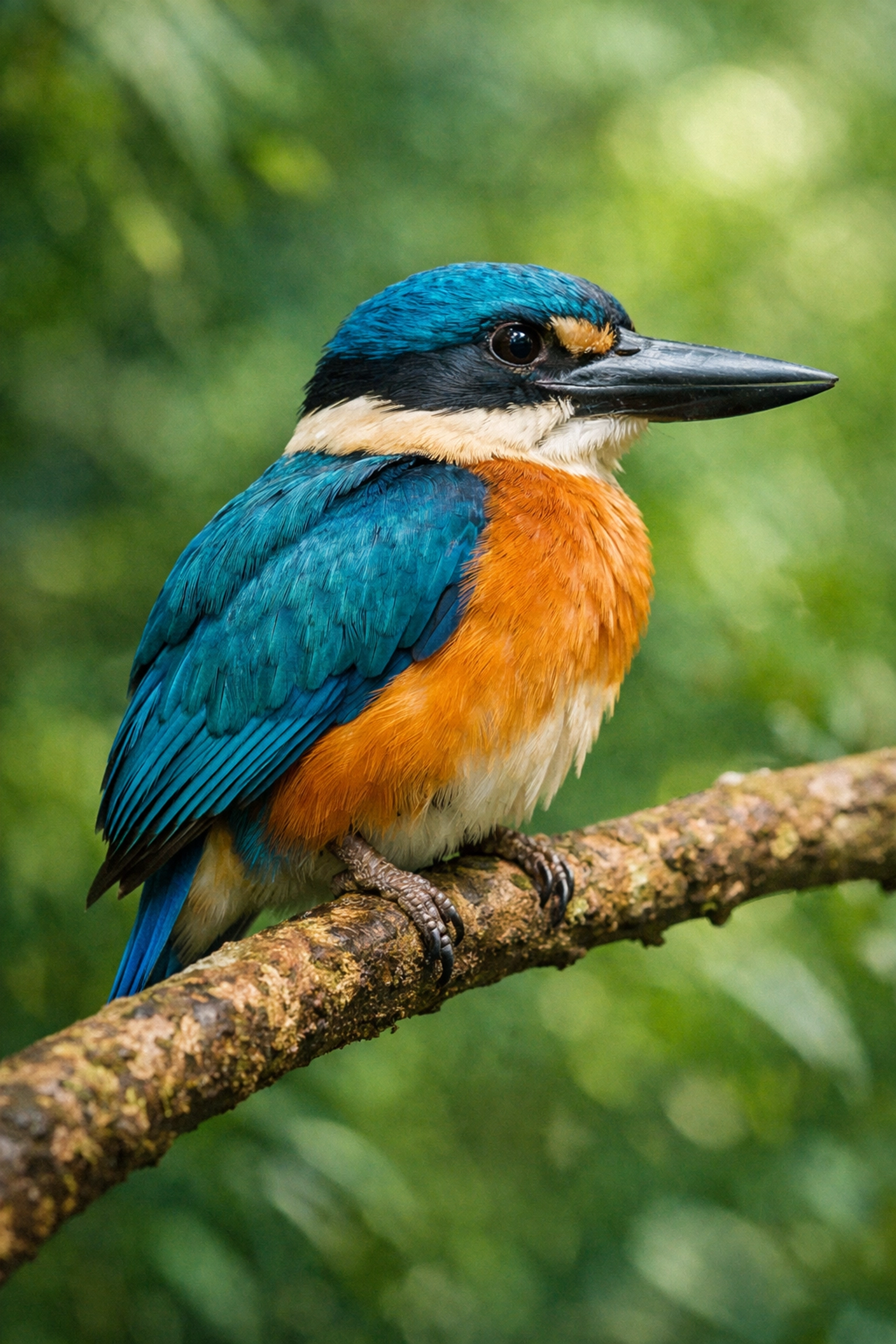
4. Guam Kingfisher: Extinct in the Wild for 30 Years
Status: Extinct in Wild
Conservation approach: Captive breeding, experimental reintroduction
The Guam kingfisher hasn't flown free in over three decades. But extinction isn't the end of this story.
Breeding programs continue. Plans for reintroduction to Palmyra Atoll move forward. The worldwide population could significantly increase.
Visual appeal? This bird delivers. Striking colors. Distinctive features. The kind of subject that makes people care.
Captive breeding isn't the goal. It's a bridge to wild populations. To recovery. To return.
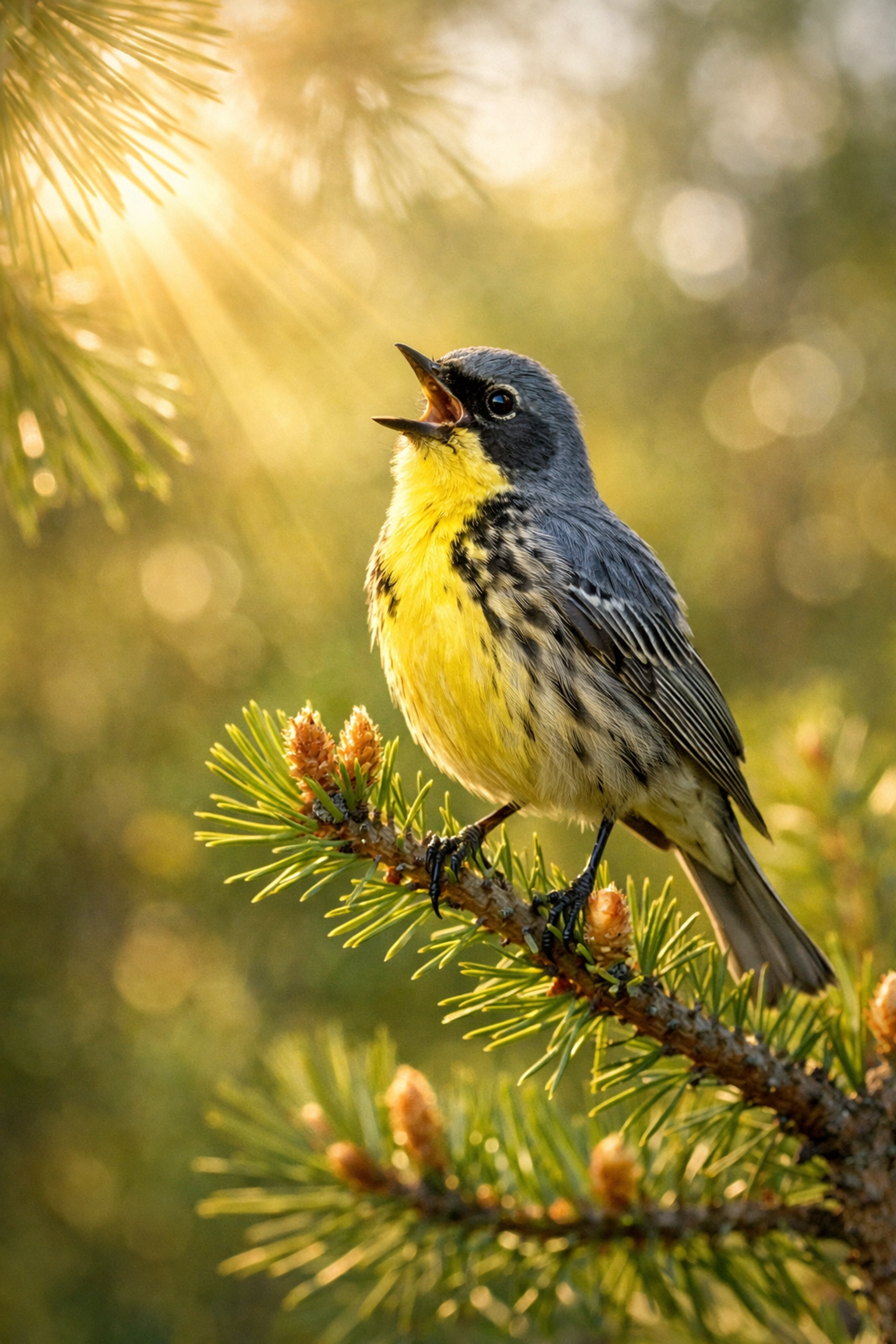
5. Kirtland's Warbler: The Success Story
Status: Recovered (removed from endangered list 2019)
Population: 2,000+ pairs
Not every conservation story ends in loss.
The Kirtland's warbler population grew beyond expectations. More than double the recovery goal. Removed from the endangered species list in 2019.
This is what conservation success looks like. Sustained effort. Long-term commitment. Measurable results.
The narrative here shifts from crisis to triumph. From fear to hope. From endangered to thriving.
6. Foskett Speckled Dace: Habitat Restoration Works
Status: Recovered (delisted September 2019)
Conservation method: Habitat restoration
Sediment excavation. Vegetation removal. Spring restoration.
These actions saved the Foskett speckled dace from extinction. Result: delisting from the endangered species list.
Proof that targeted intervention works. That restoration matters. That species can recover when we create the right conditions.
Small fish. Big lesson.
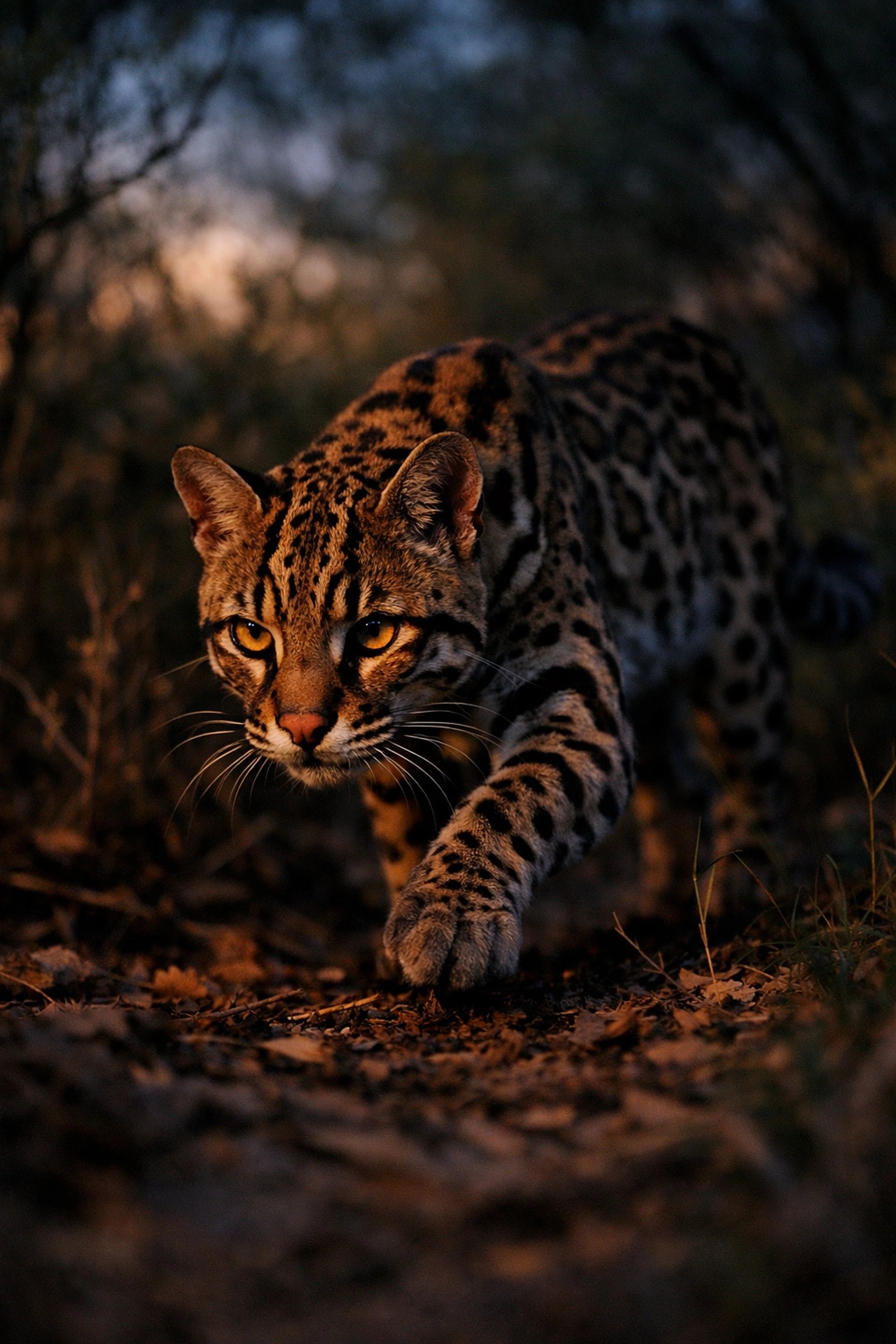
7. Ocelot: Locally Critical Despite Global Status
Status: Least Concern (globally), Critically Endangered (locally in Texas/Mexico)
Threats: Habitat fragmentation, poaching
Global status doesn't tell the whole story.
Ocelot populations in Texas and Mexico face critical endangerment. Habitat fragmentation isolates groups. Poaching continues. Local extinction threatens.
This nocturnal wild cat needs localized conservation efforts. Regional focus. Community involvement.
Beautiful. Elusive. Threatened where it matters most.
Why Visual Storytelling Matters
Data alone doesn't move people. Numbers don't create connection.
A photograph of a Siamese crocodile emerging from dark water does.
An image of the last known Swinhoe softshell turtle does.
A video of a Guam kingfisher in flight does.
Conservation needs visibility. Species need advocates. Stories need to be told.
Zoos and aquariums hold these stories. They document recovery. Capture moments. Create connections between species and people.
The right image at the right moment changes everything.
What This Means for Your Audience
Your audience wants meaningful content. Stories with substance. Content that matters.
These seven species deliver:
- Urgency (Siamese crocodile, Swinhoe softshell turtle)
- Discovery (Diyarbakir loach)
- Innovation (Guam kingfisher breeding programs)
- Success (Kirtland's warbler, Foskett speckled dace)
- Complexity (ocelot local vs. global status)
Conservation storytelling isn't just about awareness. It's about action. Engagement. Connection.
When your audience sees these stories: really sees them: they engage. They share. They care.
The Zoo Imagery Approach
We provide visual content that tells conservation stories simply and powerfully.
No complicated messaging. No jargon. Just clear, compelling imagery that connects species to people.
Every photograph serves a purpose. Every species spotlight creates impact.
Want to bring these conservation stories to your audience? Looking for visual content that drives engagement?
Visit Zoo Imagery or connect with us on LinkedIn.
Conservation happens one story at a time. One image at a time. One connection at a time.
These seven species are waiting for their moment.
Don't let their stories go unnoticed.


