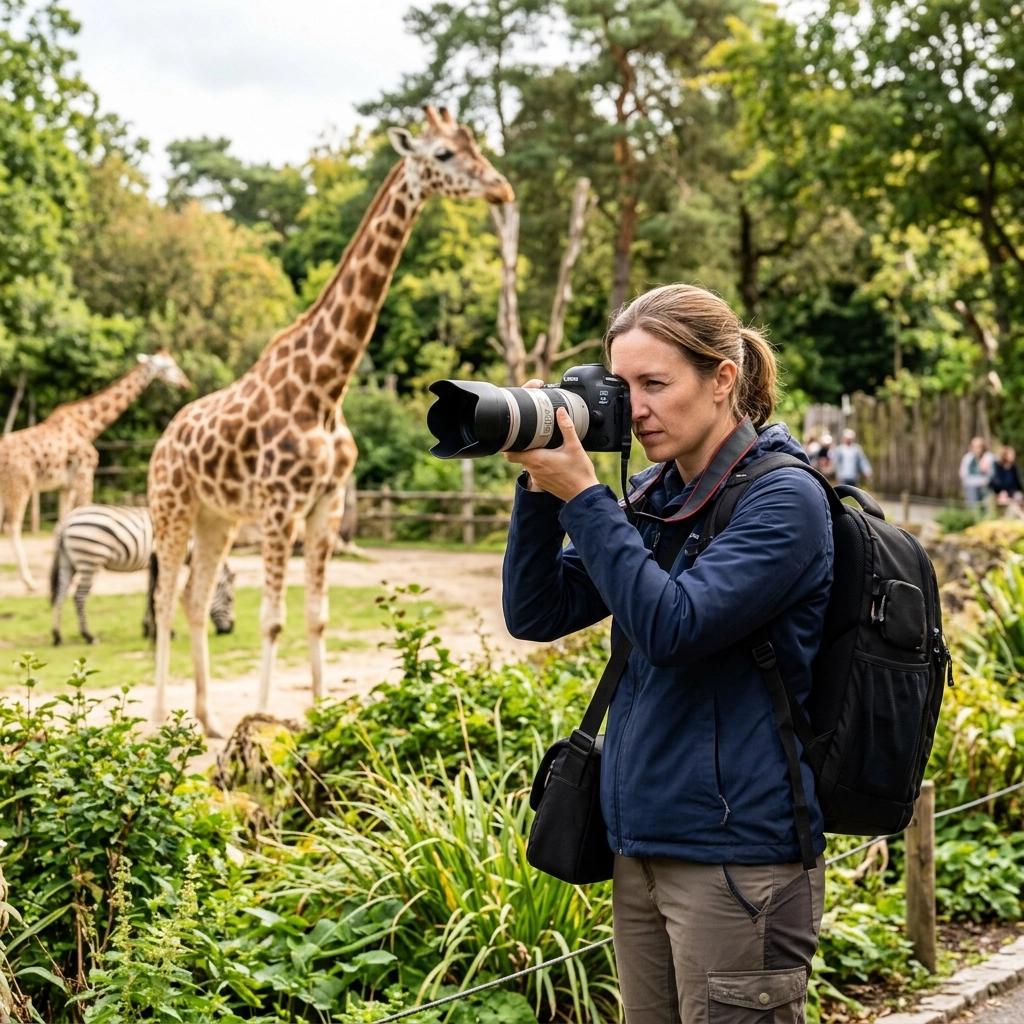
7 Mistakes You’re Making with Zoo Animal Photos (and How to Fix Them)
Photography is about connection. In zoo settings, that connection is often blocked by glass, wire, or poor timing. Capturing a powerful animal image requires more than a good camera. It requires an understanding of the environment.
At Zoo Imagery, we provide professional stock media that tells a story. We help brands move past amateur mistakes.
Here are the 7 most common mistakes in zoo photography and the simple ways to fix them.
1. The Visible Barrier
The biggest giveaway of a zoo photo? The fence. Chain-link shadows or green mesh ruin the illusion of the wild.
The Issue:
- Visible wires cutting across the subject.
- Blurred mesh creating a "haze" over the animal.
- Reflections on glass enclosures.
The Fix:
- Get close. Put your lens as close to the wire as safely possible.
- Use a wide aperture (low f-number). This blurs the foreground fence into invisibility.
- For glass, use a lens hood or a dark cloth. Eliminate the gap between your lens and the window.

2. Shooting from a Human Perspective
Most people take photos from a standing position. This creates a "looking down" effect. It makes the animal look small and captive.
The Issue:
- Dominant, high-angle perspective.
- Disconnected feel.
- Boring composition.
The Fix:
- Get on their level. Squat. Sit. Kneel.
- Eye-level shots create empathy.
- When you look a lion in the eye, the story changes.
- Perspective shift: From "visitor" to "observer."
3. Human Elements in the Background
A majestic tiger looks less impressive next to a bright red fire extinguisher or a "Do Not Feed" sign.
The Issue:
- Concrete walls.
- Plastic enrichment toys.
- Keepers' buckets or hoses.
- Exit signs.
The Fix:
- Watch the corners of your frame.
- Re-position yourself. A few steps left or right can hide a concrete wall behind a tree.
- Tight crops. Focus on the texture of the fur or the intensity of the gaze.
- Use the "Presented by" layout style. Focus on the species, not the enclosure.
4. Missing the "Catchlight"
The eyes are the soul of the image. If the eyes are dark, the animal looks lifeless.
The Issue:
- Flat, dull eyes.
- Subject looking into deep shadow.
- Loss of facial detail.
The Fix:
- Wait for the light.
- Look for a small white reflection in the eye (the catchlight).
- This tiny dot of light brings the animal to life.
- Focus specifically on the eye closest to the camera.

5. Harsh Midday Lighting
Most zoo visits happen between 10 AM and 3 PM. This is the worst time for photography.
The Issue:
- Dark shadows under the brow.
- Blown-out highlights on white fur.
- Animals hiding in the shade to stay cool.
The Fix:
- Golden Hour. Visit during early morning or late afternoon openings.
- Overcast days are your friend. Clouds act as a giant softbox.
- Even lighting across the whole animal.
- Better for polar bears and high-contrast species.

6. Lack of Behavioral Context
A photo of an animal sleeping is fine. A photo of an animal engaging with its environment is better.
The Issue:
- Static, "statue" poses.
- No sense of movement or purpose.
- Generic imagery.
The Fix:
- Patience.
- Observe the routine.
- Capture the elephant using its trunk or a primate interacting with a branch.
- Action creates engagement.
- Perfect for sponsored species spotlights.
7. Over-Editing the Natural Beauty
Digital filters can be tempting. Too much saturation makes wildlife look like a cartoon.
The Issue:
- Neon green grass.
- Unnatural fur colors.
- "Crunchy" textures from over-sharpening.
The Fix:
- Keep it simple.
- Adjust contrast and exposure only.
- Respect the natural palette of the species.
- Authenticity builds trust in conservation storytelling.

Why Professional Imagery Matters
For zoos and corporate partners, the right photo is a business asset. Amateur photos can look cluttered. They can highlight the "cage" rather than the "conservation."
Zoo Imagery specializes in high-quality, professional stock photography. We remove the "mistakes" so your message stays clear.
Sponsored Species Spotlights
Brands looking for ESG-aligned campaigns need clean imagery. A "Presented by" animal page works best when the photography is world-class.
- Simple backgrounds.
- High impact.
- Direct connection.

Our Library
We offer a curated collection of digital media. From the strength of giraffes to the mystery of hyenas, we cover the spectrum of zoo-based wildlife.
Quick Stats:
- High-resolution files.
- Clear licensing terms.
- Professionally vetted.
- Ready for corporate use.
Summary of Techniques
| Mistake | Simple Fix |
|---|---|
| Fence visible | Wide aperture, lens against wire |
| High angle | Get at eye level |
| Distractions | Tight crop, reposition |
| Dull eyes | Wait for catchlight |
| Harsh light | Shoot early/late or on cloudy days |
| Boredom | Capture behavior/action |
| Over-editing | Stay natural and authentic |
Elevate Your Storytelling
Great photography isn't about the camera. It’s about removing the distractions between the subject and the viewer.
Stop making these common mistakes. Start capturing images that inspire.
Whether you need a single shot for a social post or a full gallery for a corporate sponsorship, Zoo Imagery is your partner in digital media.
Explore our full collection:
ZooImagery.com
Stay updated on our latest additions:
Connect with us on LinkedIn


