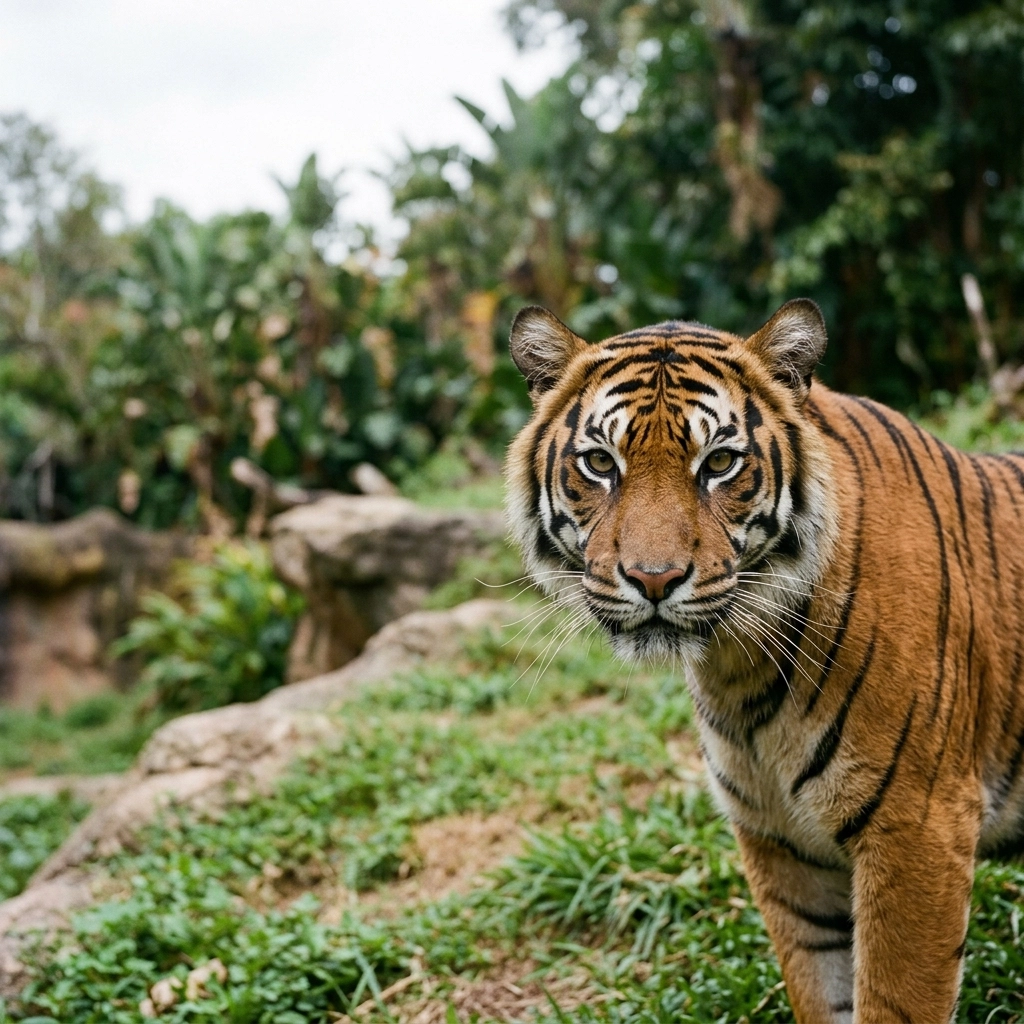
7 Mistakes You’re Making with Zoo Animal Photos (and How to Fix Them)
Good photography sells a story. Bad photography distracts from it.
In the world of zoo marketing and digital media, imagery is your strongest currency. Whether you are building "Presented by" animal pages or running a sponsored species spotlight, the quality of your photos dictates engagement.
Many people think zoo photography is easy because the subjects are contained. It is actually harder. You are fighting glass, fences, and crowds.
Here are the seven most common mistakes people make: and how to fix them.
1. The "Fence" Problem
Fences, bars, and wire mesh are the biggest giveaways of captivity. They break the immersion of conservation storytelling.
The Mistake: Shooting from a distance with a narrow aperture. This makes the fence visible as a blurry grid or a sharp distraction.
The Fix: Get your lens as close to the mesh as safety allows. Use a wide aperture (a low f-number like f/2.8 or f/4.0). This creates a shallow depth of field. The fence will effectively "disappear" or turn into a soft, unnoticeable blur.
Focus on the eyes of the animal. If the eyes are sharp, the viewer won’t mind a slight haze from the fence.
2. Shooting from a Human Perspective
Most people take photos from eye level: human eye level. This creates a "looking down" effect that makes animals appear small, insignificant, or distant.
The Mistake: Standing tall and pointing the camera down into an enclosure.
The Fix: Get on their level. If you are photographing a red panda, crouch down. If it is a reptile, get as low to the ground as possible.
Shooting at the animal’s eye level creates an immediate emotional connection. It treats the animal as an equal subject rather than an object of observation. For "Presented by" animal pages on zooimagery.com, this intimacy is what keeps visitors on the page longer.

3. Ignoring the Background "Noise"
A stunning shot of a tiger is ruined if there is a trash can, a bright exit sign, or a person eating popcorn in the background.
The Mistake: Focusing so hard on the animal that you ignore the rest of the frame.
The Fix: Scan the edges of your viewfinder before clicking. Look for "man-made" distractions. If you see a sign or a bright bucket, shift your position.
Sometimes moving just six inches to the left can replace a distracting fence post with a lush green leaf. Clean backgrounds make for better stock photography. They allow for easier text placement when creating sponsored spotlights or social media ads.
4. Fighting the Glass (and Losing)
Glass enclosures are a nightmare for reflections. You often end up with a great photo of the animal and a clear reflection of your own t-shirt.
The Mistake: Using a flash against glass or standing too far back.
The Fix: Turn off your flash. It will only bounce back and ruin the shot. Instead, lean your lens directly against the glass. This eliminates the space where light can crawl in and cause reflections.
Use a rubber lens hood if you have one; it creates a seal against the glass. If you don't have one, use your hand to cup around the lens. Wear dark clothing when you go to the zoo. Bright colors reflect much more easily in exhibit windows.

5. Capturing "Statues" Instead of Behavior
A sleeping lion is a classic zoo photo, but it isn't always an engaging one. Static shots can feel repetitive and uninspired.
The Mistake: Taking one photo and moving on once you’ve "got the shot."
The Fix: Patience. Wait for a moment of behavior. A yawn, a stretch, a look toward the keeper, or an interaction with enrichment items.
Action shots tell a story of animal welfare and activity. These are the images that perform best in species spotlights. They show the animal as a living, breathing being with a personality. At Zoo Imagery, we look for photos that capture these unique moments: they are much more valuable for digital media kits.
6. Technical Laziness in Low Light
Many zoo exhibits, like nocturnal houses or rainforest buildings, are dark.
The Mistake: Relying on "Auto" mode. The camera will often try to compensate by using a slow shutter speed, resulting in a blurry animal, or a flash, which is usually prohibited and ineffective.
The Fix: Manually increase your ISO. Modern cameras handle "noise" (graininess) much better than they used to. A slightly grainy, sharp photo is always better than a clean, blurry one.
Keep your shutter speed fast enough to catch movement. If the animal is moving, aim for at least 1/250th of a second. If you’re at a Zoo Imagery partner location, check their specific guidelines for tripod use, which can help in these low-light scenarios.

7. Forgetting the "Why"
Every photo should have a purpose. In a professional zoo environment, photos aren't just for memories; they are for marketing, education, and sponsorship.
The Mistake: Not leaving enough "white space" or context for branding.
The Fix: Think like a designer. If this photo is for a "Presented by" page, it might need a logo in the corner or text across the top.
Take some shots where the animal is off-center. This provides "negative space" (the empty area around the subject) where a zoo can place its branding or a sponsor can put their message. Compositional variety is key to building a functional stock library.
Why Quality Imagery Matters
At Zoo Imagery, we believe that high-quality visuals are the backbone of modern zoo marketing. When a corporate partner sponsors a species, they want to see that animal represented with dignity and professional clarity.
Simple fixes: like getting closer to the glass or crouching down: can transform an amateur snapshot into a powerful piece of digital media.
Better photos lead to:
- Higher engagement on social media.
- Better conversion on sponsorship pages.
- Stronger emotional connections for conservation stories.
- Professional-grade stock assets for the whole team.
How We Can Help
Zoo Imagery specializes in providing zoos and aquariums with the tools they need to shine online. From curated stock libraries to turnkey "Presented by" animal pages, we simplify the way you manage your digital presence.
If your current photo library feels a bit "messy" or you want to elevate your sponsored species spotlights, let's talk.

Ready to upgrade your zoo’s digital media?
Visit us at zooimagery.com to see how we help zoos tell better stories through professional imagery and simple marketing solutions.
You can also follow our latest updates and industry tips on our LinkedIn profile.
Stop taking snapshots. Start telling stories.


