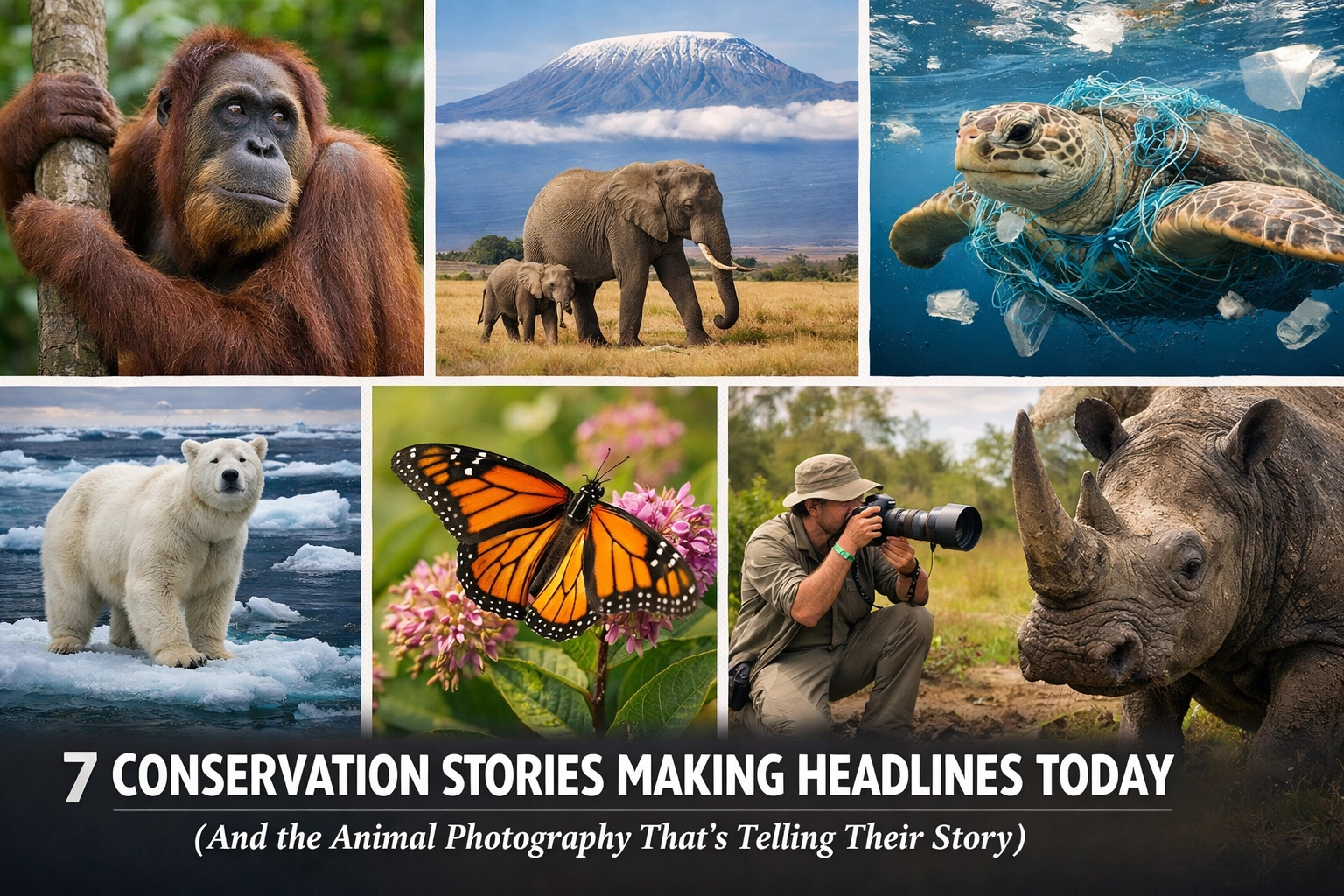
7 Conservation Stories Making Headlines Today (And the Animal Photography That’s Telling Their Story)
Conservation work happens quietly. Behind fences, across oceans, in boardrooms and on muddy trails. But the stories that break through? Those need visuals. Good ones.
Here's what's making headlines this week: and why the photography matters.
1. Genetic Vaults Launch in Dubai
Colossal Biosciences unveiled "bio vaults" at the World Governments Summit. The technology preserves genetic material from endangered and extinct species.
CEO Ben Lamm put it plainly: we could lose 50 percent of biodiversity by 2050.
The challenge for photographers? Capturing microscopic work that feels massive. De-extinction projects need imagery that shows both the science and the stakes. Lab shots paired with habitat photography tell the complete story.

When Zoo Imagery partners document species at risk, those images become part of a larger archive. Not just for today's campaigns: for tomorrow's recovery efforts.
2. Wildlife Corridors Go Global
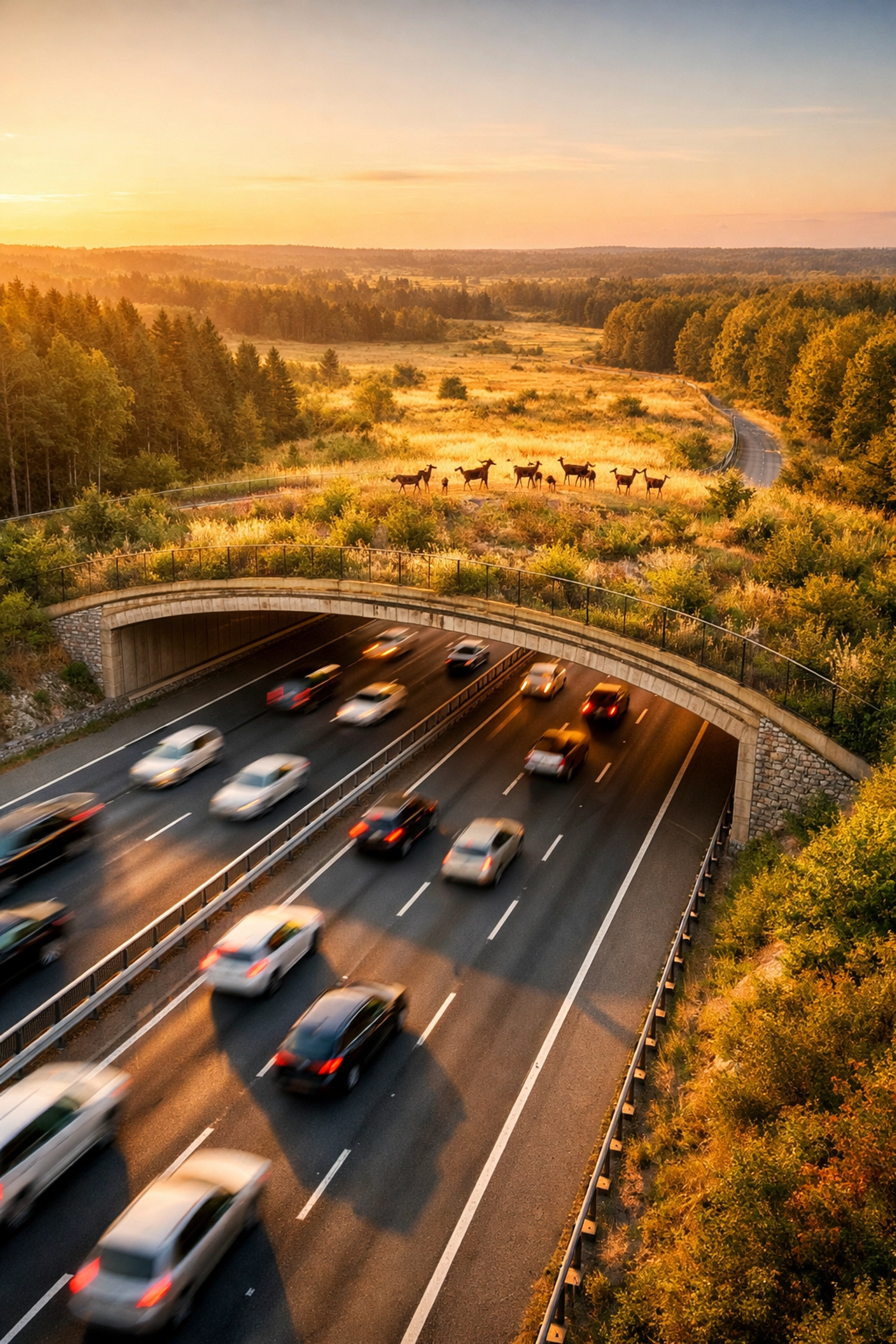
Over 50 nations now consult with the Center for Large Landscape Conservation on ecological corridor strategies. Wildlife crossing structures have cut mortality rates by more than 90 percent in many locations.
The story lives in scale. A single overpass means nothing without context. Show the highway. Show the migration path. Show animals using the corridor.
Aerial photography reveals what ground-level shots can't: connected landscapes, protected routes, animals moving freely. This conservation approach depends on big-picture thinking. The photography should match.
3. Baby Dugong Spotted in Indonesia
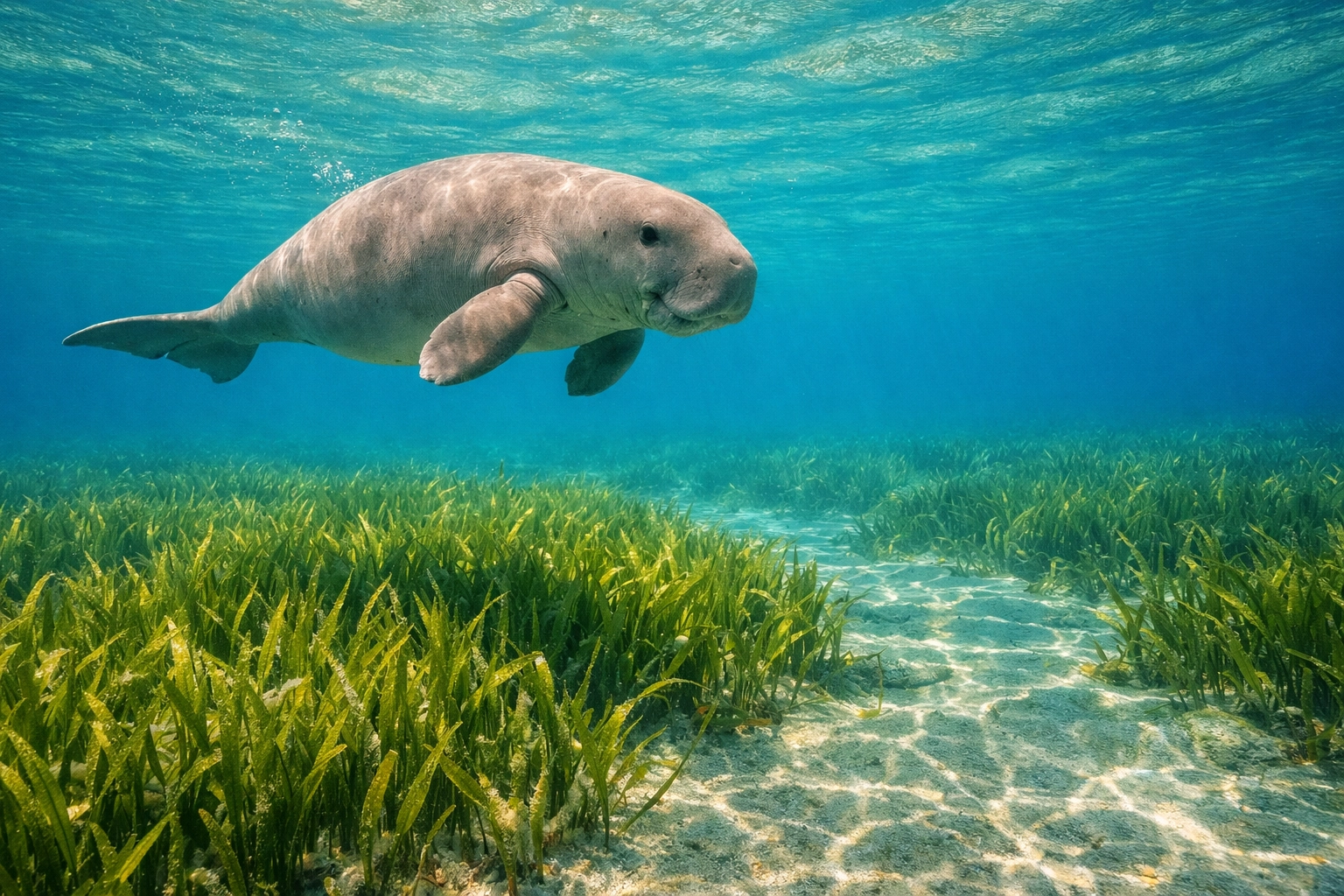
One baby dugong in a seagrass meadow signals years of restoration work paying off.
Small wins matter. But they're hard to photograph. Dugongs are elusive. Seagrass doesn't exactly pop on camera.
Yet these images drive funding. Conservation groups use them in grant applications, annual reports, donor updates. The trick is patience: and waterproof equipment. Underwater photography captures ecosystems most people will never see firsthand.
Zoo Imagery's aquatic collection includes similar success stories. Species returning to restored habitats. Proof that the work works.
4. Private Landowners Lead Conservation
At the Missouri Natural Resources Conference, conservation leaders outlined trust-based, collaborative models. Private landowners now play a central role in ecosystem-focused strategies.
This shift changes the visual narrative. Traditional conservation photography showed pristine wilderness or institutional efforts. Now? Working ranches. Family farms. Private property stewarded by people who live there.
The imagery needs authenticity. Real landowners, real landscapes, real relationships between people and wildlife. Stock photos of generic farmers won't cut it anymore.
5. Gorilla Habituation and Mangrove Protection
WWF highlighted gorilla habituation techniques alongside mangrove conservation initiatives worldwide.
Two completely different ecosystems. Same photography challenge: showing process over time.
Habituation takes years. Gorillas slowly accepting human presence doesn't happen in one dramatic shot. Mangrove restoration looks like sticks in mud for months before it resembles a forest.
Time-lapse photography and before-after comparisons do heavy lifting here. So do images that show researchers at work: the human element that makes conservation tangible.
6. Fisheries Making Unexpected Recoveries
Collapsed fisheries are recovering. Former competitors now lead rescue efforts together.
This story lives in contradiction. Depleted waters now teeming. Rivals now partners. Empty nets now full.
The photography tells it best through contrast. Historical images of peak fishing next to collapse. Then recovery. Faces of fishermen who remember all three phases.
Documentary-style photography captures these turnarounds better than anything polished. Weathered boats, working hands, genuine relief: that's what resonates.
7. Students Monitor Wildlife in Malawi
Conservation co-op programs put students in the field monitoring lions, cheetahs, and wild dogs.
Next-generation conservation needs next-generation storytelling. Young researchers using radio telemetry, camera traps, and tracking software. The tools changed. The dedication didn't.
These programs produce two outcomes: wildlife data and trained conservationists. The photography should show both. Students checking camera traps. Data analysis. Animals captured on those remote cameras.
Behind-the-scenes conservation work rarely gets spotlight. This is a chance to change that.
Why Photography Matters for Conservation
Every story here depends on visual proof.
Donors need to see impact before they write checks. Policymakers need compelling evidence before they change regulations. The public needs connection before they care.
Good conservation photography does three things:
- Documents reality
- Builds emotional connection
- Provides evidence
Zoo Imagery specializes in that intersection. Partners use our collection for campaigns that need credibility. Real animals. Real habitats. Real conservation outcomes.
The Work Continues
These seven stories represent thousands of people working toward the same goal. Scientists, volunteers, landowners, students, photographers.
Conservation moves slowly. The headlines don't always reflect the daily grind. But the images do: if photographers show up and document honestly.
Want to see how visual storytelling drives conservation impact? Check out our collection at zooimagery.com or connect with us on LinkedIn. We're building an archive that matters.


