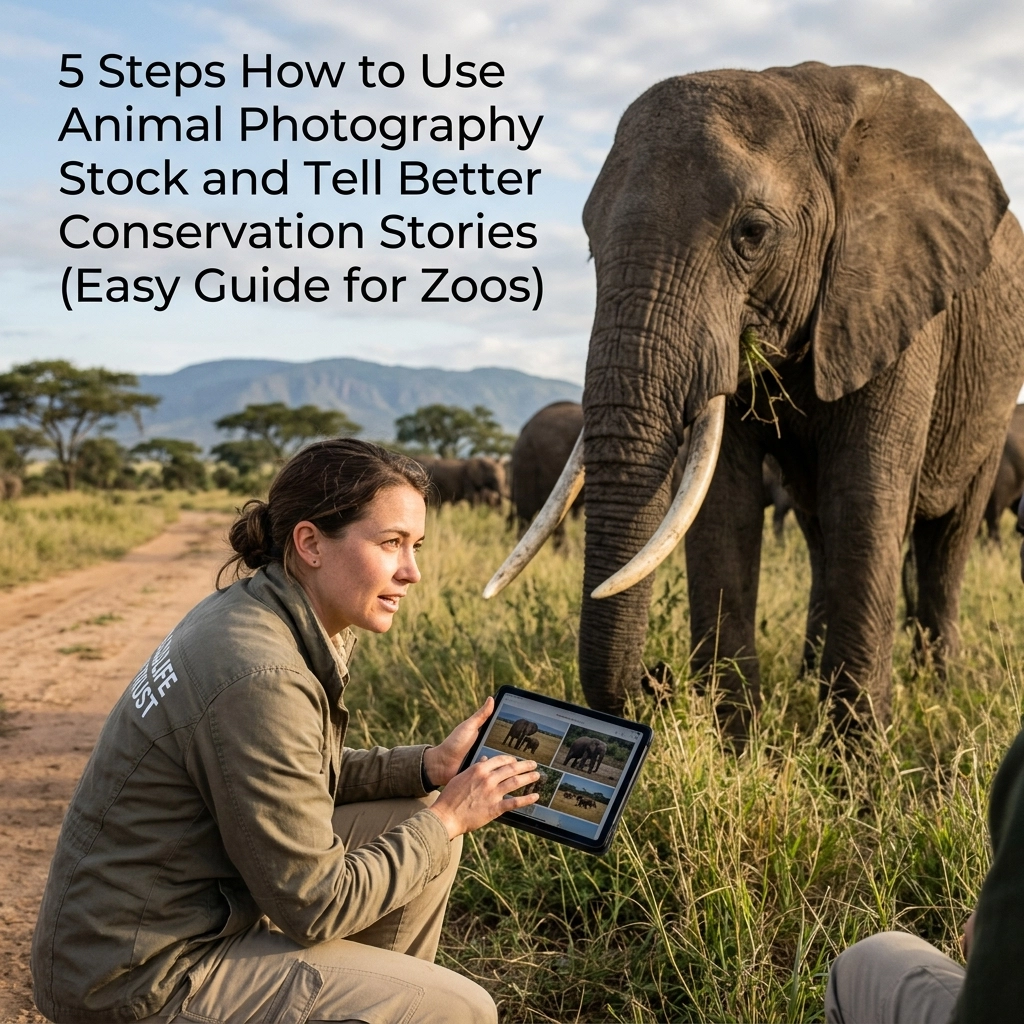
5 Steps How to Use Animal Photography Stock and Tell Better Conservation Stories (Easy Guide for Zoos)
Conservation needs a voice. It needs eyes. At Zoo Imagery, we provide the visual tools to bridge the gap between wildlife and the public. Today, Sunday, 10 of May 2026, we are sharing how your zoo can leverage high-quality stock to move people.
Storytelling is not just information. It is connection. Good photography makes a person stop scrolling. Great photography makes them care.
Step 1: Choose Eye Contact for Instant Empathy
Connection starts with the eyes. When selecting stock photography, look for subjects looking back. This is "The Gaze."
Human psychology is simple. We look for faces. When a visitor sees a Great Ape or a Tiger making eye contact, they see a peer. They see a life worth protecting.
- Select images where the animal is at eye level.
- Avoid "looking down" shots.
- Focus on the soul of the subject.
Use these images for your primary donation appeals. A direct look creates a direct response.
Step 2: Showcase Natural Behaviors, Not Just Portraits
A portrait is a photo. A behavior is a story.
Conservation is about habitat and survival. Show animals doing what they were born to do. Foraging. Caring for young. Interacting with their environment.

When you use stock that shows a mother elephant guiding her calf, you aren't just showing an elephant. You are showing family. You are showing the need for protected corridors.
- Look for movement.
- Prioritize interaction over stillness.
- Connect the action to a specific conservation goal.
Step 3: Prioritize Technical Clarity and Composition
High-resolution assets are non-negotiable. If an image is pixelated, the message is lost. Professional conservation stories require professional media.
Zoo Imagery focuses on simplicity. Clean backgrounds. Sharp focus on the subject. Minimal distractions. This allows your text: your conservation message: to breathe.
- Use simple backgrounds to highlight the species.
- Ensure the lighting is natural.
- Pick images that work across different sizes, from billboards to Instagram.
Check our full sitemap for organized categories that meet these standards.
Step 4: Align Imagery with Ethical Standards
Ethics first. Always.
As a zoo, your reputation depends on animal welfare. The photography you use must reflect this. Avoid images where animals look stressed, cornered, or in unnatural "performance" poses.
Stock photography for zoos should represent the species with dignity. At Zoo Imagery, we vet our collections to ensure the animals are presented accurately and beautifully.
- Check for relaxed body language.
- Avoid "staged" human-animal interactions.
- Celebrate the animal’s autonomy.
Step 5: Build a Consistent Multi-Channel Narrative
Don't use a photo once. Use it everywhere.
Consistency builds trust. Use a specific "Hero" image for your campaign. Use it on your website. Use it on your LinkedIn profile. Use it in your physical educational signage.
When a visitor sees the same image of a Polar Bear on their phone and then at your exhibit, the story sticks.

Milestone: A Growing Library for Global Impact
Today we celebrate a milestone. Zoo Imagery has expanded its digital media library. We now offer thousands of unique assets specifically curated for zoo marketing teams.
Our mission is simple. We provide the imagery so you can focus on the animals. No complex licensing. No low-quality files. Just professional assets for conservationists.
Species Spotlight: The African Elephant
The Elephant represents the scale of our conservation challenges. They are architects of the landscape.
When telling their story, use wide shots to show their impact on the environment. Use close-ups of their skin and trunks to show their complexity.
Our latest elephant assets focus on textures. The wrinkles. The dust. The details that make a visitor feel like they can reach out and touch the animal.

Species Spotlight: The Giant Panda
Few animals evoke as much immediate affection as Pandas. They are the face of modern conservation success.
Use Panda imagery to talk about habitat restoration. Show them eating bamboo. Show the environment they need to thrive.
Our Panda collection has been updated with new high-resolution files that capture the playfulness of the species. Simple, effective, and ready for your next campaign.
Species Spotlight: Birds of the World
Avian conservation is often overlooked. We want to change that. Our Birds collection features vibrant colors and incredible detail.
Use macro photography of feathers to talk about biodiversity. Use flight shots to talk about migration patterns and international cooperation.
Birds are indicators of environmental health. Their photos should be as sharp as their roles in the ecosystem.

Species Spotlight: The Misunderstood Hyena
Conservation isn't just for the "cute" animals. Hyenas play a vital role in their ecosystems. They are intelligent, social, and resilient.
We encourage zoos to use our Hyena stock to break stereotypes. Show their social bonds. Show their intelligence. Telling the story of the "unpopular" species is where true conservation education happens.
Daily Press Release: Zoo Imagery Updates
Date: May 10, 2026
Location: Denver, CO
Zoo Imagery continues to simplify how zoos access professional digital media. This week, we added 500 new assets across fifteen different species categories.
We have optimized our search functionality. Finding the right image is now faster. We know zoo teams are busy. Our platform is designed to save time.
New Features This Week:
- Enhanced tagging for conservation status (Vulnerable, Endangered, etc.).
- Improved download speeds for 4K video assets.
- New "Spotlight" collections for ESG-aligned corporate reports.
We are proud to support zoos in their mission to protect the natural world. Our images are more than files. They are tools for change.
Simple Solutions for Complex Stories
Storytelling shouldn't be hard. Zoo Imagery keeps it simple.
- Select your species.
- Choose your story.
- Download your assets.
- Engage your audience.
We handle the technical side. You handle the conservation side.

Start Telling Better Stories Today
The world needs to hear from you. Use the best tools available.
Explore our latest listings or view our full gallery.
Follow us on LinkedIn to see how other zoos are using our imagery to drive real-world impact.

Connect with us:
zooimagery.com
Zoo Imagery on LinkedIn


