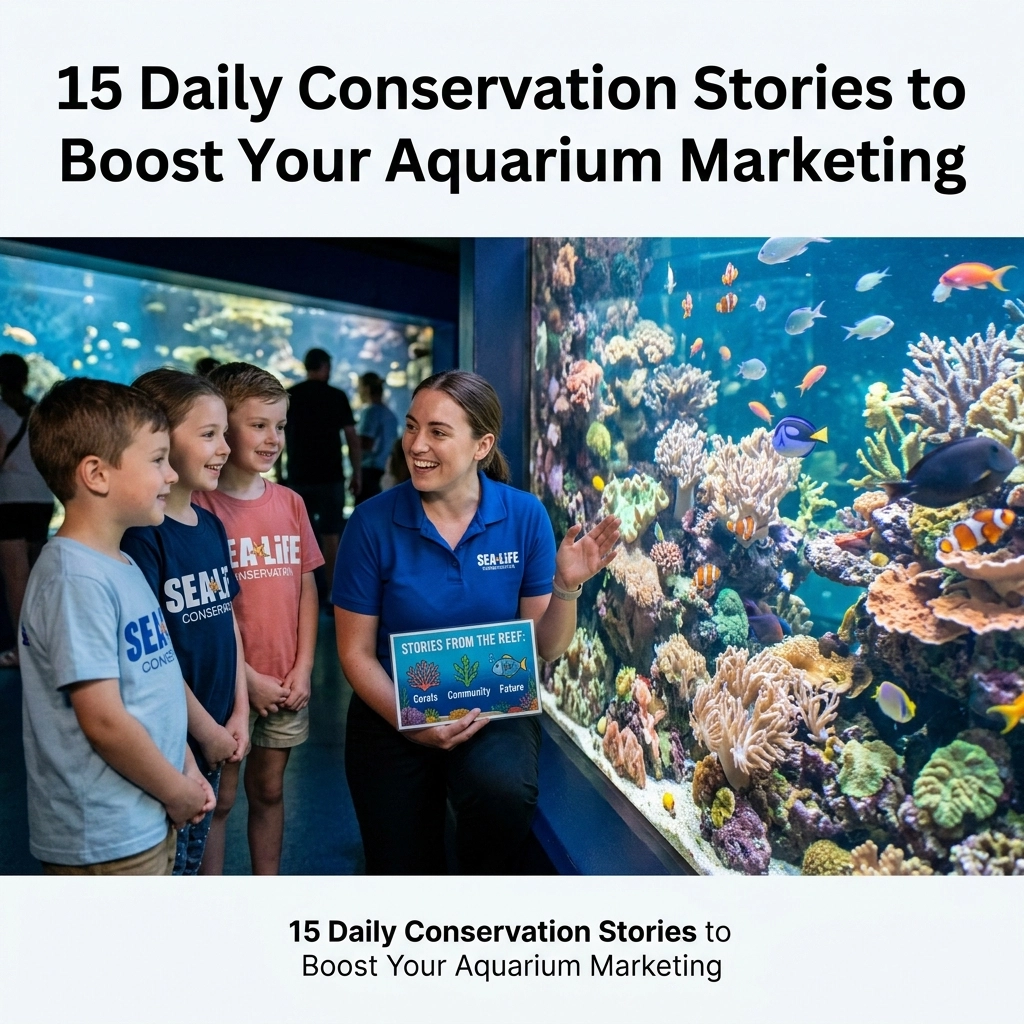
15 Daily Conservation Stories to Boost Your Aquarium Marketing
Stories drive engagement. In the aquarium industry, conservation is your most powerful narrative. People visit for the animals, but they stay for the mission. At Zoo Imagery, we provide the visual assets to tell these stories effectively.
Marketing shouldn't be complicated. It should be direct. Clear. Impactful. Use these fifteen daily story prompts to fill your content calendar and connect your audience to the wild.
1. The Humpback Whale Recovery
The humpback whale was nearly extinct by the 1960s. Today, populations have rebounded significantly. This is a story of international cooperation. It proves that policy changes work.
- The Angle: Hope.
- Action: Share a high-resolution image of a whale fluke. Contrast the 1960s numbers with today’s data.
- Visual tip: Use wide-angle shots to show scale.
2. Red Sea Coral Resilience
Scientists in the Red Sea are finding corals that resist rising temperatures. This research is a blueprint for reef survival globally. It’s a story of biological grit.
- The Angle: Science and innovation.
- Action: Detail the collaboration between nations to protect these "super corals."
- Goal: Position your aquarium as a hub for scientific literacy.

3. Sustainable Seafood Choices
The ocean provides food for billions. Overfishing threatens this. Your aquarium’s cafe or local partnerships can highlight the Seafood Watch program.
- The Angle: Personal responsibility.
- Action: List three species to avoid and three sustainable alternatives.
- Context: Keep it simple. Direct advice for the grocery store.
4. Florida Coral Reef Restoration
The Florida Reef Tract is under pressure from disease. Local aquariums are "banking" coral colonies to preserve genetic diversity. They are the insurance policy for the ocean.
- The Angle: The "Noah’s Ark" of the sea.
- Action: Show the hands-on work of biologists.
- Link: See how we document these efforts at zooimagery.com.
5. England’s Wild Beavers
Beavers were extinct in England for 400 years. Their reintroduction is transforming landscapes. They reduce flooding and create habitats for fish and birds.
- The Angle: Ecosystem engineers.
- Action: Use a "Before and After" post showing a wetland area restored by beavers.
- Species Focus: Check our birds category for the species that benefit from beaver wetlands.
6. Local River Cleanups
Conservation starts at home. Removing trash from local waterways prevents it from reaching the ocean. It is a tangible, local victory.
- The Angle: Community action.
- Action: Report the weight of trash collected. 1,000 lbs of plastic removed is a powerful headline.
- Tone: Proud but matter-of-fact.

7. Horseshoe Crab Tagging
These animals are living fossils. They have been around for 450 million years. Their blue blood is essential for medical testing. Tagging programs help track their migration.
- The Angle: Ancient survival.
- Action: Explain the tagging process. It’s low-tech but high-impact.
- Fact: Their blood helps ensure vaccines are safe.
8. Oyster Shell Recycling
Don’t throw away the shells. Restoring oyster reefs protects shorelines from erosion and filters water. One oyster filters up to 50 gallons of water a day.
- The Angle: Circular economy.
- Action: Partner with local restaurants. Show the journey from plate to reef.
- Direct Statement: One shell matters.
9. Mountain Gorilla Growth
While often associated with land-based zoos, the recovery of mountain gorillas is a universal conservation win. Their numbers are slowly rising through intense protection.
- The Angle: Perseverance.
- Action: Highlight the rangers on the front lines.
- Resource: View our wild-tigers or terrestrial collections for similar conservation themes.
10. Giant Panda Success
The giant panda is no longer "endangered." It is now "vulnerable." This transition is a massive marketing win for the conservation community.
- The Angle: Success is possible.
- Action: Focus on the habitat restoration that allowed this growth.
- Species Spotlight: pandas.
11. Steller Sea Lion Resurgence
Over 70,000 Steller sea lions are now thriving in the wild. Monitoring these populations helps scientists understand ocean health.
- The Angle: Indicators of health.
- Action: Use a "Day in the Life" post for a sea lion.
- Visual: Focus on pup survival rates.

12. Healing Through Nature
Aquariums are quiet spaces. They provide mental health benefits for veterans and first responders. The "blue mind" effect reduces stress.
- The Angle: Human-nature connection.
- Action: Invite a local veterans' group for a private tour. Document the peace, not just the animals.
- Tone: Soft. Respectful.
13. Pollinator Gardens
Aquarium grounds aren't just for parking. Native plants support monarch butterflies. These insects are essential for the ecosystems that eventually feed into our water systems.
- The Angle: The bigger picture.
- Action: Share a map of your on-site pollinator garden.
- Fact: Monarchs migrate thousands of miles. They need your garden.
14. Preventing Illegal Wildlife Trade
Donated molted feathers from aquarium birds can be used by Native American tribes for cultural ceremonies. This stops illegal poaching in the wild.
- The Angle: Cultural conservation.
- Action: Explain the partnership. It’s a unique way to protect wild populations.
- Species Focus: Macaws, parrots, and eagles.
15. The Next Generation
Every child who sees a shark for the first time is a potential future marine biologist. Education is the long game of conservation.
- The Angle: Legacy.
- Action: Feature a "Junior Keeper" or a student question of the week.
- Impact: Inspiration leads to action.

Company Milestone: Expanding Our Aquatic Library
Zoo Imagery is proud to announce a milestone. We have surpassed a new threshold in our digital media library, specifically in high-resolution aquatic content. We now offer one of the most comprehensive collections of ESG-aligned animal imagery for the aquarium industry.
Our goal is simple. We provide the tools. You tell the story.
Species Spotlight: The Sand Tiger Shark
Often misunderstood because of their visible teeth, Sand Tiger Sharks are docile. They are the perfect "ambassador" species. They allow visitors to confront their fears and learn about the necessity of apex predators in the ocean.
- Status: Vulnerable.
- Role: Maintaining balance in coastal ecosystems.
- Marketing Tip: Use a close-up "tooth" shot to grab attention, then pivot to their calm nature.
How to Implement These Stories
Don't overthink the delivery. Use a clean, uncluttered approach.
- Social Media: One story per day. Short captions. High-quality visuals.
- On-Site Signage: Place "Did You Know?" plaques near relevant exhibits.
- Newsletters: Use a "Conservation Corner" section to highlight one win each month.
- LinkedIn: Share the professional side of these stories. Focus on the partnerships and the science. Follow our LinkedIn profile for more industry insights.
Why Quality Visuals Matter
A story about coral restoration is just words until the reader sees the vibrant colors of a healthy reef. A story about whale recovery needs the scale of a high-definition image.
Zoo Imagery specializes in providing these assets. We focus on:
- Authenticity.
- Clarity.
- Impact.
We don't use marketing jargon. We provide the visual proof of your conservation work. Whether you are highlighting elephants, polar-bears, or giraffes, the image is the hook.
Simple Steps to Better Marketing:
- State the problem.
- Show the solution (The Conservation Story).
- Provide the visual.
- Invite the audience to help.
Conservation isn't just about saving animals. It's about saving the systems that support us all. Your aquarium is the window into that world. Use these stories to keep that window clear.
For more information on how to access our full library of conservation-focused media, visit zooimagery.com.


