10 Reasons Your Zoo Marketing Isn’t Working (And How to Fix It with Animal Stock Photos)
Tuesday, 5 of May 2026.
Dan Kost here.
Zoo marketing is harder than it looks. You have amazing animals. You have a great mission. But sometimes the message doesn't land. The gates don't click. The donations don't move.
Often, the problem isn't the animals. It is the visuals.
We see the same mistakes across the industry. Here are 10 reasons your zoo marketing might be stalling: and how the right imagery fixes it.
1. Visual Clutter
Most zoo ads try to do too much. Three fonts. Five logos. A collage of ten different animals. The human eye doesn't know where to look. It ignores the ad.
The Fix: One hero shot.
Use a single, high-impact image. A wild tiger looking directly at the camera. Clean space for your text. Let the animal do the talking.

2. Jargon Overload
"Ex-situ conservation." "Species Survival Plans." "Biodiversity hotspots."
To you, these are daily life. To a family looking for a weekend outing, it is noise. They want to connect with nature, not read a textbook.
The Fix: Storytelling through action.
Don't explain the plan. Show the result. Use photos of animals thriving. Show the "why" without the industry words. Simple imagery bridges the gap between science and the public.
3. Inconsistent Branding
The education department uses one style. The food service uses another. The membership team uses something else entirely. Your brand feels like five different companies.
The Fix: A unified asset library.
Centralize your visuals. When every department pulls from the same high-quality animal stock collection, the brand feels solid. Consistency builds trust. Trust builds members.
4. The "Logo Trap"
Many zoos think a new logo is a rebrand. It isn't. A logo is just a mark. Your brand is the feeling people get when they see your content. If the logo is new but the photos are old, the brand is still old.
The Fix: Visual identity over graphics.
Invest in world-class imagery. A stunning shot of elephants says more about your commitment to wildlife than a stylized "E" in your logo ever will.

5. Playing It Too Safe
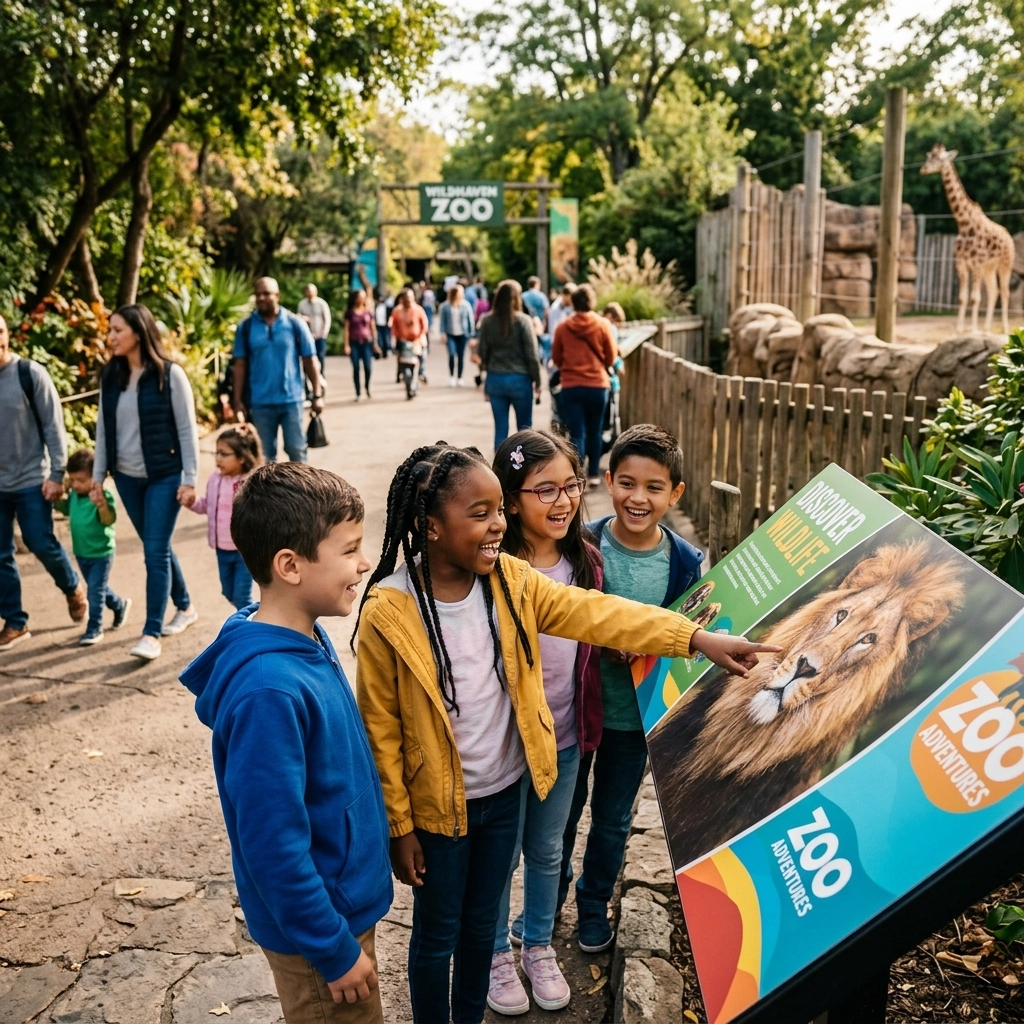
"Beige" marketing. Safe colors. Generic photos of kids pointing at a glass window. It looks like every other zoo in the country. It is forgettable.
The Fix: Rare perspectives.
Use imagery that people can’t get on their phones. Macro shots of birds. Low-angle shots of predators. Give your audience a view they haven't seen before. Stand out by being visually bold.
6. Desktop-First Thinking
Most people see your marketing on a phone. If you are using horizontal landscapes for everything, you are losing 70% of your impact. Your "big" campaign looks tiny on a vertical screen.
The Fix: Vertical-ready assets.
Select stock photos that crop well for mobile. High-resolution portraits work best. Think "phone screen first." If it doesn't look good on Instagram, it won't work in 2026.

7. Missing the Mission (The ESG Gap)
Corporate partners and major donors care about results. They want to know their money supports a better planet. If your marketing only shows "animals in cages," you are missing the bigger picture of conservation and environmental responsibility.
The Fix: Mission-aligned visuals.
Highlight the link between your facility and the wild. Use stock photos of wild counterparts to tell the story of your conservation work. It shows you are part of a global solution, not just a local attraction.
8. Wrong Audience Targeting
Using a "cute" panda photo for a high-level donor gala. Or using a technical conservation photo for a toddler’s birthday party ad. The disconnect is real.
The Fix: Specificity.
Segment your imagery.
- Donors: Majestic, powerful, "legacy" shots.
- Families: Active, engaging, "moment" shots.
- Researchers: Detailed, anatomical, "accuracy" shots.
We offer variety for this reason. One polar bear doesn't fit every message.

9. Content Fatigue
You have been using the same five photos of your resident lion for three years. Your local audience has seen them. They have scrolled past them. They are "blind" to your posts.
The Fix: Fresh perspectives.
You don't need a new animal. You need a new angle. Stock photography allows you to supplement your local shots with fresh, professional content. Keep your feed moving. Keep the interest high.
10. The Disconnect Between Ad and Reality
You show a lush, jungle-like photo of a tiger. The guest arrives and sees a sleeping cat behind a fence. The "promise" of the ad wasn't met.
The Fix: Atmospheric authenticity.
Use stock photos that evoke the spirit of the animal. Focus on the eyes, the texture of the fur, the majesty of the movement. You aren't selling a "view of a fence." You are selling an "encounter with nature." The right photo sets the emotional stage before they even walk through the gate.
Marketing for the Future: ESG and Wildlife
In 2026, "sustainability" isn't a buzzword. It is a requirement.
Zoos and aquariums are at the forefront of the environmental movement. Your marketing needs to reflect this. We focus on "Presented by" animal pages. These are sponsored species spotlights that align your corporate partners with specific conservation goals.
A local bank wants to support biodiversity? They "present" the tiger page.
A tech company wants to support climate action? They "present" the polar bear collection.
This isn't just advertising. It is alignment. It tells a story of shared responsibility.

Why Stock Photography?
Some ask: "Why not just take our own photos?"
You should. You need photos of your specific animals.
But high-end marketing requires a level of polish that is hard to capture on a busy Saturday between feedings and tours.
Stock photography provides:
- Quality: National Geographic-level clarity.
- Speed: No waiting for the sun to hit the enclosure right.
- Versatility: Thousands of species at your fingertips.
Simplicity Wins
At Zoo Imagery, we keep it simple.
No complex licensing. No confusing tiers.
Just high-quality digital media for people who care about animals.
If your marketing feels stuck, look at your photos.
Are they telling the story you want people to hear?
Or are they just taking up space?
Let’s Fix It
Your mission is too important for bad marketing.
Update your visuals.
Tell a better story.
Save more species.
Check out our full library: zooimagery.com
Follow our updates on LinkedIn.

About Zoo Imagery
We provide professional animal stock photography and digital media solutions tailored for zoos, aquariums, and conservation organizations. Our goal is to help you communicate your mission with clarity and impact.
Reach out to us at zooimagery.com/contact to learn more about how we support zoo marketing teams worldwide.
- Dan Kost
CEO, Zoo Imagery


