10 Reasons Your Lion Stock Photo Isn’t Driving Donations (And How to Fix It)
Visuals drive impact. In zoo and aquarium marketing, the wrong image stalls engagement. You use a lion photo to represent strength, majesty, and a need for protection. Yet, the donation button remains unclicked.
Donors are visually literate. They recognize generic content instantly. If your imagery feels like a placeholder, your mission feels like one too.
Here are 10 reasons your current lion photography is failing your fundraising goals and how to pivot toward imagery that works.
1. The "Identifiable Victim" Problem
Generalization kills empathy. A photo of "a lion" represents a species. A photo of "Leo," a 12-year-old male with a scarred ear from a territorial dispute, represents a life.
- The Issue: Generic stock lacks a name.
- The Science: People donate to individuals, not statistics.
- The Fix: Use photography that highlights unique physical traits. Scars, whisker patterns, and specific expressions create a narrative of a lived life.
2. The Overused "Stock" Aesthetic
Donors see millions of images daily. Commercial stock libraries often feature the same handful of high-performing lion shots.
- The Issue: Banner blindness. If they’ve seen it on a travel blog, they won’t stop for it on a donation page.
- The Fix: Source rare, high-resolution imagery from specialized libraries like Zoo Imagery. Avoid the "top 10" results on mass-market sites.
3. Lack of Direct Eye Contact
Eye contact triggers a biological response. It creates a "closed-loop" communication between the subject and the viewer.
- The Issue: Profiles or "looking away" shots feel observational, not engaging.
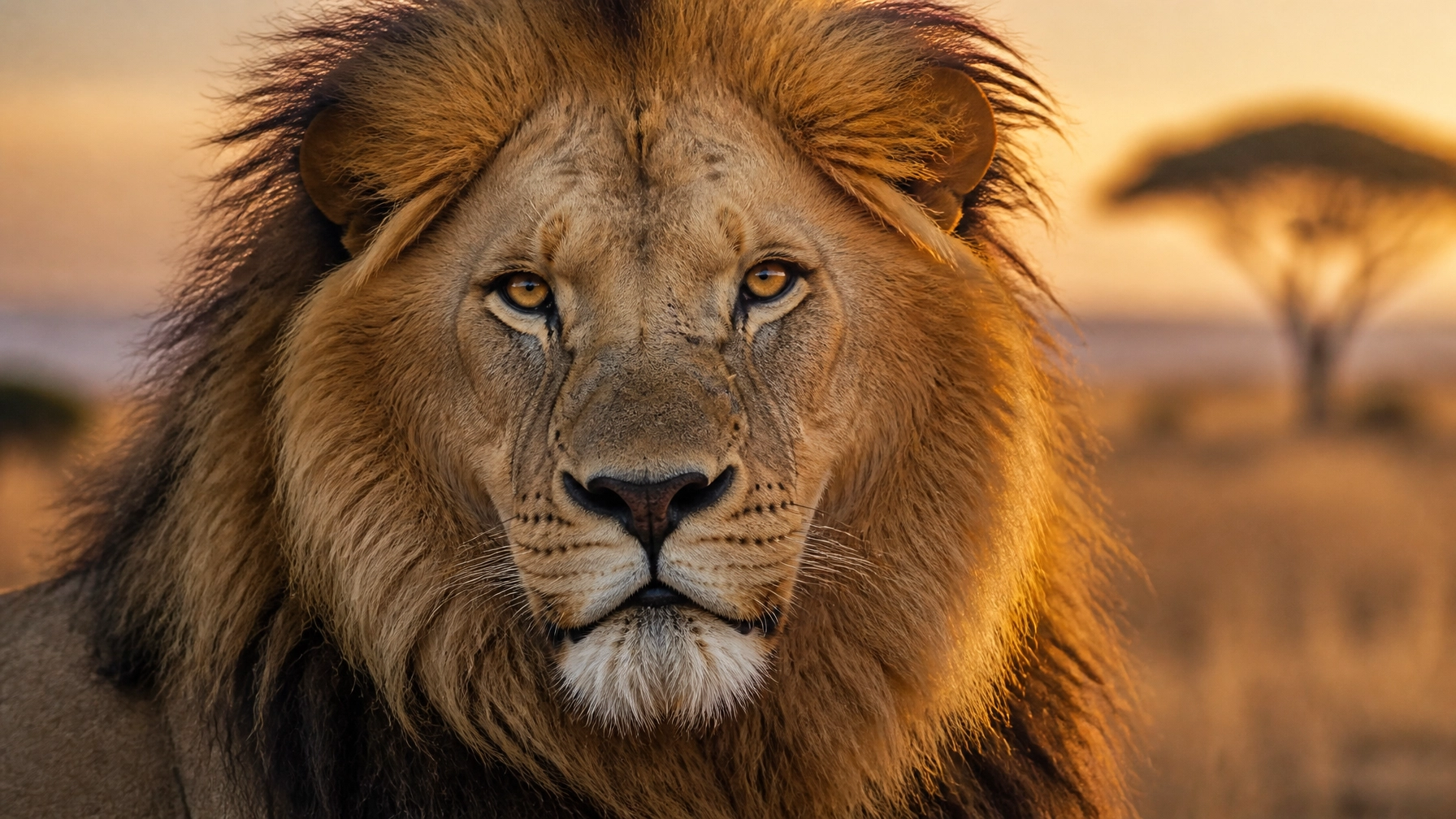
- The Fix: Prioritize "hero shots." Intense, forward-facing gazes demand attention. They force the viewer to acknowledge the animal as a conscious being.

4. Flat, Artificial Lighting
Lighting dictates mood. High-noon, flat lighting removes depth. It makes the animal look like a cardboard cutout.
- The Issue: No emotional weight.
- The Fix: Look for "Golden Hour" photography. Side-lighting reveals texture in the mane. It creates shadows that imply mystery and dignity.
5. The "Pristine Nature" Fallacy
Many stock photos show lions in perfect, untouched savannas. While beautiful, this doesn't communicate a need for help.
- The Issue: If the environment looks perfect, the donor assumes the animal is fine.
- The Fix: Use documentary-style photography. Show the reality of the habitat. Imagery that includes conservation context: research collars, tracking teams, or managed environments: proves the mission is active.
6. Missing the Human Connection
Conservation is a human effort. A lion alone is a wildlife photo. A lion near a veterinarian or a keeper is a conservation story.
- The Issue: Isolation. Donors don't see where their money goes.
- The Fix: Include "behind-the-scenes" imagery. Show the hands that feed, the doctors who heal, and the scientists who track.

7. Static Composition
A lion sleeping is natural. A lion mid-stride or reacting to its environment is compelling.
- The Issue: Passive imagery leads to passive browsing.
- The Fix: Select photos with "implied motion." A tensed muscle, a shifted ear, or an open mouth. These suggest a story is currently unfolding.
8. Misaligned Brand Values
If your zoo focuses on local conservation, using a generic African lion on every page feels disconnected.
- The Issue: Lack of transparency.
- The Fix: Align your visual assets with your specific programs. If you are funding habitat restoration, the animal should be pictured in that specific ecosystem.
9. Low Technical Quality
In 2026, donors view content on high-density displays. Low-resolution or poorly cropped images signal a lack of professionalism.
- The Issue: If you don't care about your photos, do you care about the animals?
- The Fix: Only use high-resolution, professionally color-graded assets. Quality is a proxy for trust. Explore how it works to see the difference professional standards make.
10. Absence of Social Proof
Modern donors trust other people more than they trust institutions.
- The Issue: Professional photos can sometimes feel too polished or distant.
- The Fix: Blend professional imagery with User-Generated Content (UGC).
How to Fix Your Visual Strategy
The most effective marketing strategy for zoos and aquariums today is a hybrid approach. You need professional, "anchor" imagery to establish authority, and real-time visitor photos to establish community.
The ZooMedia.us Solution
Our app allows guests to share their own photos of your animals instantly. This creates a stream of authentic, "in-the-moment" content that drives engagement results you can track. It turns a visitor’s phone into a marketing tool for your mission.

Actionable Steps for 2026
- Audit your library: Remove any image that looks like a generic wallpaper.
- Focus on "The One": Pick one lion. Tell his story. Use 5-10 different photos of just him for a specific campaign.
- Use the ZooMedia App: Encourage guests to capture the "real" life at your facility. Use these in your social feeds to complement your stock library.
- Prioritize Impact: Every photo must answer the question: "Why does this animal need me today?"
High-quality photography isn't an expense. It is an investment in donor trust. When a viewer looks into the eyes of a lion and sees a story, they aren't just looking at a photo. They are looking at a reason to give.

Ready to upgrade your visual impact?
Browse our collection of stunning animal photography or connect with us on LinkedIn to learn more about our picture marketing solutions.


