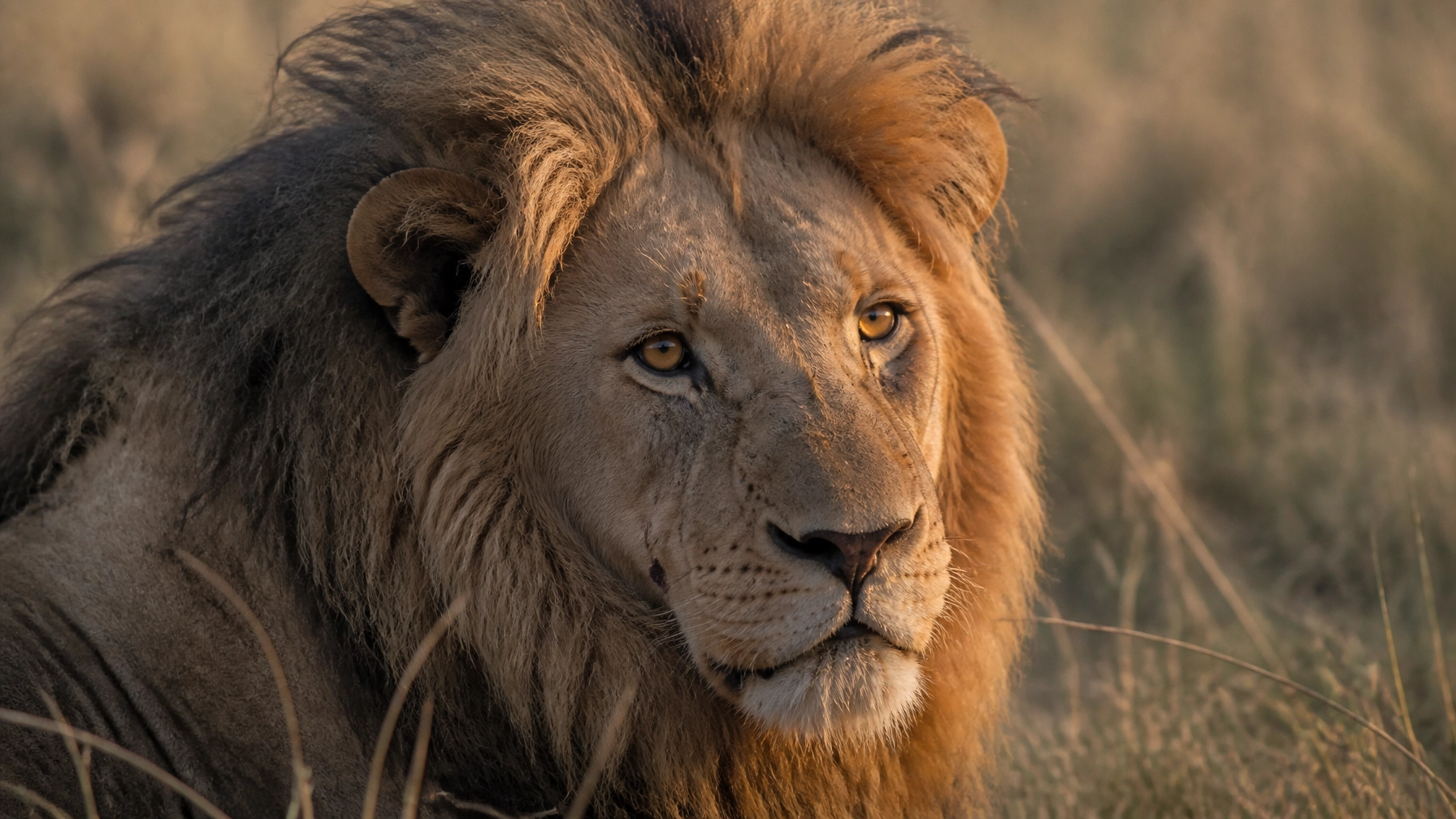
10 Reasons Your Lion Stock Photo Isn’t Driving Donations (And How to Fix It)
Stock photos are convenient.
They are also dangerous.
In conservation, the wrong image kills the message.
Donors want truth.
They want connection.
Most lion stock photos offer neither.
You are losing donations.
It isn't your cause.
It isn't your copy.
It is your imagery.
Here are 10 reasons your current lion photos are failing.
And how to fix them.
1. The "Staged" Syndrome
Most stock photos look like a movie set.
Lions don't pose for the camera.
They don't look "perfect."
A perfect lion looks fake.
A fake lion doesn't need a donation.
Donors respond to reality.
Scars.
Matted fur.
Dust.
The Problem: The photo looks "too good to be true."
The Result: The viewer assumes the animal is fine.
The Psychology: Perfection equals safety.
2. Context is Missing
A lion in a void isn't a story.
Lions live in habitats.
Grasslands.
Thick brush.
Encroaching farmland.
When you strip away the environment, you strip away the threat.
Without a threat, there is no need for a donation.
The Problem: High-contrast, studio-style portraits.
The Result: No sense of place.
The Psychology: If they have nowhere to live, why save them?

3. The "Petting Zoo" Aesthetic
Cute sells, but it doesn't always save.
Close-up, "friendly" lion cubs are popular.
They also send the wrong message.
They look like pets.
They look approachable.
Conservation is about keeping lions wild.
Stock photos that emphasize "cute" undermine the "wild."
The Problem: Oversaturated, "cuddly" imagery.
The Result: Viewers think the animal is "safe."
The Psychology: We don't save what we don't respect as wild.
4. Overused Clichés
The lion at sunset.
The silhouette on a hill.
Every organization uses these.
Your donor has seen them 100 times this week.
Familiarity breeds apathy.
When a photo is a cliché, the eye skips over it.
It becomes wallpaper.
The Problem: "Standard" lion photography tropes.
The Result: Zero engagement.
The Psychology: If the image is generic, the mission feels generic.
5. Misaligned Brand Ethics
Your ESG (Environmental, Social, and Governance) goals are clear.
Your stock photo might not be.
Many stock photos come from game farms.
These are controlled environments.
Sometimes unethical ones.
If your donor finds out your "wild" lion was a captive model, trust is gone.
Transparency matters.
The Problem: Using imagery from questionable sources.
The Result: Brand damage.
The Psychology: Inconsistency equals untrustworthiness.

6. Missing the "Action"
Donations are a response to an action.
Lions resting are beautiful.
Lions doing things are compelling.
Protecting a pride.
Searching for water.
Staring down a threat.
Passive photos lead to passive donors.
The Problem: Static, boring poses.
The Result: Low emotional stakes.
The Psychology: Motion creates emotion.
7. Aesthetic Over Impact
Many creative professionals pick the "prettiest" photo.
They should pick the most "impactful" photo.
A beautiful photo is art.
An impactful photo is a call to action.
Sometimes the best photo for a donation is the one that is hard to look at.
The Problem: Prioritizing lighting over narrative.
The Result: Admiration, but no action.
The Psychology: Beauty is passive; impact is active.
8. Lack of Specificity
"Save the Lions" is too broad.
"Save this Pride" is specific.
Generic stock photos can't be specific.
They represent "Lion" as a concept.
They don't represent a specific animal or project.
Donors want to know exactly where their money goes.
The Problem: Using a photo that could be from anywhere.
The Result: Disconnect from the local mission.
The Psychology: People help individuals, not statistics.

9. The Digital Divide
Stock photos often look digital.
Heavily edited.
High-pass filters.
Unnatural colors.
Humans are evolved to recognize nature.
When nature looks digital, we pull away.
Authenticity is the currency of conservation.
The Problem: Over-edited, "shiny" stock assets.
The Result: Subconscious rejection of the image.
The Psychology: We don't donate to pixels. We donate to life.
10. No "Presented by" Context
Marketing is changing.
Sponsorships are moving toward species spotlights.
If your photo doesn't fit a "Presented by" format, it’s harder to sell to partners.
Photos need to be professional enough for corporate partners.
But raw enough for individual donors.
It’s a fine line.
The Problem: Photos that don't scale for different marketing needs.
The Result: Lost sponsorship opportunities.
The Psychology: Partners want to be associated with quality and truth.
How to Fix It (The Zoo Imagery Way)
Knowing the problem is half the battle.
The other half is the solution.
At Zoo Imagery, we built our library for this exact purpose.
We don't do "stock."
We do documentation.
Use "Presented by" Animal Pages
Our platform allows for "Presented by" pages.
These are dedicated spaces for specific animals.
They aren't just photos.
They are stories.
They are context.
When a donor sees a lion on a "Presented by" page, they see a partner.
They see a mission.
It feels exclusive.
It feels real.
Leverage Sponsored Species Spotlights
Corporate partners want impact.
They want to sponsor a specific species.
A sponsored species spotlight uses high-quality imagery to link a brand to an animal.
But it has to be the right imagery.
Natural.
Documentary-style.
Honest.
We provide the assets that make these partnerships work.
Focus on ESG-Aligned Imagery
Your organization’s values should be visible in every pixel.
Our library is curated for conservation.
We prioritize:
- Real behaviors.
- Natural lighting.
- Habitat context.
- Ethical sourcing.
Documentary Style Only
We avoid the "shiny" look.
Our photos use "Golden Hour" and "Moody Morning" light.
They emphasize skin textures.
They capture "micro-expressions."
A lion looking tired after a hunt is more powerful than a lion roaring at the sky.
One is a memory.
The other is a postcard.

Don't Just Tell. Show.
If the habitat is disappearing, show the dust.
If the lion is a veteran of the wild, show the scars.
If the pride is growing, show the community.
Use Zoo Imagery to find photos that do the heavy lifting for you.
The ZooMedia Advantage
Images drive engagement.
User-generated content (UGC) drives trust.
Our ZooMedia.us phone app bridges the gap.
It lets guests share their own photos.
It creates a real-time feed of authentic moments.
Combine our professional stock with guest UGC.
That is how you drive donations.
You save time.
You save money.
You save animals.
Ready to upgrade your imagery?
Don't settle for "good enough."
Donors won't.
Visit Zoo Imagery to explore our library.
Follow us on LinkedIn for daily conservation marketing tips.
Stop using stock.
Start using stories.


