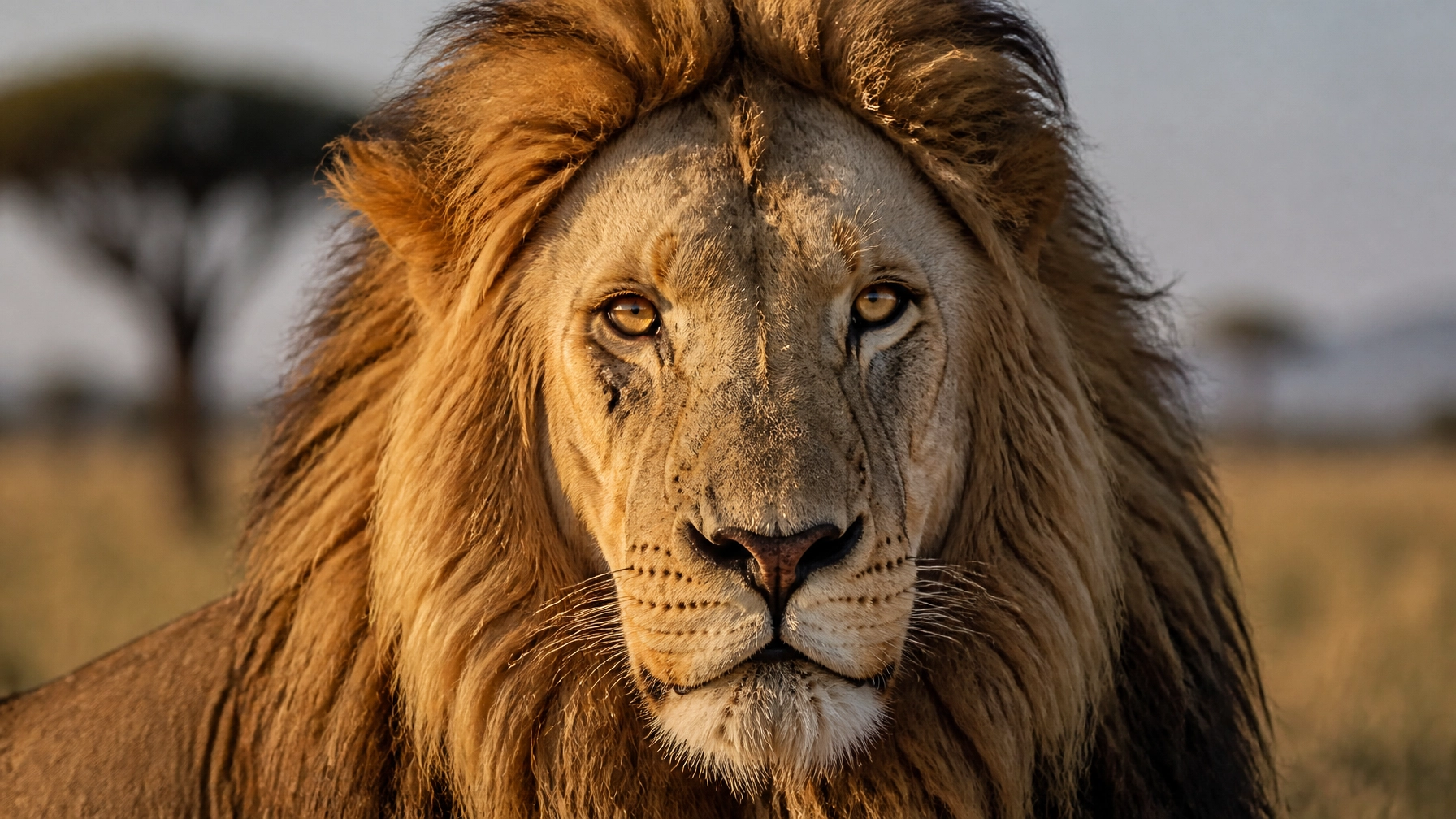
10 Reasons Your Lion Stock Photo Isn’t Driving Donations (And How to Fix It)
Visuals drive conservation.
Bad visuals stall it.
Most organizations use the same generic lion photos.
They fail.
Donors don't feel.
Donors don't act.
Here is why your lion imagery is failing and how to change the narrative.
1. Zero Eye Contact
Human psychology is wired for connection.
Eyes are the entry point.
If the lion is looking at the ground or a distant gazelle, the viewer is a spectator.
If the lion looks into the lens, the viewer is a participant.
Research shows "facial salience" activates brain regions linked to value and anticipation.
No eye contact means no empathy.
The Fix:
- Prioritize tight portraits.
- Select images where the subject breaks the "fourth wall."
- Ensure the eyes are sharp and well-lit.
2. The "Stock Photo" Aesthetic
Over-processed images feel fake.
Vibrant, neon-green grass.
Airbrushed fur.
Perfect, symmetrical lighting.
Donors associate "perfect" with "artificial."
Conservation is raw.
It is dusty, harsh, and real.
High-gloss imagery creates a barrier between the donor and the reality of the savanna.
The Fix:
- Use documentary-style photography.
- Embrace natural textures: dust, flies, and scars.
- Stick to authentic color palettes.
3. Aggression Over Empathy
The "Roaring Lion" is a cliché.
It communicates power, but also danger.
It is hard to feel protective of something that looks like it wants to eat you.
Aggressive imagery reinforces distance.
Donors give to what they care for, not what they fear.
While a roar is iconic, it rarely drives a donation for habitat protection.

The Fix:
- Feature vulnerable moments.
- Focus on kinship: mothers with cubs or pride grooming.
- Show the "socioemotional" side of the species.
4. Missing Narrative Context
A lion in a void is just a shape.
Lions live in ecosystems.
They face encroaching farmland.
They navigate shrinking corridors.
If your image doesn't hint at a story, it is just a wallpaper.
Donors need to see the "why" behind the "what."
The Fix:
- Use environmental portraits.
- Include the habitat: even the degraded parts.
- Select photos that suggest a timeline: where they were, where they are, where they are going.
5. Lack of Individuality
The "Identifiable Victim Effect" is real.
People don't donate to "Lions."
They donate to Saba.
They donate to a mother of three cubs.
Generic pride shots are abstract.
Abstract problems don't get funded.
Specific individuals get protected.
The Fix:
- Focus on one lion as the protagonist.
- Give the subject a name and a history in your copy.
- Avoid large, distant groups for donation headers.
6. Poor Orientation Utility
Marketers often force landscape photos into portrait-first mobile feeds.
You lose the impact.
You crop out the context.
If the lion’s face is cut off on a smartphone, the message is lost.
Most donation journeys happen on mobile.
The Fix:
- Source vertical (9:16 or 4:5) photography.
- Ensure the focal point: the eyes: is in the center for responsive cropping.
- Utilize the Zoo Imagery library for diverse format options.
7. Over-Editing and Filters
Filters are for influencers, not conservationists.
Sepia tones and heavy vignettes distract from the subject.
They make the image feel like a memory, not a current crisis.
Conservation happens in the "now."
Keep the edits clean.
The Fix:
- Maintain natural white balance.
- Avoid heavy vignettes.
- Let the raw quality of the capture speak.
8. The "Pity" Trap
Constant imagery of suffering leads to desensitization.
It is called "compassion fatigue."
If every photo shows a starving or injured animal, the donor feels helpless.
Helplessness leads to inaction.
You need to show the beauty worth saving.

The Fix:
- Balance "threat" images with "dignity" images.
- Show the lion as a majestic apex predator worthy of respect.
- Highlight the goal of conservation: a healthy, wild animal.
9. Inauthentic Settings
Lions in enclosures don't always look like lions in the wild.
Subtle cues: fences, manicured grass, or concrete: break the illusion.
Even if the donor doesn't consciously see it, they sense the lack of "wildness."
It weakens the urgency of "wildlife" conservation.
The Fix:
- Verify the source of your stock.
- Use photos from authentic field conditions.
- Check for "unnatural" background elements before licensing.
10. Technical Mediocrity
Low-resolution images suggest a low-impact organization.
Grainy, pixelated, or blurry shots communicate a lack of professionalism.
If you don't care about your imagery, why should a donor care about your mission?
High-quality photos build trust.
The Fix:
- Use high-resolution, professional-grade photography.
- Avoid "user-generated" content for primary fundraising headers.
- Invest in a curated library like Zoo Imagery.
Species Spotlight: The African Lion (Panthera leo)
The lion is more than a mascot.
It is an "Umbrella Species."
By protecting the lion's habitat, we protect thousands of other species.
Current status: Vulnerable.
Population decline: 43% over the last 21 years.
Remaining wild lions: Estimated 23,000.
Lions are social.
They live in prides.
This social structure makes them unique among big cats.
It also makes them susceptible to conflict.
They need space.
They need your support.
Zoo Imagery Milestones: Driving Real Engagement
At Zoo Imagery, we don't just sell photos.
We drive connection.
Our ZooMedia.us app is a milestone in digital engagement.
It allows zoo guests to become conservation storytellers.
By sharing high-quality, user-generated content, guests create a ripple effect.
Recent Achievements:
- Expanded our library to include rare, high-resolution portrait formats for mobile-first campaigns.
- Helped partners increase social engagement by 30% through targeted animal photography strategies.
- Simplified the licensing process to get content into the hands of creators faster.
The Future of Conservation Storytelling
Donors want to be heroes.
Your imagery should be the call to adventure.
Show them the king.
Show them the family.
Show them the horizon.

If your lion stock photos aren't working, change the photo.
Don't settle for "good enough."
The species deserves better.
Ready to upgrade your visual strategy?
Explore our curated collections of lions, tigers, and more.
Save time.
Save money.
Save species.
Visit Zoo Imagery or follow us on LinkedIn for more insights.


