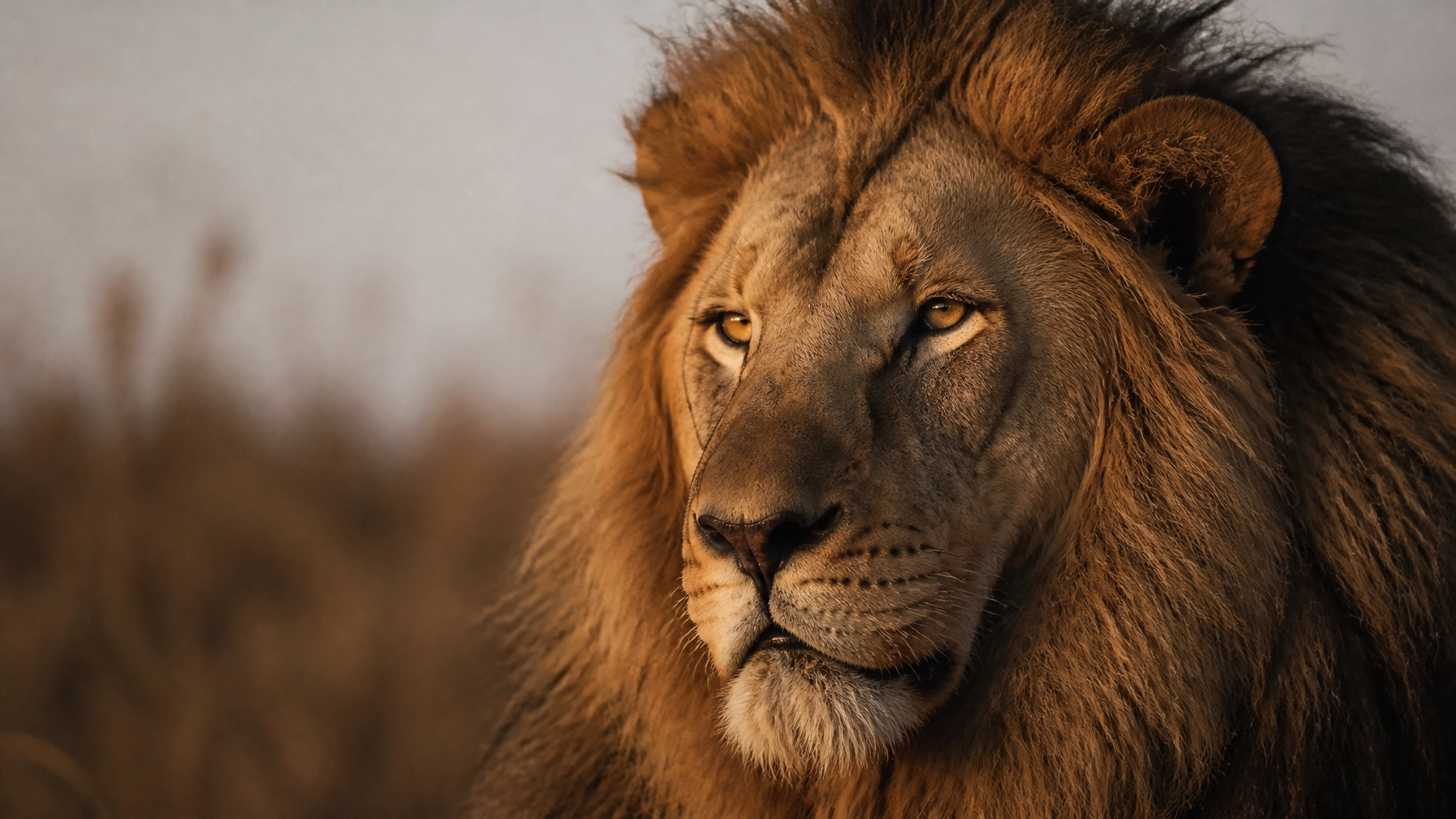
10 Reasons Your Lion Stock Photo Isn’t Driving Donations (And How to Fix It)
Stock photography often misses the mark.
In conservation, "generic" equals "ignored."
Donors look for authenticity.
They want a connection, not a commercial.
If your donation rates are flat, look at your imagery.
Specifically, your lions.
The king of the jungle often becomes a king of clichés.
Here are 10 reasons your lion imagery is failing.
And the tactical fixes to boost engagement.
1. The "Glass Eye" Problem
Generic stock photos often feel clinical.
The lion looks at the camera, but not at the donor.
It is a subject, not a character.
Emotional disconnect follows.
The Fix:
- Use portraits with soul.
- Prioritize micro-expressions.
- Look for "contemplative" or "vulnerable" gazes.
- Avoid the "taxidermy" look of flat studio lighting.

2. Lack of Geographic Context
A lion in front of a white wall tells no story.
Donors fund habitats, not just animals.
If the setting is missing, the urgency is missing.
The photo feels "displaced."
The Fix:
- Show the environment.
- Dust, tall grass, and heat haze.
- Contextualize the lion within its ecosystem.
- Use images from Zoo Imagery’s lion collection that feature naturalistic settings.
3. The "Hero" Cliché
The roaring male lion is overused.
It’s a trope.
It signals "power," but rarely "need."
Conservation marketing requires a balance of strength and fragility.
The Fix:
- Show different life stages.
- Cubs, elderly lions, or lionesses in a pride.
- Focus on social structures.
- Authentic interaction drives more empathy than a lonely roar.
4. Lighting That Feels "Commercial"
Bright, even lighting is for selling cars.
It’s not for saving species.
Flat lighting removes the mystery.
It makes the wild look sanitized.
The Fix:
- Embrace "Golden Hour."
- Use heavy shadows for depth.
- Documentary-style lighting.
- Refer to the Photo Ark for high-contrast portrait inspiration.
5. Ignoring Mobile Optimization
Most donations happen on smartphones.
Landscape photos lose 60% of their impact on a vertical screen.
If your lion is a tiny speck in a horizontal box, the donor scrolls past.
The Fix:
- Use portrait-format (9:16) imagery.
- Crop for impact.
- Tight shots on faces for Instagram Stories.
- Zoo Imagery provides both landscape and portrait formats for this reason.

6. Zero Evidence of Human Impact
Donors want to see where their money goes.
A photo of just an animal is a "discovery."
A photo of an animal and a researcher is a "mission."
Pure stock lacks the human element of ESG-aligned campaigns.
The Fix:
- Include subtle human elements.
- Ranger tracks in the dirt.
- Conservation tags.
- Pair animal portraits with behind-the-scenes content of your team.
7. The Absence of User-Generated Content (UGC)
Stock photography is one-way communication.
Modern donors value peer-to-peer authenticity.
They trust a photo taken by a guest more than a polished ad.
Static imagery can feel "untouchable."
The Fix:
- Leverage the ZooMedia app.
- Let guests share their own photos.
- UGC creates real-time social proof.
- Engagement results are measurable and ROI-positive.
8. Inconsistent Brand Aesthetic
Mixing high-end documentary shots with cheap, bright stock.
It confuses the donor.
It creates a "visual jar."
The brand feels fragmented.
The Fix:
- Curate a consistent look.
- Stick to one lighting style.
- Limit your color palette.
- Build a dedicated library of animal imagery that matches your organization’s voice.

9. Failure to Show "Agency"
Stock animals often look passive.
They are "being" rather than "doing."
Active animals: hunting, protecting, moving: tell a story of survival.
Passive animals look like they are in a postcard.
The Fix:
- Choose "action" shots.
- A lion mid-stride.
- Tension in the muscles.
- Direct eye contact during movement.
10. Lack of Storytelling Specificity
"Save the Lions" is too broad.
"Help Save the Pride in the Mara" is specific.
Generic stock photos are un-narrated.
They have no name. No history.
The Fix:
- Give the subject a backstory.
- Even if using stock, choose a photo that looks like a specific individual.
- Pair the image with data about their specific pride or region.
- Transparency builds trust.
Tactical Implementation: A Checklist for 2026
Quality over quantity.
Rarely use stock, but when you do, make it the best.
Follow this checklist for your next campaign:
- Format: Vertical for mobile, high-resolution.
- Lighting: Natural, dramatic, non-commercial.
- Subject: Active, emotional, specific.
- Source: Verified wildlife photography or ZooMedia user-generated content.

The Bottom Line
Donations are driven by emotion.
Generic imagery kills emotion.
To fix your conversion rates, change your lens.
Move away from the polished.
Move toward the authentic.
High-quality lion photography isn't just a decoration.
It is your most powerful fundraising tool.
For more insights on animal photography and picture marketing, visit Zoo Imagery or follow us on LinkedIn.


