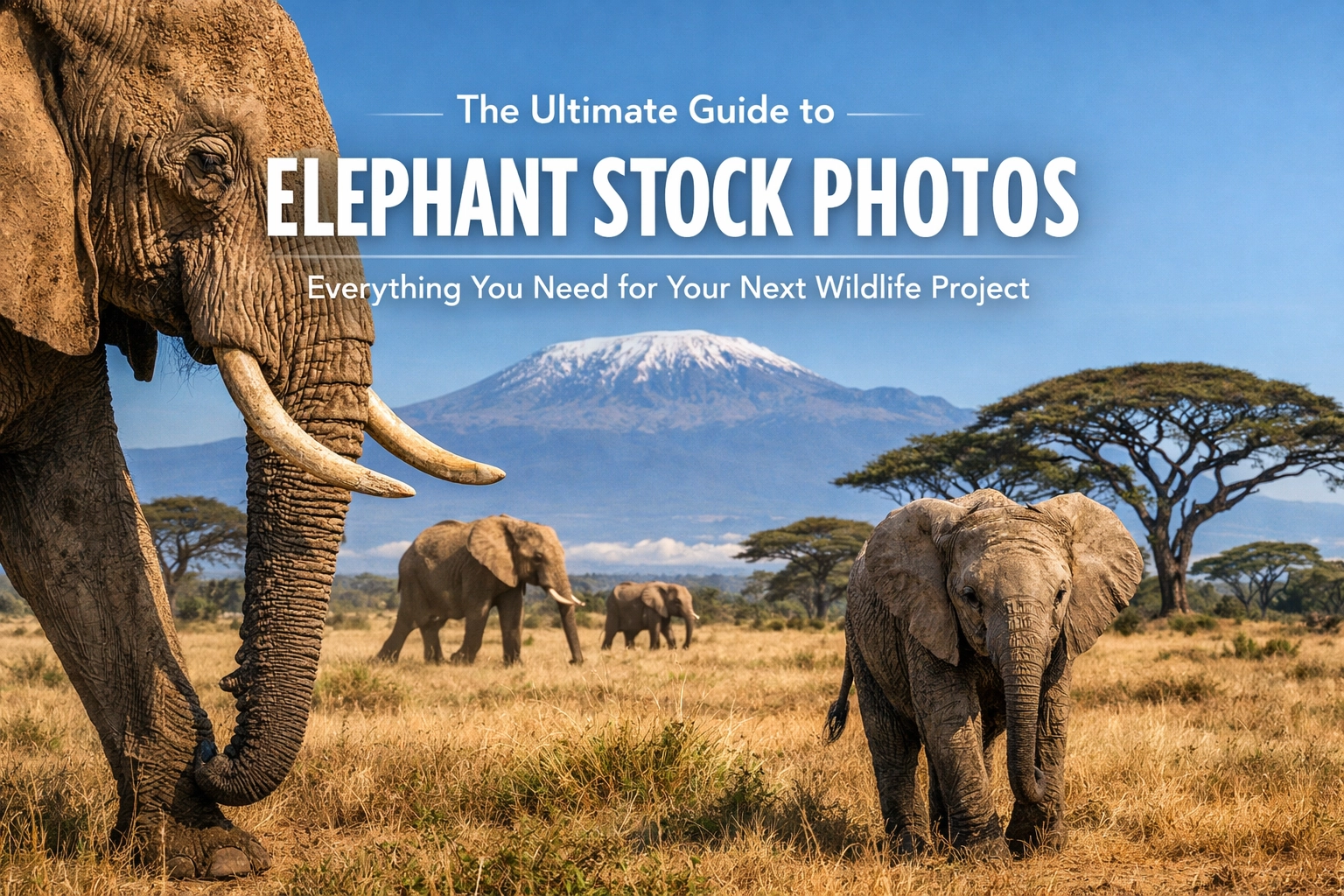
The Ultimate Guide to Elephant Stock Photos: Everything You Need for Your Next Wildlife Project
Elephants command attention. Their size, intelligence, and presence make them powerful subjects for wildlife projects.
Whether you're building a conservation campaign, designing educational materials, or creating social content, the right elephant photo makes your project work.
Why Elephant Stock Photos Work
Elephants connect with audiences. People recognize them instantly. They evoke emotion without trying.

A good elephant image:
- Stops scrollers mid-feed
- Conveys strength and vulnerability
- Works across formats and platforms
- Appeals to diverse audiences
- Supports conservation messaging
Wildlife projects need images that carry weight. Elephants deliver.
Understanding African vs Asian Elephants
Two species. Different characteristics.
African elephants feature larger ears, curved backs, and both males and females typically have tusks. They photograph dramatically against savanna landscapes.
Asian elephants have smaller, rounded ears, arched backs, and often only males have visible tusks. They work well in forest settings.
Know the difference. It matters for authentic wildlife content.
Types of Elephant Stock Photos You Need
Behavioral Shots
Action tells stories. Look for:
- Elephants bathing and spraying water
- Mothers guiding calves
- Herds moving together
- Trunk interactions between individuals
- Feeding and foraging moments
Behavior shots create narrative. They show personality and relationship dynamics that static poses can't match.

Portrait and Close-Ups
Detail work differently. Eye-level elephant portraits create intimacy. Close-ups of texture: wrinkled skin, wise eyes, powerful tusks: add visual interest to layouts.
These images anchor hero sections and feature areas. They command full attention.
Herd and Group Compositions
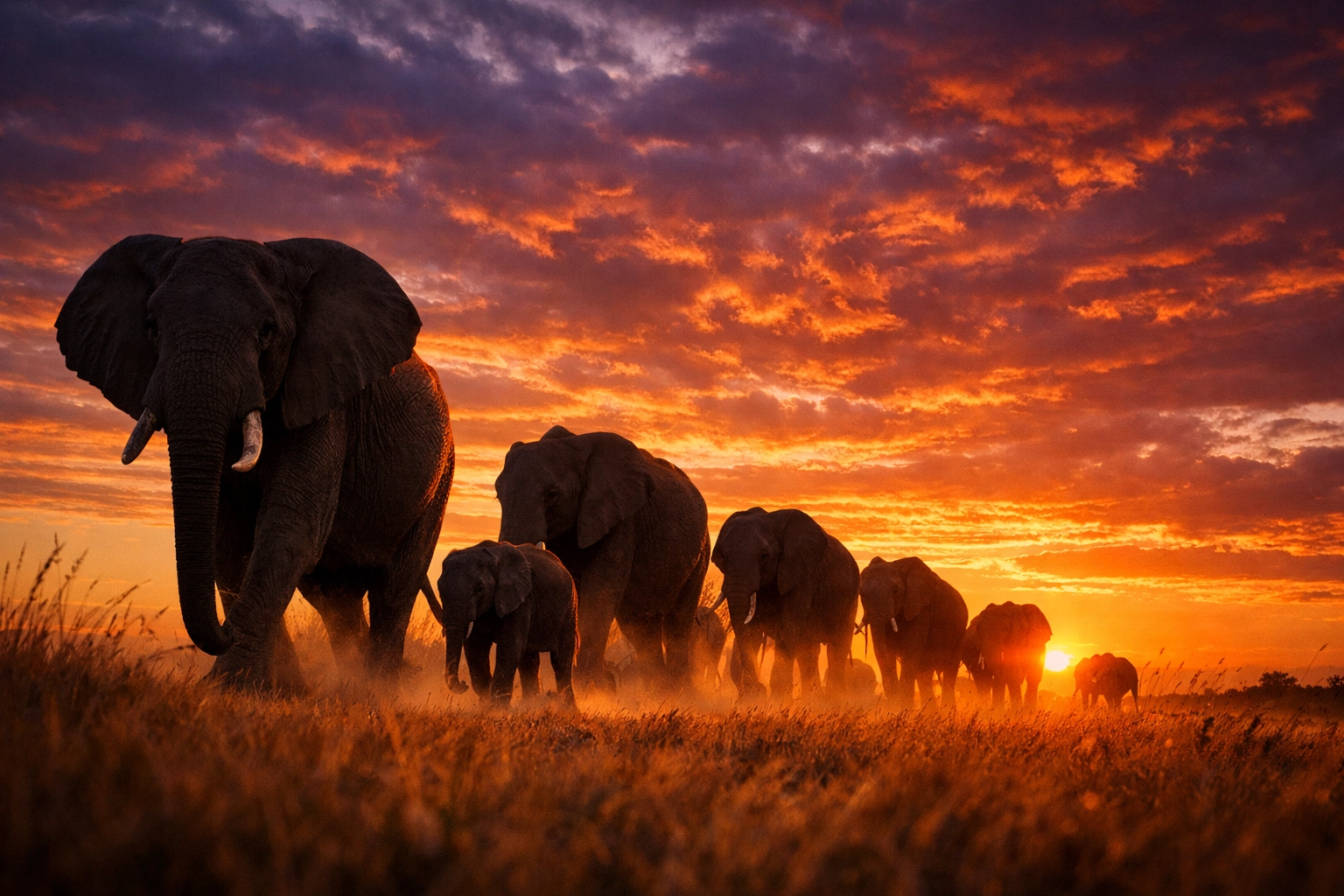
Multiple elephants create scale and context. Family groups demonstrate social structure. Herds moving across landscapes provide drama and scope.
Group shots work for:
- Wide banner images
- Conservation storytelling
- Educational content about elephant society
- Background elements in larger designs
Baby Elephants
Calves generate engagement. Young elephants learning from adults, playing, or staying close to their mothers trigger emotional responses.
Use strategically. Baby elephant photos drive clicks and shares but balance them with adult imagery for credibility.
What Makes a Quality Elephant Stock Photo
Resolution matters. Wildlife photography needs detail.
Look for:
- Sharp focus on the subject
- Natural lighting that shows texture
- Clean backgrounds without distracting elements
- Proper exposure across the full range
- Authentic behavior, not staged moments

Avoid obvious zoo settings unless that's your specific need. Bars, fences, and artificial environments undermine wildlife messaging.
Common Use Cases
Conservation Campaigns
Elephant imagery anchors environmental messaging. Their status as vulnerable and endangered species makes them powerful advocates for habitat protection and anti-poaching initiatives.
Pair compelling elephant photos with clear conservation calls-to-action.
Educational Materials
Textbooks, presentations, and learning platforms need accurate elephant representation. Choose images that clearly show anatomical features, natural behaviors, and habitat contexts.
Marketing and Social Media
Elephants perform well in digital spaces. They're recognizable thumbnails. They work across platforms from Instagram squares to YouTube banners.
Wildlife content generates engagement. Elephants particularly so.
Editorial and Publishing
Magazine features, blog posts, and articles about wildlife, travel, or conservation need strong supporting imagery. Elephant photos provide visual weight and reader interest.
Technical Considerations
Orientation: Landscape works for most web applications. Portrait fits social stories and mobile layouts. Have both available.
File formats: JPEGs for most uses. High-resolution TIFFs for print projects.
Licensing: Royalty-free simplifies usage across multiple projects. Understand commercial vs editorial rights.
Metadata: Well-tagged images help you find specific shots quickly. Search by species, behavior, location, and composition style.
Finding the Right Images
Over 315,000 elephant stock photos exist across major platforms. That's the problem and the solution.
Narrow searches by:
- Specific species (African, Asian)
- Behavior type
- Number of subjects
- Setting (savanna, forest, waterhole)
- Time of day
- Composition style
Specific searches return better results than broad terms.
The Conservation Connection
Elephant populations face pressure. Habitat loss, human-wildlife conflict, and poaching continue despite protection efforts.
Quality wildlife photography serves a purpose beyond aesthetics. It raises awareness. It funds research. It motivates action.
When you use elephant stock photos, you're participating in a larger conversation about wildlife preservation. Choose images that honor these animals and their reality.
Support platforms and photographers who contribute to conservation efforts. The images you select can make a difference.
Making Your Selection
Start with project requirements. Match image style to audience and platform.
Consider:
- Emotional tone needed
- Technical specifications
- Color palette and mood
- Context and messaging
- Long-term usage plans
Don't settle for close enough. The right elephant image elevates your entire project.
Ready to Find Your Perfect Shot?
Zoo Imagery specializes in animal stock photography that works. Our collection features elephants and hundreds of other species, shot by photographers who understand wildlife.
Browse our library at zooimagery.com or connect with us on LinkedIn to see how we support wildlife projects with authentic animal imagery.
The right elephant photo is waiting.


