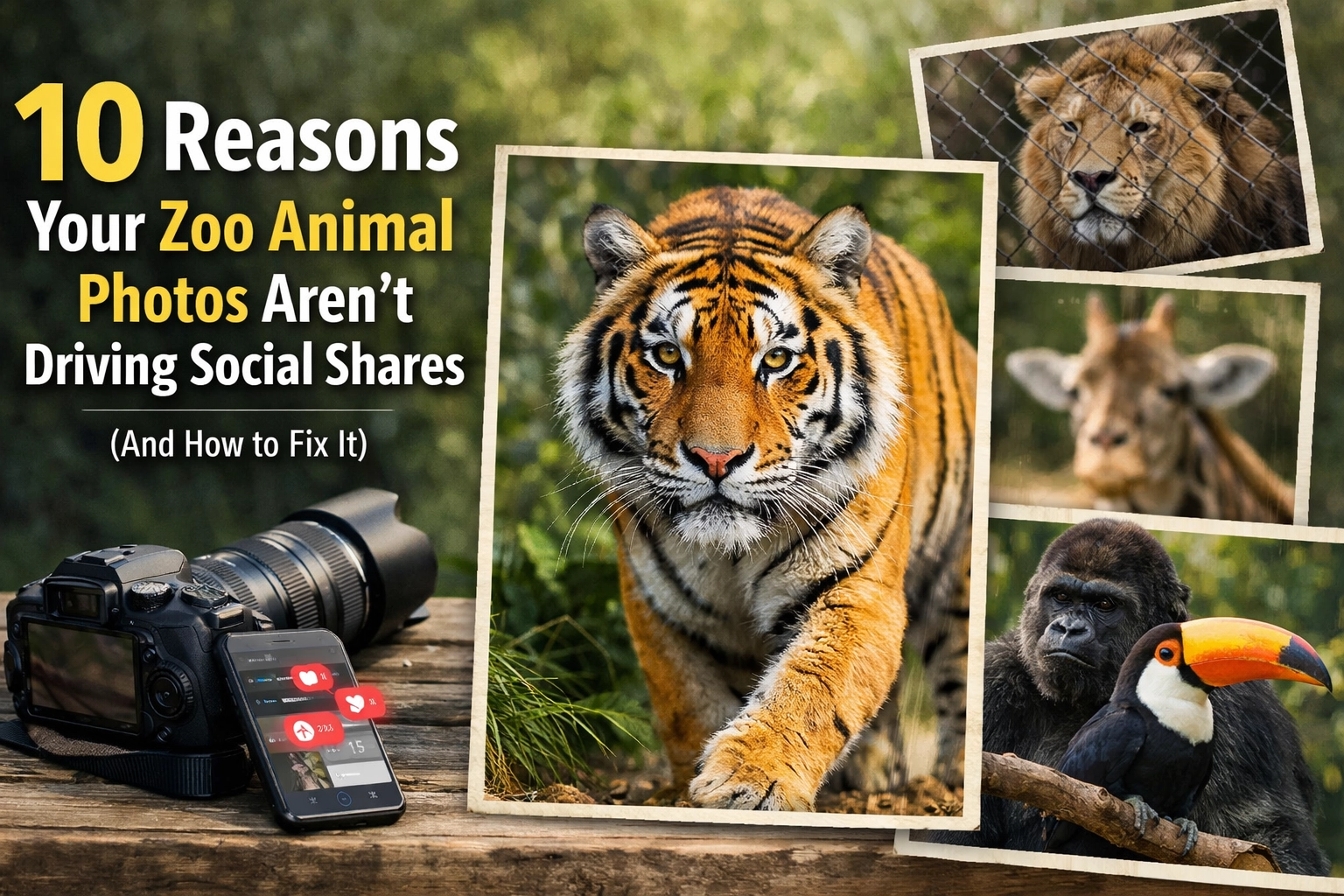
10 Reasons Your Zoo Animal Photos Aren’t Driving Social Shares (And How to Fix It)
You post a photo of a tiger. It’s a great tiger. You wait for the likes, the comments, and the shares.
Nothing happens.
Engagement stays flat. The reach is minimal. It feels like shouting into a void.
In the digital media world, specifically for zoos and aquariums, a "good" photo isn't enough. Social media algorithms and human psychology require more than just a clear image. People share content that makes them feel something, teaches them something, or reflects their values.
If your zoo animal photos are sitting idle, here is why: and how to fix it.
1. The Framing is Generic
Most people take photos from eye level, standing behind a fence. The result is a standard perspective everyone has seen a thousand times.
The Problem:
Generic shots are easy to scroll past. They don't stop the thumb. If the animal looks like it's just "there," the audience won't feel a connection.
The Fix:
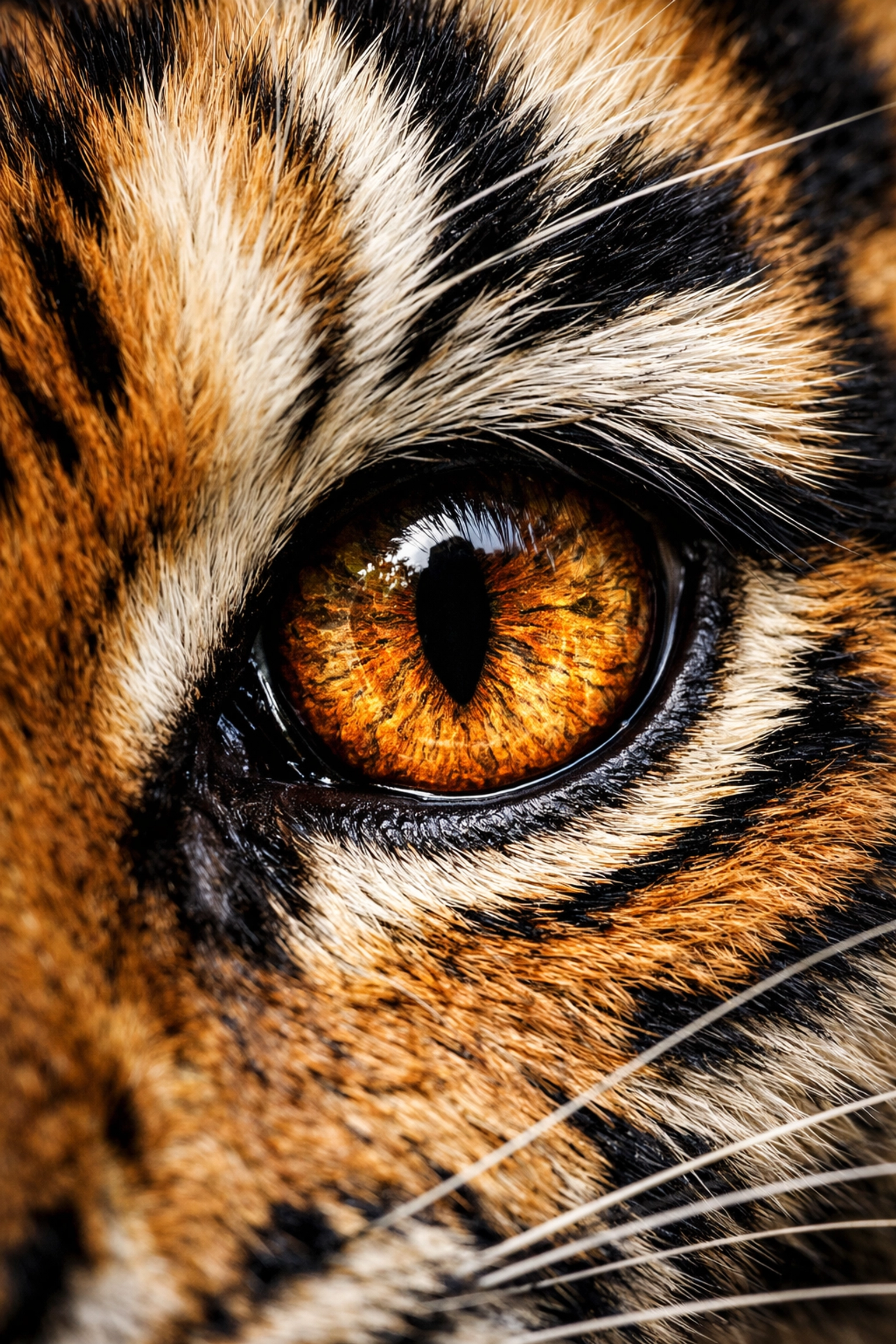
Change the angle. Close-ups of textures: scales, fur, an eye: create intimacy. Use professional stock photography from Zoo Imagery to find angles you can’t get with a standard handheld camera.
2. Lack of "Presented by" Context
A photo without a sponsor or a partner feels like an orphan. In modern digital media, audiences respond well to curated content.
The Problem:
The post feels like "just another update." It lacks the weight of a professional campaign.
The Fix:
Utilize "Presented by" animal pages. When a species spotlight is sponsored by a local business or a conservation partner, it adds authority. It tells the viewer that this animal matters enough for a brand to stand behind it. This increases the "shareability" because it feels like a community effort.
3. You’re Not Telling a Story
A photo of a gorilla is a noun. A story about that gorilla is a verb.
The Problem:
Information-less posts. "Meet our gorilla, Bob." That's not a reason to share.
The Fix:
Focus on sponsored species spotlights. Tell the story of Bob’s contribution to his troop. Mention conservation efforts. Give people a narrative they can pass on to their friends. People share stories, not just pictures.
4. Technical Quality Issues
Social media platforms prioritize high-quality files. Low-resolution or poorly lit photos are suppressed by algorithms.
The Problem:
Grainy, dark, or shaky images. They look unprofessional and reflect poorly on the institution.
The Fix:
Quality over quantity. Post fewer times but use better assets. Access our digital media library at zooimagery.com for crisp, high-definition animal imagery that meets platform standards perfectly.
5. Ignoring the "Why"
Why should someone share this? Does it make them look smart? Does it make them look compassionate?
The Problem:
The post serves the zoo’s ego, not the follower’s identity.
The Fix:
Align your photos with conservation goals. When a follower shares a photo of a rhino with a caption about protecting the species, they are signaling their values to their network. Use your captions to provide that "value signal."

6. No Call to Action
You didn't ask.
The Problem:
Followers look at the photo, like it, and move on. They aren't prompted to do anything else.
The Fix:
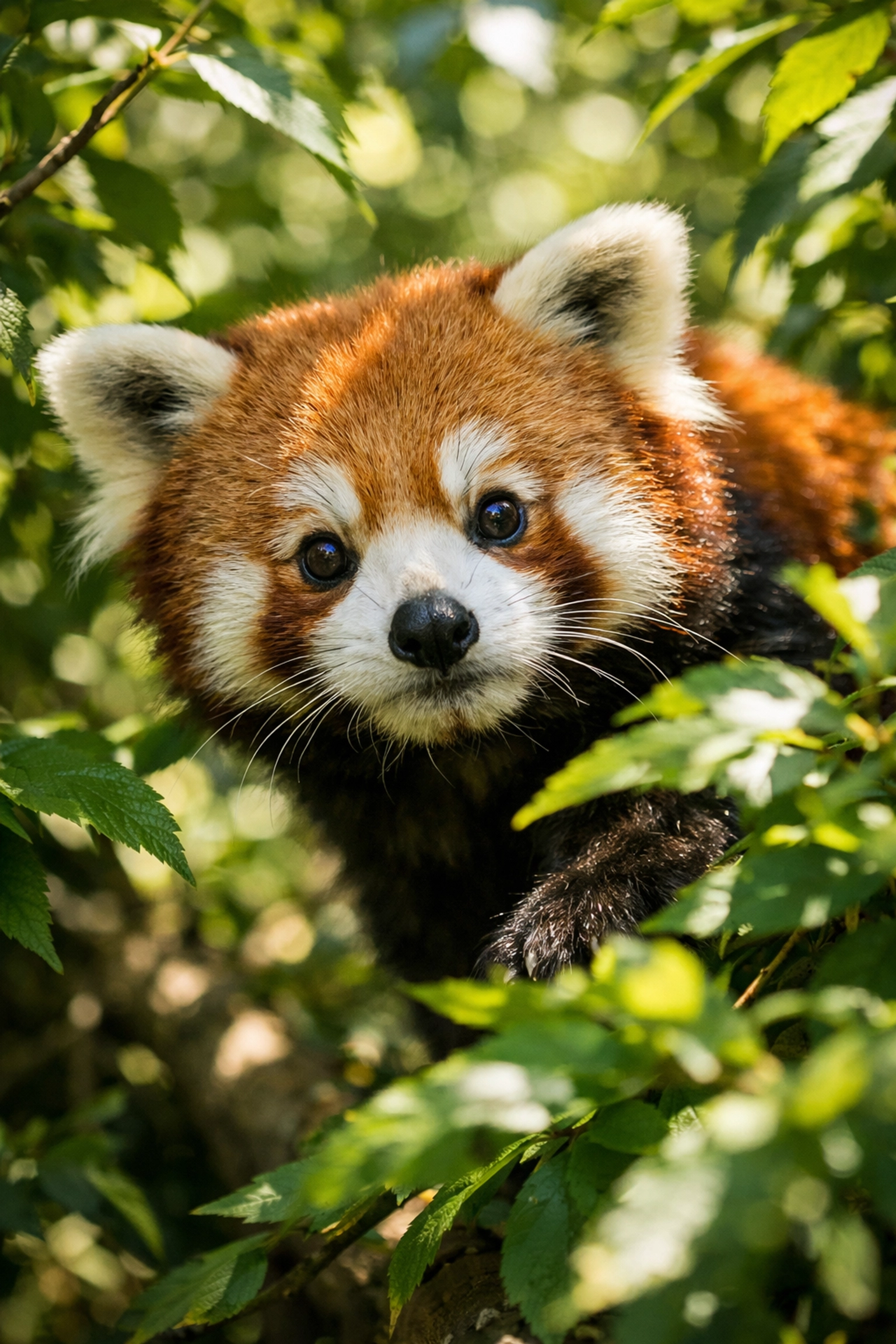
Keep CTAs brief. "Share to spread awareness" or "Tag a friend who loves red pandas." Simple prompts work. Direct them to your website or your LinkedIn profile to learn more about your conservation partnerships.
7. Missing the Interactive Element
Static images are the baseline. Engagement requires participation.
The Problem:
The post is a one-way street. You are talking at your audience.
The Fix:
Use the photo as a catalyst for a question. "What do you think this leopard is looking at?" "Can you guess how many hours a sloth sleeps?" Interaction triggers the algorithm to show the post to more people.
8. Platform Mismatch
Using the same photo and caption for Instagram, Facebook, and LinkedIn.
The Problem:
LinkedIn users want data and ESG-aligned stories. Instagram users want aesthetics. Facebook users want community and family-oriented content.
The Fix:
Tailor the delivery.
- Instagram: High-impact visual, short caption.
- LinkedIn: Focus on the business of conservation and species spotlight partnerships.
- Facebook: Focus on education and visitor experience.
9. Over-Editing or "Uncanny" Filters
Natural beauty is the sell. Over-saturated or heavily filtered animal photos look fake.
The Problem:
The animal looks like a cartoon. Trust is lost.
The Fix:
Keep it simple. Clean edits. Natural light. If you need professional-grade imagery that doesn't look over-processed, check our curated collections at Zoo Imagery. Authenticity drives trust, and trust drives shares.
10. Inconsistency
You post once a month and wonder why engagement is low.
The Problem:
The algorithm has forgotten you. Your audience hasn't built a habit of looking for your content.
The Fix:
Create a schedule. Use sponsored species spotlights to fill your calendar. It provides a steady stream of high-quality content that keeps your brand top-of-mind.
Moving Forward
Social media success for zoos isn't about luck. It's about combining high-quality digital media with strategic storytelling. When you provide your audience with a photo that is visually stunning and contextually relevant, they become your best marketers.
Focus on the species. Highlight your partners. Tell the truth about conservation.
The shares will follow.
About Zoo Imagery
We provide stock photography and digital media solutions specifically for the zoo and aquarium industry. Our goal is to simplify your marketing while amplifying your conservation message.
Connect with us:
Explore our library: zooimagery.com
Follow our updates: LinkedIn
Summary Checklist for Your Next Post:
- Angle: Is it unique?
- Quality: Is it high-resolution?
- Partnership: Is there a "Presented by" element?
- Story: Does the caption teach or inspire?
- Platform: Is the format right for the channel?
- CTA: Did you ask them to share?
Stop posting just to post. Start posting to connect.
If you need better visuals to start with, you know where to find us. Visit Zoo Imagery today.


